
Discover Kampung Sasirangan, the Heart of Traditional Banjar Craftsmanship
Cultural Tourism, Souvenir Shopping, and the Heritage of South Kalimantan’s Iconic Traditional Textile
When talking about souvenirs from South Kalimantan, Sasirangan is almost always the first name that comes to mind for both locals and visitors.
This traditional textile of the Banjar people has long been a symbol of regional cultural identity and a source of pride for the people of South Kalimantan.
The best place to learn about and purchase this unique fabric is Kampung Sasirangan, a cultural tourism destination located in the city of Banjarmasin.
Kampung Sasirangan is much more than a traditional textile marketplace. It serves as a production center, a cultural gallery, and a living community where artisans continue to preserve the heritage of their Banjar ancestors.
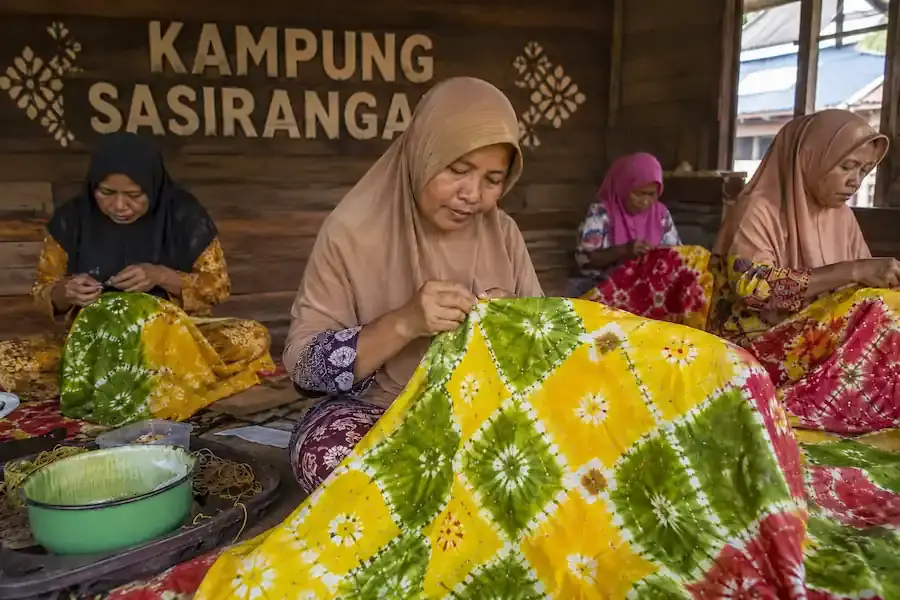
Here, visitors can do more than just shop. They can also witness firsthand how Sasirangan fabric is created using traditional techniques that have been passed down through generations.
Since 2010, Kampung Sasirangan has been officially developed as a handicraft tourism destination and a central hub for the sale of Sasirangan textiles and fashion products.
Its existence plays an important role in preserving local culture while supporting the growth of Banjarmasin’s creative economy.
Two Kampung Sasirangan Locations That Have Become Popular Tourist Destinations
In general, Kampung Sasirangan consists of two main areas that are well known among tourists. The first is located on Jalan Seberang Mesjid in Seberang Mesjid Village, Central Banjarmasin District.
This area is the most famous location and is often the primary destination for visitors looking to purchase authentic Sasirangan products.
The second location is situated in Sungai Jingah Village, North Banjarmasin District. Known as Kampung Sasirangan Sungai Jingah, this area offers added appeal because it is surrounded by the river-based tourism environment that characterizes Banjarmasin.
The two locations provide different experiences for visitors.
Seberang Mesjid is best known as a commercial center and gallery for Sasirangan products, while Sungai Jingah offers a stronger cultural village atmosphere where visitors can observe artisan activities and local community life.
The History of Sasirangan: A Cultural Heritage That Endures
Sasirangan is a traditional textile of the Banjar people, created using hand-stitching and dyeing techniques. The word "Sasirangan" originates from the Banjar word "sirang," which refers to the process of stitching or tying sections of fabric before they are dyed.
This technique produces distinctive patterns that cannot be replicated exactly, making every piece of Sasirangan fabric unique and artistically valuable.
In the past, Sasirangan was not only worn as everyday clothing. It also held ceremonial and spiritual significance within Banjar society.
As time progressed, Sasirangan evolved into a modern fashion product while preserving its cultural roots.
The Philosophy Behind Sasirangan Motifs
One of the aspects that distinguishes Sasirangan from other traditional textiles is the richness of its motifs, each carrying its own philosophy and meaning. Many designs were inspired by the Banjar people's close relationship with nature.
The Iris Pudak motif is inspired by slices of pudak leaves commonly found in Kalimantan. Kambang Kacang depicts long bean flowers, while Bayam Raja takes inspiration from the lush spinach leaves that grow abundantly in the region.
Other well-known motifs include Kulat Karikit, which resembles small mushrooms; Ombak Sinapur Karang, symbolizing waves crashing against coral rocks; and Bintang Bahambur, representing stars scattered across the night sky.
Additional traditional motifs that remain popular today include Sari Gading, Kulit Kayu, Naga Balimbur, Jajumputan, Turun Dayang, Kambang Tampuk Manggis, Daun Jeruju, Kangkung Kaombakan, Sisik Tanggiling, and Kambang Tanjung.
Alongside these classic patterns, artisans now create contemporary motifs that blend traditional elements with modern design. These innovations have helped Sasirangan gain popularity among younger generations and across wider national markets.
Witnessing the Sasirangan-Making Process Firsthand
One of the most fascinating experiences at Kampung Sasirangan is the opportunity to observe the fabric-making process directly.
Most artisans still rely on traditional handcrafting techniques. The process begins by sketching patterns onto the fabric, followed by stitching specific sections with thread before immersing the cloth in dye.
Once the dyeing process is complete, the stitches are removed, revealing the distinctive patterns that define Sasirangan. Although some producers have adopted modern equipment and printing techniques to increase production capacity, the artisan’s craftsmanship remains the key factor that determines the quality and uniqueness of each piece.
Interestingly, many of today’s Sasirangan entrepreneurs and artisans come from the millennial generation. Young Banjar creatives continue to preserve this tradition while introducing innovations in design, marketing, and product development.
Sasirangan Products Available for Tourists
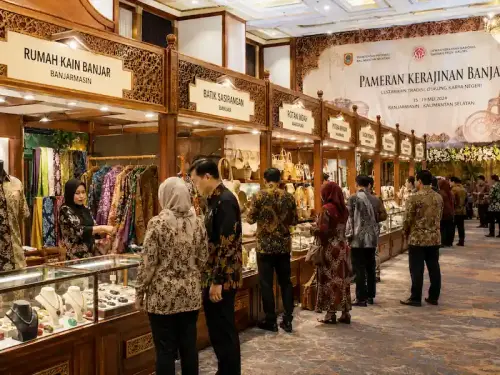
Kampung Sasirangan offers a wide variety of products. In addition to traditional fabric by the meter, visitors can also find numerous fashion items and handicrafts featuring distinctive Sasirangan motifs.
Sasirangan fabric remains the most sought-after product, as it can be used for clothing, scarves, or personal collections. Visitors can also purchase hijabs, shawls, T-shirts, shirts, and various women's fashion items designed with a modern touch.
For travelers looking for practical souvenirs, Kampung Sasirangan offers Sasirangan-patterned bags, wallets, sandals, hats, handkerchiefs, tablecloths, and even bed linens featuring traditional Banjar designs.
With such a diverse selection, almost every visitor can find products that suit their preferences and budget.
Price Range of Sasirangan Products
The price of Sasirangan products depends largely on the type of material used and the complexity of the pattern.
Satin cotton Sasirangan fabric is generally sold for around IDR 110,000 to IDR 135,000 for a two-meter piece. When purchased by the meter, prices typically range from IDR 130,000 to IDR 185,000.
Meanwhile, silk Sasirangan fabrics command higher prices and can cost several hundred thousand rupiah due to their premium materials and more exclusive production process.
Accessories such as sandals, wallets, and bags are available at prices ranging from tens of thousands to several hundred thousand rupiah. Sasirangan hijabs and shawls are generally sold for approximately IDR 50,000 to IDR 200,000.
Most shops also accommodate wholesale purchases and custom orders at more competitive prices.
How to Get to Kampung Sasirangan
Kampung Sasirangan is conveniently accessible from various parts of Banjarmasin. From the Wasaka Museum area, it is only about two kilometers away, while the distance from Sentra Antasari Market Terminal is approximately three to four kilometers.
For visitors traveling from Banjarbaru, the journey to Kampung Sasirangan covers a distance of around 33 kilometers.
Several transportation options are available, including public minibuses serving the Pasar Lama route, metered taxis, rental vehicles, and app-based transportation services.
For those wishing to experience the unique atmosphere of the City of a Thousand Rivers, traveling by traditional klotok boat along the Martapura River is a highly recommended option.
In addition to enjoying scenic river views, visitors can observe the daily life of the Banjar people, whose culture remains closely connected to the waterways.
Best Time to Visit
Kampung Sasirangan can be visited throughout the year. The Sungai Jingah area is generally open daily from 8:00 AM to 10:00 PM Central Indonesia Time (WITA), while most shops in the Seberang Mesjid area begin serving visitors from late morning until the afternoon.
The best times to visit are in the morning between 8:00 AM and 11:00 AM or in the afternoon between 2:00 PM and 5:00 PM.
During these hours, production activities are usually underway, allowing visitors to observe the traditional fabric-making process firsthand.
The village atmosphere is also more vibrant, with artisans actively working and interacting with customers.
Additional Attractions That Make Visitors Stay Longer
The appeal of Kampung Sasirangan extends far beyond its textiles. The area offers an authentic cultural experience that reflects the heritage of the Banjar people.
Visitors can take photos at the iconic village gateway, watch young artisans at work, and enjoy the atmosphere of a traditional Banjar neighborhood that continues to preserve its local customs.
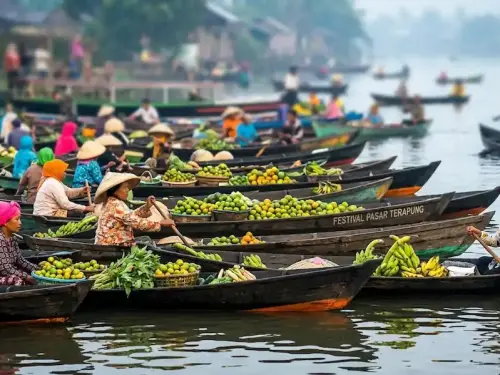
The surrounding area is also home to several famous river tourism attractions, including the floating markets that have become one of Banjarmasin’s most recognizable landmarks.
The combination of cultural tourism and river-based attractions makes a visit to Kampung Sasirangan a truly complete experience.
The Sungai Jingah area has even gained recognition as part of the Meratus Geopark Site, further highlighting its significance as an important cultural and tourism destination in South Kalimantan.
The Role of Kampung Sasirangan in South Kalimantan’s Creative Economy
Behind its beautiful colors and intricate patterns, Kampung Sasirangan plays a major role in supporting the regional economy.
The Sasirangan industry involves thousands of people, including artisans, tailors, dye makers, designers, and traders.
Many artisans generate annual revenues ranging from tens of millions to hundreds of millions of rupiah due to the strong demand for Sasirangan products.
This success demonstrates that cultural preservation not only safeguards regional identity but also provides a sustainable source of livelihood for local communities.
Conclusion
Kampung Sasirangan Banjarmasin is a destination that beautifully combines culture, history, art, and the creative economy within a single tourism area.
It is here that visitors can gain a deeper understanding of Banjar cultural heritage, witness the traditional fabric-making process, interact with local artisans, and bring home authentic souvenirs from South Kalimantan.
With easy access, free admission, a wide variety of products, and a well-preserved cultural atmosphere, Kampung Sasirangan deserves to be one of the top destinations for anyone visiting Banjarmasin.
More than just a shopping destination, this cultural village stands as a living symbol of the creativity, resilience, and pride of the Banjar people in the face of modernization.