
The Early Footprints of Islam and the Oldest Architectural Heritage in Kalimantan
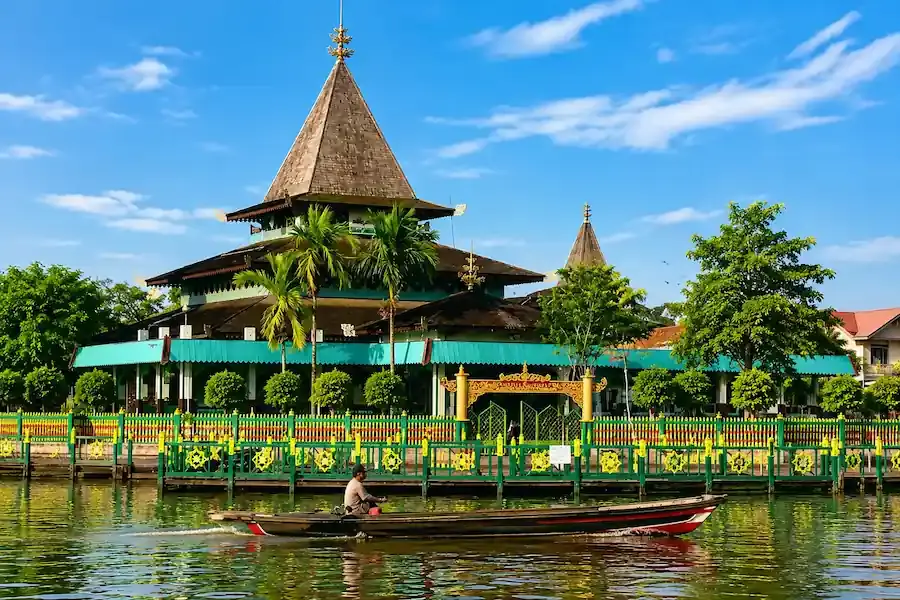
On the peaceful banks of the Kuin River in the North Banjarmasin area stands a historic building that has become one of the most important symbols of Islam’s journey in Kalimantan. This remarkable structure is Sultan Suriansyah Mosque, the oldest mosque in Kalimantan, which has stood for nearly five centuries.
To many visitors, the mosque may appear modest compared to the grandeur of modern mosques. However, behind its simplicity lies a rich history that tells the story of the birth of the Islamic Banjar Sultanate, the spread of Islam throughout the island of Kalimantan, and the harmonious fusion of local Banjar culture with the Islamic values that arrived later.
To this day, Sultan Suriansyah Mosque remains one of the most important religious and historical destinations in South Kalimantan.
Built by the First Banjar Sultan to Embrace Islam
The mosque was built around 1526 CE by Sultan Suriansyah, the first ruler of the Banjar Sultanate to convert to Islam. Before becoming Sultan Suriansyah, he was known as Prince Samudera, a key figure in the establishment of the Banjar Sultanate.
The transition of power and the introduction of Islam into the royal court marked a significant turning point in the history of South Kalimantan. After embracing Islam, Sultan Suriansyah made the religion the new foundation of the kingdom and encouraged its spread throughout the region.
The construction of the mosque in the Kuin area had strategic importance. At that time, the Kuin River served as a major transportation route connecting settlements and trading centers. Located along the riverbank, the mosque became both a center of religious activity and a gathering place for the local community.
From this location, Islamic teachings began to flourish across the Banjar region before spreading to many other parts of Kalimantan.
A Blend of Banjar, Hindu-Buddhist, and Islamic Architecture
One of the greatest attractions of Sultan Suriansyah Mosque is its unique architectural design.
Unlike many Middle Eastern mosques that feature large domes, this mosque preserves a traditional multi-tiered roof known as the three-tiered roof. This architectural style is a legacy of the Indonesian archipelago that developed during the Hindu-Buddhist era and was later adapted into Islamic architecture.
The combination of these cultural influences makes Sultan Suriansyah Mosque a powerful symbol of the peaceful cultural assimilation that took place in the land of Banjar.
The mosque is also dominated by the use of wood, particularly ulin wood, a native Kalimantan hardwood renowned for its exceptional strength and resistance to tropical weather conditions. One of the most fascinating features is the presence of a main pillar carved from a single solid piece of ulin wood, an extraordinary engineering achievement for its time.
Although the mosque has undergone several renovations to preserve its condition, its original architectural character and basic form have been carefully maintained.
A Peaceful Atmosphere in the Heart of the City
Upon entering the mosque grounds, visitors immediately notice a different atmosphere. Despite being located not far from downtown Banjarmasin, the surrounding environment feels calm, peaceful, and reflective.
The neatly maintained courtyard and classic wooden structure create a strong sense of historical charm. Many visitors come not only to worship but also to learn about the long history of the Banjar Sultanate and the development of Islam in Kalimantan.
For photography enthusiasts, the front section of the mosque is a favorite spot for capturing its architectural beauty. The late afternoon light is often considered the best time for photography, as it highlights the intricate wooden details and the distinctive multi-tiered roof that defines the building.
Visitor Information
Sultan Suriansyah Mosque is located in the Kuin area of North Banjarmasin, approximately 10 kilometers from the center of Banjarmasin. Traveling by private vehicle or ride-hailing motorcycle service typically takes around 20 to 30 minutes, depending on traffic conditions.
There is no admission fee for visitors. The mosque is open to the public and only accepts voluntary donations from those who wish to contribute to the preservation of this historic building. Parking fees generally range from IDR 2,000 to IDR 5,000.
As the mosque continues to function primarily as a place of worship, visitors are expected to dress modestly and appropriately. Female visitors who do not bring a headscarf can usually borrow one on-site. Certain upper-floor areas may also be reserved exclusively for male worshippers.
More Than Just a Place of Worship
Sultan Suriansyah Mosque is more than just an ancient building that has withstood the passage of time. It is a witness to the beginning of a new era in Banjar history, a place where Islam first took root and flourished in South Kalimantan.
Every wooden pillar, every carving, and every corner of the structure holds stories of a kingdom’s long journey, the spread of a faith, and the meeting of diverse cultures that continue to shape the identity of the Banjar people today.
As the oldest mosque in Kalimantan, standing for more than 400 years, Sultan Suriansyah Mosque is not only a source of pride for South Kalimantan but also an important part of Indonesia’s historical heritage, demonstrating how local traditions and Islam can blend together to create a unique and enduring cultural identity.