
A Banjar Cultural Heritage on the Martapura River Since the Sultanate Era
Tracing the River Life of the Banjar People
When talking about South Kalimantan, many people immediately think of its nickname, “The City of a Thousand Rivers.” This title is more than just a tourism slogan. For centuries, rivers have served as the lifeblood of Banjar society.
Long before highways and motor vehicles became common, rivers functioned as the primary transportation routes, trading centers, and social spaces where communities interacted with one another.
One of the most remarkable examples of this river culture is the Lok Baintan Floating Market, a traditional marketplace held on the waters of the Martapura River.
Located in Lok Baintan Village, Sungai Tabuk District, Banjar Regency, this market has been part of local life since the era of the Banjar Sultanate and continues to thrive today.
Amid ongoing modernization, the existence of the Lok Baintan Floating Market is truly special. Few places in Indonesia still have an active floating market where traditional trading activities take place naturally every day.
For this reason, the market is not only an important economic center for the local community but also one of South Kalimantan’s most famous cultural tourism icons.
A Unique Traditional Market on the River
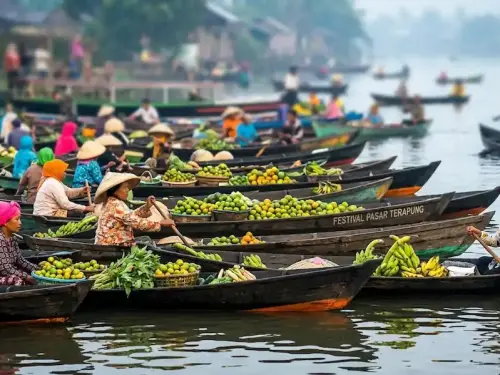
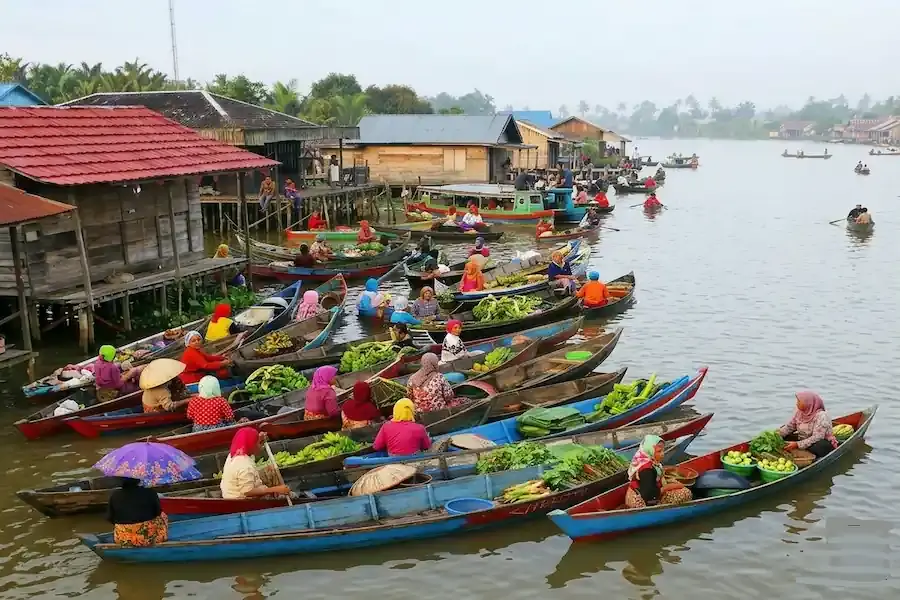
Unlike conventional markets built on land, all trading activities at the Lok Baintan Floating Market take place on the water. Merchants arrive using traditional boats known in the Banjar language as jukung.
They bring agricultural products, plantation harvests, traditional foods, and everyday necessities to sell to buyers, many of whom also arrive by boat.
The sight of dozens of jukung boats gathering together in the middle of the river creates a truly distinctive atmosphere. There are no permanent stalls, no large market buildings, and no aisles like those found in modern markets.
Instead, the river itself becomes both a marketplace and a meeting place for people from villages along the Martapura River.
This uniqueness has made the Lok Baintan Floating Market one of the most popular cultural tourism destinations for both domestic and international visitors.
The History of Lok Baintan Floating Market Since the Banjar Sultanate
The history of the Lok Baintan Floating Market is inseparable from the history of the Banjar people, who have lived alongside rivers for generations.
During the era of the Banjar Sultanate, river routes served as the primary means of transporting agricultural products, spices, and various other trade commodities.
Because most settlements were located along riverbanks, local communities naturally used the river as a place to meet and conduct business. From this practical necessity, the floating market emerged and gradually became an integral part of Banjar culture.
For hundreds of years, this tradition of river-based trade has continued from one generation to the next.
While many other floating markets declined due to the development of land transportation, the Lok Baintan Floating Market survived and remains one of the few authentic traditional floating markets still operating today.
Its existence serves as a living reminder of how rivers once formed the center of civilization in South Kalimantan.
Market Activities Begin Before Sunrise
One of the features that makes the Lok Baintan Floating Market so fascinating is its early operating hours. Trading activities typically begin before dawn.
Around 5:30 a.m. local time, merchants start arriving in their jukung boats. At this hour, the river remains calm and the sky is only beginning to brighten. Gradually, more and more boats gather until the market area is filled with activity.
The busiest period usually occurs between 6:00 and 7:30 a.m. This is when the market is at its liveliest. Dozens of boats move close together as merchants offer their goods, buyers select products, and the soft morning sunlight creates a stunning scene across the river.
For photographers, this period is often considered the best time to capture the beauty of the Lok Baintan Floating Market. The combination of golden morning light and traditional river commerce creates images that are difficult to find anywhere else.
By around 9:00 a.m., activity begins to decline. One by one, the merchants return to their villages, and the river gradually becomes quiet again.
A Wide Variety of Local South Kalimantan Products
Most of the goods sold at the Lok Baintan Floating Market are produced by local communities. Merchants commonly bring freshly harvested products directly from their farms and gardens.
Visitors can find a wide selection of fresh vegetables, tropical fruits, plantation products, fish, meat, and traditional Banjar delicacies. Traditional cakes such as apam, bingka, cucur, and many other local snacks are also popular attractions for tourists.
Since most products come directly from local farmers and producers, they are typically very fresh. This makes the market not only a tourist attraction but also an important distribution center for local agricultural products.
Bapanduk: A Traditional Barter System That Still Survives
One of the most unique aspects of the Lok Baintan Floating Market is the continued practice of bapanduk, a traditional barter system among merchants.
In practice, a merchant carrying produce from a farm or garden may exchange goods with another merchant without using money.
This tradition is a cultural legacy that reflects the strong social bonds among river communities.
However, visitors and regular buyers generally make purchases using money, just as they would in any other market. As a result, two transaction systems coexist in the market: the modern monetary system and the traditional barter system.
The survival of bapanduk is especially fascinating because such practices have become increasingly rare in modern economic life.
Jukung and Tanggui: Symbols of Banjar River Culture
When visiting the Lok Baintan Floating Market, two important symbols of Banjar culture are immediately visible: the jukung and the tanggui.
A jukung is a traditional wooden boat used by Banjar communities for transportation and daily activities along the river. It remains the primary vessel used for trading in the floating market.
Meanwhile, many female merchants wear a tanggui, a wide traditional hat made from woven bamboo or leaves. The tanggui protects its wearer from the sun while also serving as a symbol of the river culture of South Kalimantan.
Together, the jukung, tanggui, and traditional trading activities create an atmosphere that is both distinctive and authentic.
A Cultural Tourism Destination Known Around the World
As tourism in South Kalimantan continues to grow, the Lok Baintan Floating Market has become increasingly well known among visitors from across Indonesia and abroad. Many travelers come to experience shopping directly on the river or simply to enjoy its unique early-morning atmosphere.
Unlike some floating markets in other countries that were specifically developed as tourist attractions, the Lok Baintan Floating Market continues to function primarily as a traditional marketplace for local residents. This is what makes the experience feel genuine and authentic.
In addition to exploring the market, visitors can travel along the Martapura River aboard a motorized wooden boat known as a klotok, while observing the daily life of communities living along the riverbanks.
Preserving Cultural Heritage for Future Generations
In an era of rapid change, the Lok Baintan Floating Market represents far more than a place to buy and sell goods.
It is a symbol of Banjar identity, a reflection of a river-based culture that has flourished for centuries, and proof that traditions can continue to thrive amid modernization.
Preserving the floating market is important because it safeguards local knowledge, trading traditions, community values, and a unique way of life.
Every jukung that sails across the river at dawn carries not only merchandise but also a long story about the relationship between the Banjar people and the rivers that have sustained them for generations.
Today, the Lok Baintan Floating Market remains one of South Kalimantan’s most treasured cultural landmarks.
From the era of the Banjar Sultanate to the modern digital age, this floating market continues to flow alongside the Martapura River, preserving ancestral heritage while introducing the richness of Banjar culture to the world.