
Traces of Chinese and Banjar Cultural Acculturation in a Bowl of Noodles
Indonesia is home to many varieties of laksa. From Betawi Laksa in Jakarta and Bogor Laksa in West Java to the famous Laksa Katong found in Singapore and Malaysia.
Each region has developed its own interpretation of this noodle soup dish, which has traveled across various Asian cultures for centuries.
In South Kalimantan, however, the Banjar people have created a version unlike any other. It is known as Laksa Banjar, a traditional culinary specialty that blends Chinese cultural heritage with the rich natural resources of Kalimantan’s rivers.
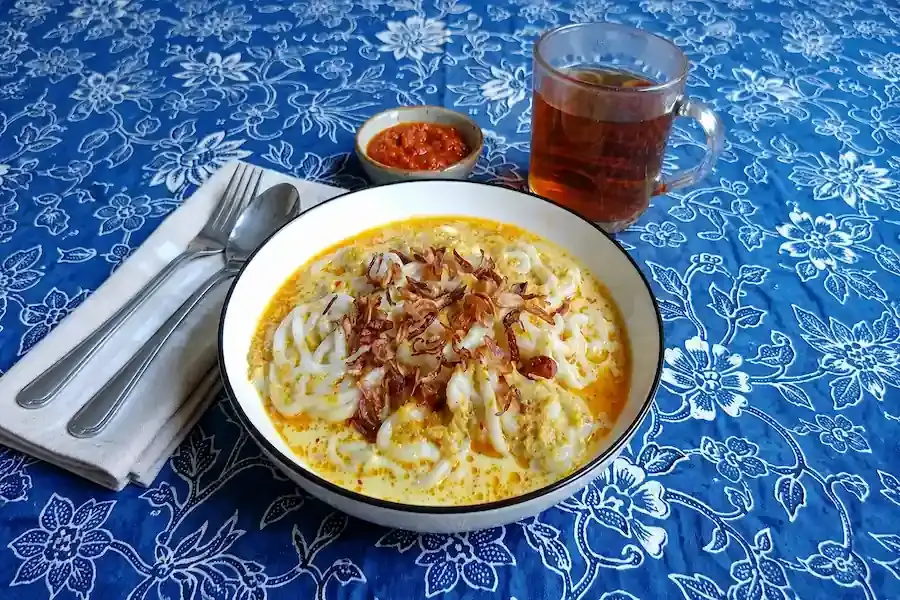
At first glance, Laksa Banjar may appear to be an ordinary coconut milk noodle soup. Yet as soon as the bowl is placed before you, its uniqueness becomes immediately apparent.
The noodles are arranged in distinctive coils, the broth has a pale orange hue, and the unmistakable aroma of haruan fish creates an identity that cannot be found in other regional laksa varieties.
Laksa Banjar is more than just food. It tells a story of cultural encounters, local creativity, and the Banjar community’s ability to transform outside influences into something entirely their own.
The Journey of Laksa from the Peranakan World to the Land of Banjar
The history of laksa is generally believed to originate from Peranakan Chinese culture, a blend of Chinese traditions and local Southeast Asian societies.
Chinese traders who sailed throughout the Indonesian archipelago brought not only merchandise but also their culinary traditions.
As they interacted with local communities, new dishes emerged, combining Chinese cooking techniques with locally available ingredients.
Laksa is one of the products of this cultural exchange.
In different regions, laksa evolved according to the character and preferences of the communities that adopted it. Some versions use shrimp, chicken, eggs, or various types of seafood as their primary ingredients.
The Banjar people, however, chose a different path.
Instead of relying on ingredients commonly found in other laksa varieties, they incorporated haruan fish, known nationally in Indonesia as snakehead fish, into their recipe.
This choice was far from accidental. For generations, the rivers and wetlands of South Kalimantan have served as the lifeblood of Banjar society.
Haruan fish is one of the most abundant and widely consumed freshwater fish in the region.
By utilizing this local ingredient, the Banjar people created a laksa with a distinctive identity and flavor profile of its own.
Why Is Laksa Banjar So Different?
The uniqueness of Laksa Banjar can be seen even before the first bite.
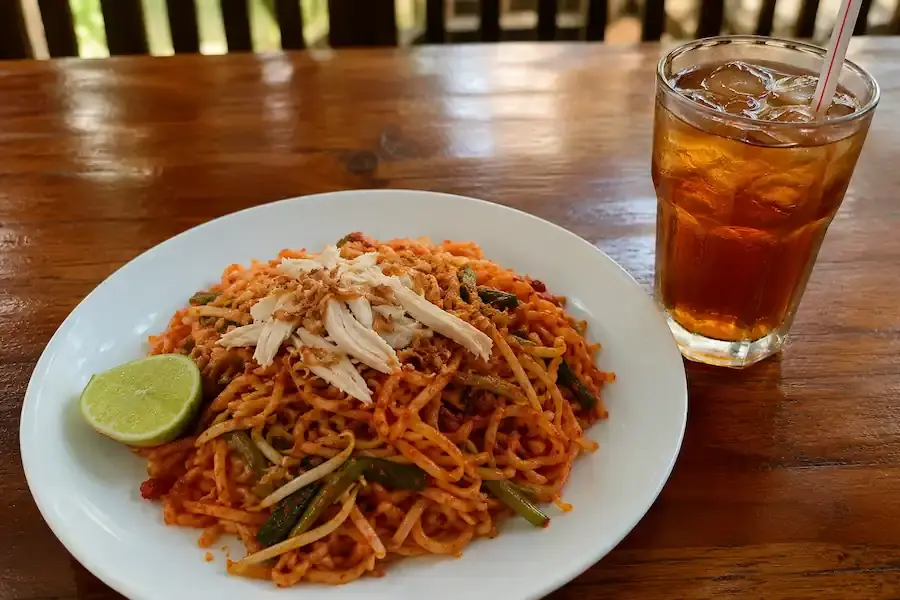
While laksa in many other regions uses loose noodles similar to ordinary noodle dishes, Laksa Banjar features noodles that are carefully arranged and woven into compact coils.
This presentation creates a striking visual impression. Served in a large bowl, the noodle coils resemble a nest ready to absorb the rich coconut broth.
The shape is not merely decorative. The coiled noodles help maintain their texture and allow the broth to seep in gradually, ensuring every strand remains flavorful.
For many first-time visitors, this distinctive noodle arrangement is the easiest feature by which to recognize Laksa Banjar.
The Secret Broth That Defines the Dish
If the coiled noodles form the visual identity of Laksa Banjar, then the broth is undoubtedly the heart of the dish.
The broth has a soft pale-orange color, quite different from other laksa varieties that are often deep red or bright yellow.
Its uniqueness lies in the combination of coconut milk and finely ground haruan fish.
Haruan fish is not merely a garnish or side ingredient. In Laksa Banjar, it forms an essential component of the broth itself.
The fish meat is blended into the broth, creating a richer texture and a deeper, more complex flavor.
The coconut milk provides a smooth, creamy sensation, while the haruan fish contributes a natural savory taste that is difficult to replicate with other ingredients.
A variety of traditional Banjar spices are then added to strengthen the flavor profile. The result is a broth that is complex, savory, aromatic, and deeply satisfying.
The Importance of Haruan Fish in Banjar Cuisine
For people outside Kalimantan, the idea of using snakehead fish in a noodle soup may seem unusual.
For the Banjar people, however, haruan fish holds a very special place.
This fish has been part of everyday life for centuries. Besides being readily available, it is known for its firm texture, savory flavor, and high nutritional value.
It is therefore not surprising that many traditional Banjar dishes feature haruan fish as a primary ingredient.
In Laksa Banjar, haruan fish creates a character that is distinctly different from chicken- or shrimp-based laksa. The flavor is stronger, deeper, and carries an aroma immediately recognizable to local residents.
It is precisely this use of fish that allows Laksa Banjar to stand out among the many laksa variations found across Southeast Asia.
A Hearty and Filling Meal
Laksa Banjar is not a light snack meant merely to satisfy temporary hunger.
It is designed to be a substantial meal that provides nourishment and energy.
For this reason, Laksa Banjar is often enjoyed as breakfast or lunch. A single large bowl is usually enough to keep a person satisfied for several hours.
The dense noodles, rich coconut broth, and protein-packed haruan fish create a complete and balanced combination.
It is no wonder that the dish remains popular among people seeking nutritious food to begin their daily activities.
In traditional food stalls throughout South Kalimantan, Laksa Banjar continues to be one of the most beloved menu items.
A Symbol of Two Cultures Meeting
More than just a meal, Laksa Banjar represents the success of cultural acculturation.
Within a single bowl are traces of noodle traditions brought by the Peranakan Chinese community, combined with the rich local ingredients of the Banjar people.
Neither culture disappeared. Instead, both complemented one another and gave birth to something entirely new.
This phenomenon can be found throughout the history of Indonesian cuisine. Yet Laksa Banjar remains a particularly fascinating example because its local identity remains so strong.
Although it originated from the broader laksa tradition, the Banjar people successfully transformed it into a dish that genuinely reflects the character of their own region.
A Culinary Heritage Deserving Wider Recognition
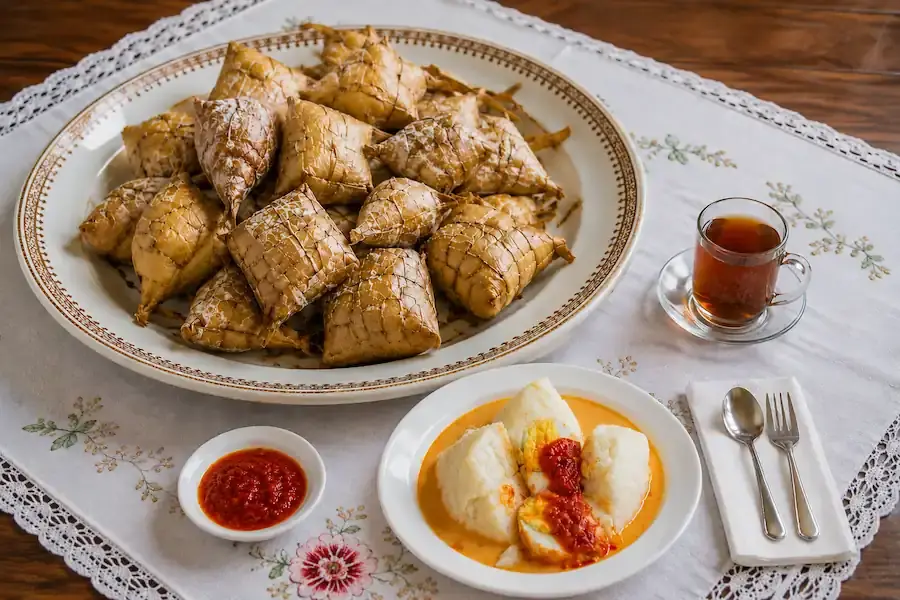
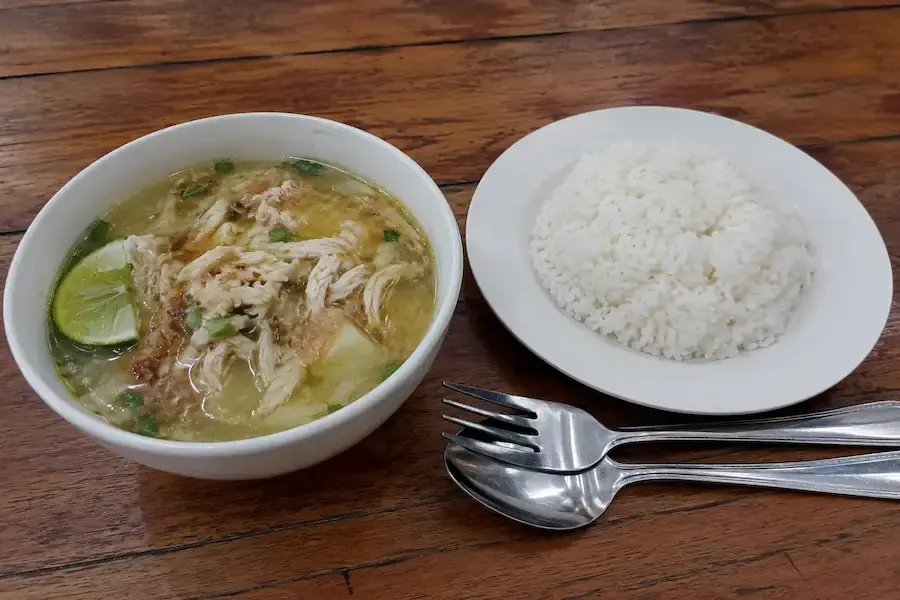
Unfortunately, compared to Soto Banjar or Ketupat Kandangan, Laksa Banjar remains relatively unknown on the national stage.
Yet in terms of flavor, history, and uniqueness, it possesses all the qualities needed to become one of Indonesia’s iconic culinary treasures.
The distinctive coiled noodles, the coconut broth enriched with haruan fish, and the cultural fusion behind its creation make Laksa Banjar one of South Kalimantan’s most remarkable dishes.
Each bowl offers not only a delicious savory taste but also a story of trade, migration, and cultural exchange that has unfolded over centuries.
Ultimately, Laksa Banjar teaches an important lesson: food is often the simplest language through which people from different backgrounds can come together.
Within a bowl of laksa, Chinese and Banjar traditions meet, adapt, and coexist, creating a dish cherished across generations.
And as long as the aromas of coconut milk, spices, and haruan fish continue to rise from the kitchens of South Kalimantan, Laksa Banjar will remain a source of pride for both the Banjar people and Indonesia as a whole.