

The Spirit of Borneo Recognized by the World
In the heart of South Kalimantan lies a vast natural region that preserves millions of years of Earth's history, living cultural traditions, and remarkable biodiversity that Indonesia proudly calls its own.
This region is the Meratus UNESCO Global Geopark, an area that not only offers breathtaking mountain landscapes but also serves as a witness to the extraordinary geological history of the island of Kalimantan.
International recognition finally arrived when UNESCO officially designated Meratus as a UNESCO Global Geopark on April 17, 2025. This status places Meratus alongside some of the world's finest geoparks, recognized for their outstanding geological, cultural, and biodiversity significance to humanity.
For South Kalimantan, this achievement marks a historic milestone, as Meratus became the first geopark on the island of Kalimantan to receive such international recognition.
UNESCO Recognition That Elevated South Kalimantan's Global Profile
Before earning UNESCO Global Geopark status, the Meratus region was first designated as an Indonesian National Geopark on November 29, 2018. After undergoing a rigorous evaluation process, UNESCO ultimately acknowledged the exceptional value of this remarkable area.
Meratus carries the theme "The Spirit of Borneo", reflecting how the region represents the natural heritage, cultural richness, and historical legacy of the island of Kalimantan.
Beyond its geological treasures, Meratus is also home to diverse local traditions that have been preserved and passed down through generations for centuries.
This UNESCO recognition further strengthens South Kalimantan's position as one of Indonesia's premier geotourism destinations, worthy of exploration by both domestic and international travelers.
A Vast Landscape Spanning Six Administrative Regions
The Meratus UNESCO Global Geopark covers an area of approximately 3,645.01 square kilometers, making it one of Indonesia's largest geopark regions. Its territory stretches across six regencies and cities in South Kalimantan: Banjarbaru City, Banjarmasin City, Banjar Regency, Tapin Regency, Hulu Sungai Selatan Regency, and Barito Kuala Regency.
The uniqueness of this region lies in its combination of diverse landscapes. Visitors can encounter mountains, rivers, limestone caves, waterfalls, karst hills, and traditional cultural areas within a single interconnected geopark network.
This diversity makes a journey through Meratus feel like exploring multiple worlds within a single destination.
Exploring 54 Sites Through Four Travel Routes
To help visitors experience the richness of the region, the geopark management has divided the area into four main routes: the northern, eastern, southern, and western routes.
Together, these routes encompass around 54 featured sites that can be explored gradually. Travelers who wish to experience the geopark comprehensively are encouraged to allocate approximately five days for their journey.
However, for first-time visitors, selecting one or two routes is often enough to create a memorable experience.
The southern route is among the most popular, offering a complete combination of nature, geology, and cultural attractions.
A Geological Paradise with Dozens of Fascinating Geosites
One of the main reasons UNESCO recognized Meratus is its exceptional geological wealth. The region contains 76 geosites, locations that preserve valuable information about the Earth's formation and geological evolution.
In addition, there are 6 biosites showcasing Kalimantan's unique biodiversity and 12 cultural sites that reflect the traditions and way of life of local communities.
In Hulu Sungai Tengah Regency, for example, several karst sites have become favorites among researchers and adventure enthusiasts.
The Nateh Village area in Batang Alai Timur District is home to several important locations, including Air Kukup Cave, Berangin Cave, Sulingan Hill, Pono Hill, and Pasulingan Cave.
These caves were formed through geological processes that took place over millions of years, creating breathtaking limestone passages, stalactites, and stalagmites. For nature photographers and adventure seekers, these locations offer some of the most exotic and visually stunning landscapes in South Kalimantan.
Home to the Oldest Ophiolite Formation in Indonesia
The greatest geological distinction of Meratus lies in the presence of the oldest ophiolite formation in Indonesia. Ophiolites are fragments of ancient oceanic crust and the Earth's upper mantle that were uplifted onto land through tectonic processes.
The existence of this formation provides valuable evidence about the geological evolution of Kalimantan and the movement of tectonic plates in prehistoric times. Very few places in the world preserve such a complex and well-exposed geological record as the Meratus region.
For this reason, Meratus has become an important destination for geological research, attracting scientists, academics, and researchers from both Indonesia and abroad.
In addition to its ophiolite formations, the region is also known for containing significant diamond deposits. The historical connection between the Meratus Mountains and South Kalimantan's diamond mining industry adds another fascinating dimension to the area's geological and economic significance.
A Living Cultural Landscape
Meratus is not solely about rocks and spectacular landscapes. The geopark is also home to communities that continue to preserve their ancestral heritage and traditional way of life.
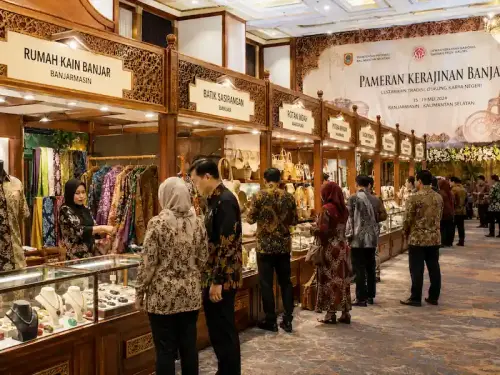
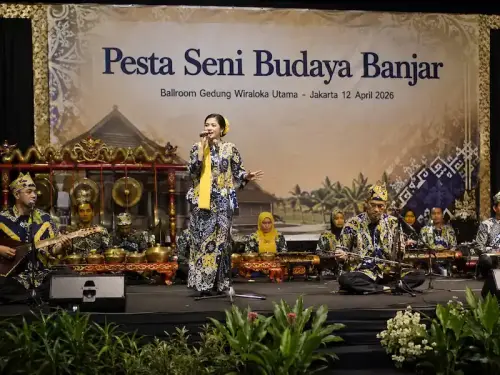
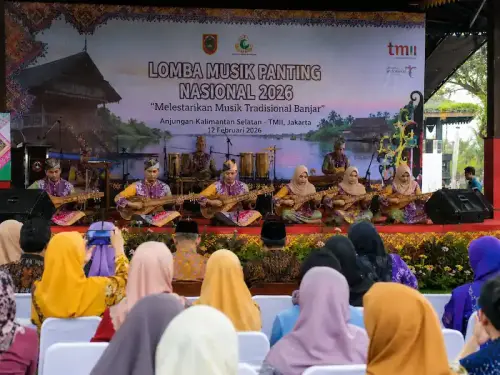
The two major cultural groups associated with the geopark are the Banjar people and the Dayak Meratus people. Many Dayak Meratus communities living in the mountainous interior continue to uphold customs, ceremonies, and traditional knowledge that have been passed down through generations.
Visitors are offered more than scenic beauty. They also have the opportunity to learn about local wisdom and sustainable practices that are closely connected to environmental conservation. For local communities, nature is not merely a resource for survival but an integral part of their identity and cultural heritage.
This harmonious relationship between people and nature is one of the fundamental values promoted by the UNESCO Global Geopark concept.
Exciting Activities for Every Traveler
Meratus offers a wide variety of experiences for visitors. Adventure enthusiasts can explore limestone caves such as Air Kukup Cave, Berangin Cave, and Pasulingan Cave, each featuring remarkable underground formations and natural beauty.
For trekking enthusiasts, Sulingan Hill and Pono Hill provide rewarding hiking routes with spectacular views of the Meratus Mountain Range. From their summits, vast expanses of Kalimantan's tropical rainforest stretch toward the horizon.
Visitors can also enjoy waterfalls scattered throughout the region, capture dramatic landscape photography, study geological formations, observe wildlife, and interact with local communities.
For students, researchers, and academics, Meratus serves as an invaluable open-air laboratory for studying geology, biodiversity, anthropology, ecology, and environmental conservation.
The Best Time to Visit Meratus
The dry season, typically from April to September, is considered the ideal time to explore the geopark. During these months, trekking trails are generally safer, mountain views are clearer, and outdoor activities can be enjoyed more comfortably.
During the rainy season, however, some hiking routes may become slippery, while water levels in certain caves can rise significantly, requiring additional caution.
Because many sites are located in mountainous and remote areas, private vehicles or rental cars are the most practical transportation options. Some destinations also require trekking journeys ranging from one to three hours from the nearest villages.
A World-Class Geotourism Destination from South Kalimantan
Meratus UNESCO Global Geopark stands as proof that South Kalimantan possesses natural and cultural treasures recognized on a global scale.
UNESCO recognition is not only an honor for the region but also a responsibility to preserve its geological heritage, biodiversity, and living cultural traditions for future generations.
With 76 geosites, 6 biosites, 12 cultural sites, the majestic Meratus Mountains, Indonesia's oldest ophiolite formations, and thriving indigenous communities, Meratus offers an experience that goes far beyond conventional nature tourism.
For anyone seeking to discover the true spirit of Borneo, explore millions of years of Earth's history, and witness the harmonious relationship between people and nature, Meratus UNESCO Global Geopark deserves a place on their travel itinerary.