
The Union of Five Cultures in One Bowl of Broth
When discussing the traditional cuisine of South Kalimantan, one name almost always appears at the very top of the list: Soto Banjar.
This dish is more than just a comforting bowl of soup. It is a cultural heritage that carries a long story of trade, encounters between different civilizations, and centuries of Indonesian history.
Behind a seemingly simple bowl of Soto Banjar lies the legacy of merchants from various corners of the world who once visited Banjarmasin.
Every spoonful of its broth tells the story of how Chinese, Indian, Arab, Dutch, and Banjar cultures blended together, creating a flavor that continues to be loved throughout Indonesia today.
From the Spice Routes to the Dining Table
The history of Soto Banjar is believed to have begun developing after 1563, when Banjarmasin became one of the most important trading centers in the Indonesian archipelago. At the time, the Banjar Sultanate was renowned as a major producer of pepper, a commodity highly sought after in international markets.
Merchant ships from many nations arrived carrying not only goods but also their cultures and culinary traditions.
One of the strongest influences came from Chinese traders. Many culinary historians believe that the word "soto" originated from the Hokkien term "jao to" or "cao do", referring to an offal-based dish cooked with various spices.
Over time, the term was adapted to local pronunciation and eventually became the word "soto" that Indonesians know today.
However, Soto Banjar did not remain merely a Chinese culinary adaptation. It continued to evolve alongside the Banjar people, who were open to outside influences. This process gave birth to a unique dish that became the result of cultural acculturation from multiple civilizations.
A Fusion of Five Cultures in One Bowl
One of the most fascinating aspects of Soto Banjar is that it represents the meeting point of five major cultures.
Chinese influence can be seen in the basic concept of a spiced soup dish and certain cooking techniques introduced by early settlers and traders.
From India, Soto Banjar inherited a subtle curry touch. Although it is not as intense as traditional Indian curries, traces of this influence remain evident in the complexity of the broth's flavor.
Arab culture contributed aromatic spices such as cloves, cardamom, and cinnamon. These spices were once highly valuable commodities traded along maritime routes.
Meanwhile, Dutch influence appears in the use of milk in the broth. Some traditional Soto Banjar recipes incorporate evaporated milk to create a richer texture and a smoother savory taste.
All of these influences were then refined by the Banjar people into a distinct culinary identity. The result is a dish unlike any other found elsewhere.
The Secret Behind Soto Banjar's Delicious Flavor
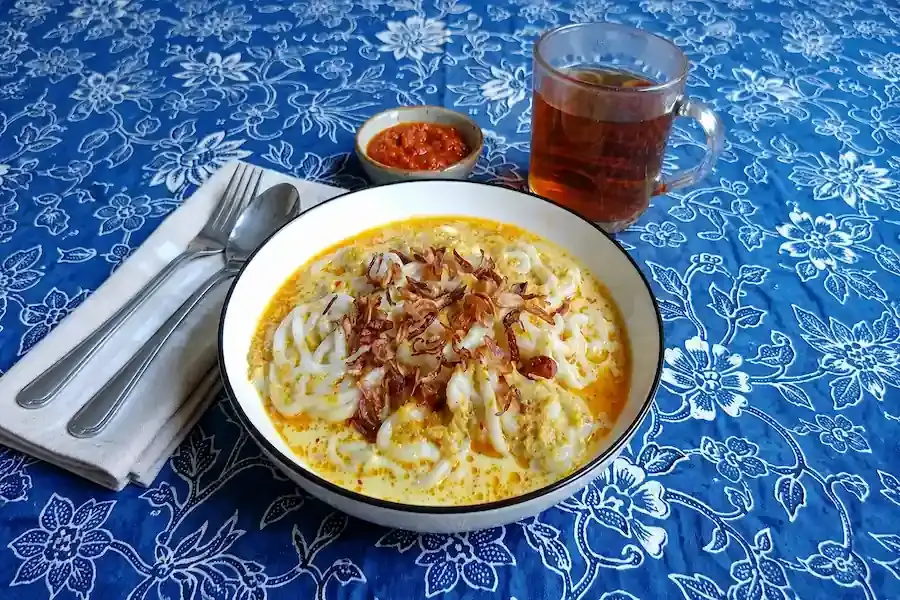
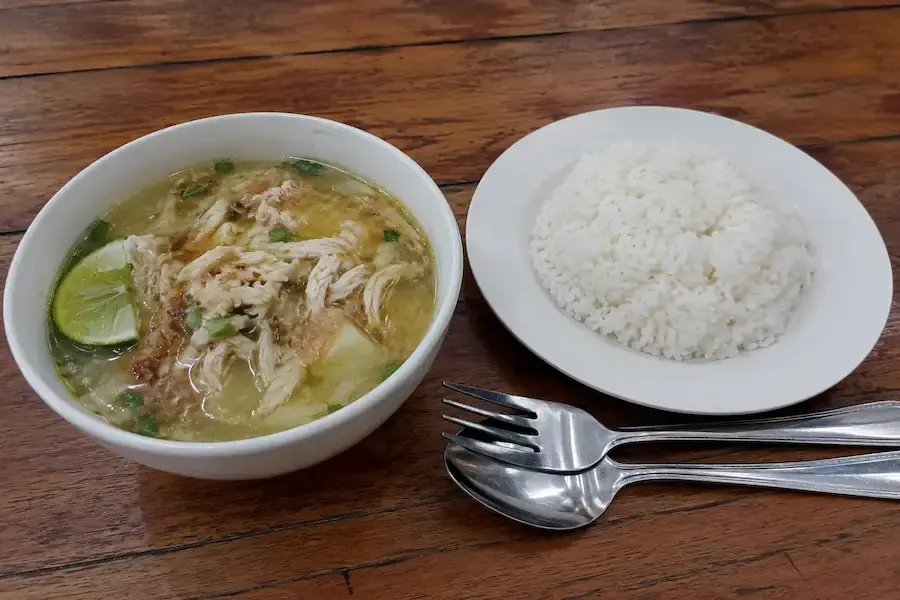
The uniqueness of Soto Banjar lies in its carefully selected ingredients. Unlike many other Indonesian soto varieties that feature a thick yellow broth, Soto Banjar has a clear soup that appears simple yet is remarkably flavorful.
Free-range chicken is the most commonly used main ingredient, although some variations use beef. The broth is prepared from chicken stock combined with a blend of premium spices.
Shallots and garlic form the foundation of the flavor. Black pepper provides a gentle warmth, while cinnamon adds a delicate sweet aroma. Nutmeg, cloves, cardamom, and star anise contribute the distinctive character that makes Soto Banjar recognizable even before the first taste.
The garnishes are equally appealing. A typical bowl contains glass noodles, carrot slices, potato fritters, boiled duck egg slices, and fresh celery. Some vendors also add coconut milk or evaporated milk to enrich the broth.
This combination creates a savory, aromatic, and complex flavor profile without ever feeling overwhelming.
Different from Other Indonesian Soto Varieties
Indonesia is home to dozens of soto varieties stretching from Sabang to Merauke. There is Soto Lamongan, known for its yellow broth and koya topping, Soto Betawi with its rich coconut milk base, and Coto Makassar, which features offal and peanuts.
Soto Banjar, however, possesses a character all its own.
The first thing people notice is its clear broth, which resembles a soup. Despite its light appearance, the aroma is exceptionally rich due to the generous use of high-quality spices.
With every sip, the savory flavor of chicken blends harmoniously with the fragrance of cardamom, nutmeg, and cinnamon. There is also a subtle sweetness, not from sugar but from the natural character of the spices themselves.
For this reason, many first-time visitors are pleasantly surprised. What looks like a simple broth actually reveals layers of remarkably complex flavors.
A Favorite Dish Passed Down Through Generations
In South Kalimantan, Soto Banjar is far more than an everyday meal. It has become an integral part of the region's cultural identity.
Soto Banjar is commonly enjoyed for breakfast or lunch. Many food stalls become busy early in the morning because people believe a bowl of Soto Banjar provides the energy needed to start the day.
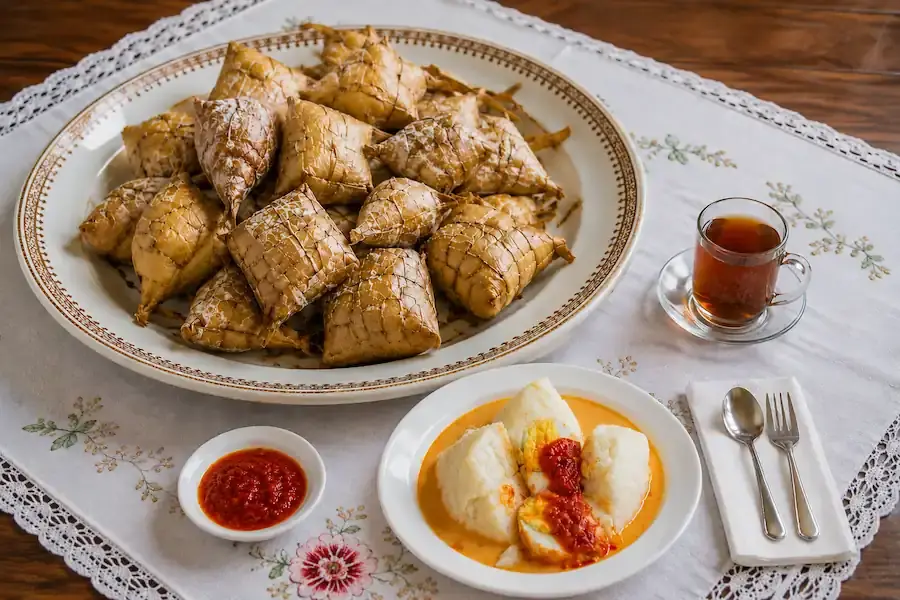
It is typically served with ketupat or lontong. The combination of warm broth and soft rice cakes creates a satisfying balance of flavors and textures.
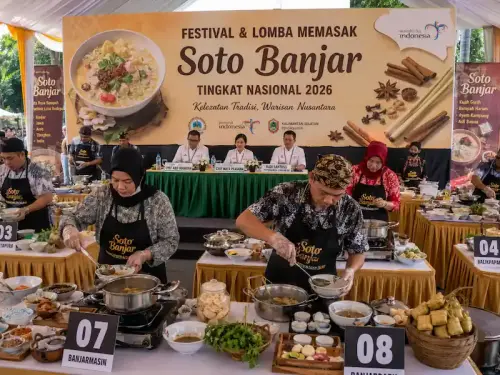
Interestingly, Soto Banjar also holds an important place in traditional ceremonies. From wedding celebrations and family gatherings to cultural festivities, its presence is often considered essential.
It is no exaggeration to say that Soto Banjar has become a unifying dish for the Banjar people. Whenever extended families gather or guests arrive from outside the region, this dish is frequently served as a symbol of hospitality and respect.
Loved Throughout Indonesia
The popularity of Soto Banjar has long extended beyond the borders of South Kalimantan. Restaurants and food stalls serving this dish can now be found in many major Indonesian cities.
People appreciate it because it offers rich flavors while remaining light and easy to enjoy. Unlike some coconut milk-based soups that can feel heavy, Soto Banjar remains comfortable to eat at any time of day.
With an average price ranging from approximately IDR 28,000 to IDR 32,000 per serving (prices may vary), Soto Banjar is also considered affordable. The portions are filling, especially when accompanied by ketupat, potato fritters, and duck eggs.
It is no surprise that many travelers visiting South Kalimantan place Soto Banjar at the top of their must-try culinary list.
More Than Just a Meal
Ultimately, Soto Banjar is about more than flavor alone. It stands as proof that cultural differences do not always lead to conflict. On the contrary, the meeting of diverse civilizations can create something beautiful—and delicious.
Within a single bowl of Soto Banjar, one can discover traces of Chinese merchants, the aroma of Arab and Indian spices, Dutch European influences, and the creativity of the Banjar people who transformed them into a unique culinary identity.
Perhaps that is why Soto Banjar continues to endure and remain beloved today. It is not merely a traditional dish but also a symbol of openness, unity, and the cultural richness of the Indonesian archipelago.
Every time we enjoy a warm bowl of Soto Banjar, we are tasting more than just broth and chicken. We are experiencing a living piece of Indonesian history, fragrant with spices that have connected many nations for hundreds of years.