
A Distinctive Oral Art of South Kalimantan Filled with Humor, Wisdom, and History
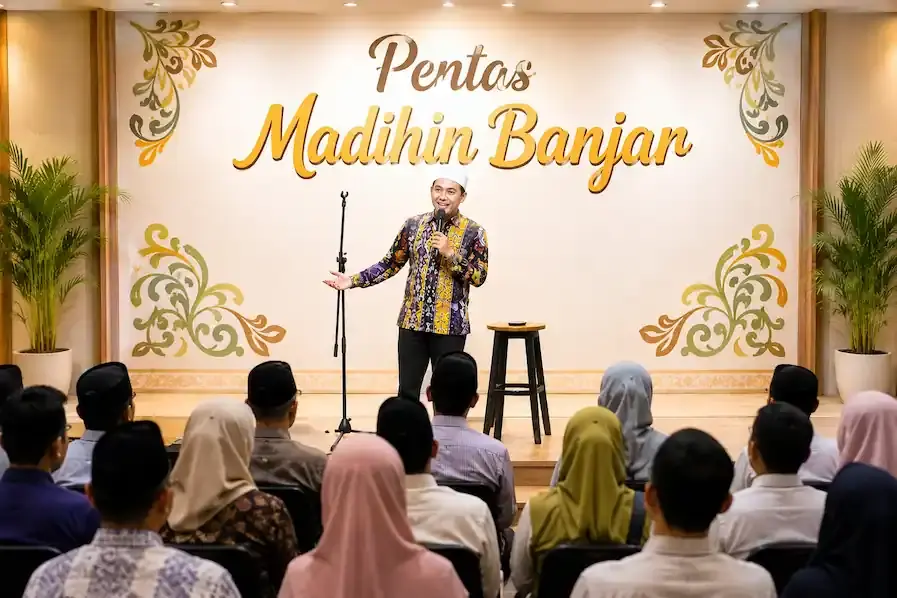
Banjar Madihin is one of the most distinctive and iconic traditional art forms of South Kalimantan. This art form thrives within Banjar society as an oral performance that combines poetry, pantun, humor, advice, and the rhythmic beats of the rebana drum into a dynamic and engaging presentation.
Long before stand-up comedy became popular in Indonesia, madihin had already pioneered a form of oral performance that entertained audiences while delivering social criticism throughout South Kalimantan. Madihin is believed to have developed as early as the 1800s, and some sources even suggest that the tradition has existed since the spread of Islam in South Kalimantan during the 16th century, whereas modern stand-up comedy in Indonesia only began gaining widespread popularity after 2011.
Both forms share similarities in their monologue format, typically performed by one or two artists, using humor and clever satire to convey messages while maintaining interaction with the audience.
However, madihin is not entirely the same as stand-up comedy, as it serves a much broader purpose.
In addition to entertaining audiences and delivering social criticism, madihin also functions as a medium for Islamic preaching, moral guidance, and the preservation of Banjar cultural identity through the accompaniment of the rebana or the traditional madihin drum. Stand-up comedy, by contrast, primarily focuses on entertainment and social commentary without religious or musical elements.
In many traditional ceremonies, religious gatherings, and family celebrations, madihin is present not merely as entertainment but also as a vehicle for conveying moral values, social criticism, and the strong cultural identity of the Banjar people.
For the Banjar community, madihin is far more than an ordinary stage performance. It is an oral art form born from tradition, shaped by the social life of the people, and preserved to this day because of its ability to adapt to changing times without losing its cultural roots.
Amid modernization and the rise of digital entertainment such as contemporary music, films, and social media content, madihin continues to hold a special place because of its flexibility, closeness to the audience, and meaningful content.
What is Banjar Madihin?
Madihin is an oral art form performed through storytelling or singing in the form of rhythmic poetry and pantun. The performer is known as a pamadihinan (often simply called a madihin performer), an artist capable of crafting words spontaneously, humorously, and with meaningful messages.
Madihin is usually performed by one or two individuals, accompanied by percussion instruments such as the rebana, the madihin drum, or sometimes a small gong that provides its distinctive rhythm.
What makes madihin especially fascinating is its lively and flexible nature. The content of a performance can be adjusted to suit the occasion, the audience's mood, and even topics that are currently being discussed. At times, madihin contains profound religious advice; at other times, it offers clever social satire, or simply serves to make the audience laugh wholeheartedly.
This combination is what makes madihin a folk art form deeply connected to the daily lives of the Banjar people.
A pamadihinan typically possesses the ability to memorize numerous pantun verses, compose lines spontaneously, and interact directly with the audience. They often succeed in making audiences laugh, sing along, or respond enthusiastically with cheers and applause.
The History of Banjar Madihin
The history of Banjar madihin is closely linked to the spread of Islam in South Kalimantan. Many local historical sources and cultural records state that madihin developed alongside the dissemination of Islamic teachings, particularly through traditions of poetry, praises to the Prophet, and moral guidance commonly found in Islamic culture.
Influenced by these traditions, madihin evolved into an oral art form that not only entertains but also carries educational and religious values.
In earlier times, madihin is said to have been performed as entertainment within the Banjar Sultanate Palace and among certain social circles before eventually spreading to the wider community.
From there, madihin became an integral part of Banjar folk traditions, commonly featured at celebrations, weddings, circumcision ceremonies, customary gatherings, and various other social events.
The history of madihin demonstrates that this art form is not static. It has evolved alongside changing times while preserving its Banjar cultural foundations.
That is why madihin remains widely recognized today as a traditional art form with a strong identity, continuously preserved and promoted by younger generations.
Characteristics of Madihin
Banjar Madihin has several distinctive characteristics that set it apart from other forms of oral performance such as traditional pantun recitations, lenong, or droso.
First, madihin is performed in the distinctive Banjar language. As a result, the performance feels highly local and familiar to the community. The use of the Banjar language allows audiences to connect immediately with the content of the performance.
Second, madihin contains a strong element of improvisation. Although there is usually a theme or general framework, the pamadihinan often composes verses spontaneously according to the situation. This is what makes every madihin performance unique and never exactly the same as a previous one.
Third, madihin is always accompanied by a musical rhythm. The beats of the rebana or madihin drum provide a rhythmic foundation that supports the recited verses. This rhythm makes the performance more lively, engaging, and enjoyable for the audience to follow.
Fourth, madihin typically combines humor and advice within the same verse. Audiences may laugh at the witty lines while simultaneously absorbing the moral messages being conveyed.
This dual nature makes madihin effective not only as entertainment but also as a subtle educational medium.
Fifth, madihin is interactive. Pamadihinan performers often encourage audience participation, invite people to sing along, or respond to comments, making the performance feel personal and engaging rather than one-sided.
The Role of Madihin in Society
Banjar Madihin serves many important social functions within the community:
As a form of entertainment, madihin is frequently performed at family celebrations such as weddings, circumcision ceremonies, thanksgiving gatherings, and commemorative events. In these settings, madihin helps create a joyful atmosphere and brings people together.
As a medium for advice and guidance, madihin often delivers messages about life, religion, manners, and social relationships. These messages are presented in a light and approachable way, making them easy to understand without sounding preachy.
As a medium for Islamic preaching, madihin is often used to communicate religious teachings in a way that is accessible and appealing to the community. Topics may include prayer, fasting, moral conduct, and love for the Prophet Muhammad (PBUH).
Because it is rooted in the oral traditions of Islam, madihin serves as an effective and natural form of religious outreach.
As a means of social criticism, madihin can address community issues through clever satire without creating conflict or tension.
Issues related to the environment, education, or the behavior of public figures can be criticized in a subtle and indirect manner.
As a symbol of cultural identity, madihin also represents the unique cultural identity of the Banjar people and distinguishes them from other ethnic groups. The preservation of this art form strengthens community pride in their own cultural heritage.
Traditional Attire in Madihin Performances
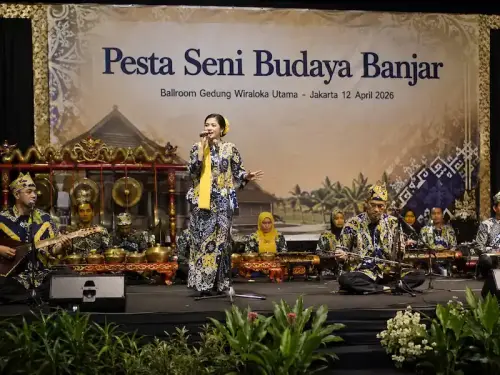
In terms of clothing, pamadihinan performers usually appear in attire that is neat, modest, and appropriate to the occasion. When the performance takes place within a traditional or cultural setting, traditional Banjar clothing is often worn to enhance the authentic atmosphere.
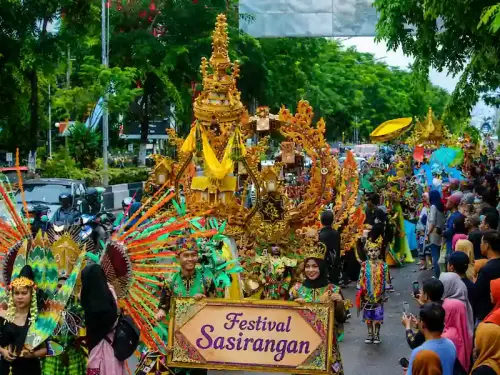
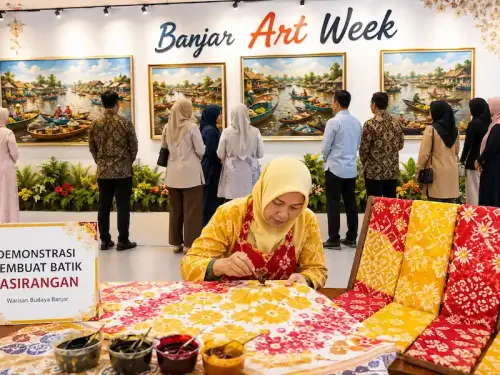
Traditional Banjar attire commonly includes baju kurung or Banjar bridal attire for women, baju teluk belanga or baju kampua for men, sasirangan fabric used as a shawl or decorative cloth, and a kopiah or songkok as headwear.
However, in certain events, costumes may be adapted to suit the stage theme or the formal nature of the occasion. The most important aspect of madihin attire is that it appears respectful and attractive. Since madihin is a public performance, the appearance of the pamadihinan is generally designed to reflect neatness, dignity, and Banjar cultural identity.
In this way, clothing is not merely an accessory but also an important part of the overall image of the performance.
Madihin in the Modern Era
Although it is considered a traditional art form, madihin continues to survive in the modern era. Several factors contribute to its continued relevance:
Adaptability is the most important factor. Madihin can adjust its content to reflect contemporary developments. Themes may include education, environmental issues, politics, technology, health, and various aspects of modern daily life.
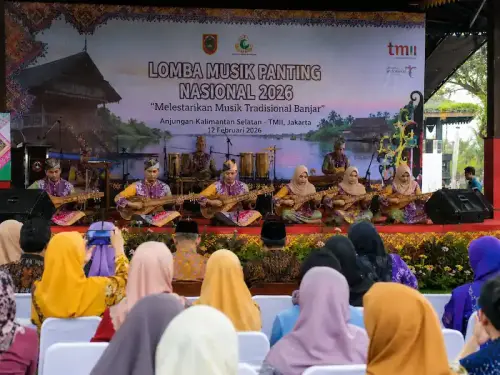
Performances at official events also help sustain its popularity. Today, madihin is frequently featured at government functions, cultural festivals, traditional arts competitions, and heritage preservation programs throughout South Kalimantan.
Digitalization has opened new opportunities. Through social media platforms such as YouTube, Instagram, TikTok, and other video-sharing services, madihin can reach wider audiences, particularly younger generations. Many young pamadihinan performers now upload recordings of their performances and attract thousands of viewers.
Generational succession is also beginning to take place. The future of madihin depends greatly on the willingness of younger people to learn and preserve it. Several cultural institutions and schools in South Kalimantan have started incorporating madihin into arts curricula and extracurricular programs.
Conclusion
Banjar Madihin is a distinctive oral art form of South Kalimantan that combines pantun, poetry, music, humor, and moral messages within a lively and dynamic performance. Its long history, broad social functions, and ability to adapt have enabled madihin to remain relevant to this day.
It is not merely a form of folk entertainment but also a reflection of the wisdom and cultural richness of the Banjar people.
Behind its laughter and seemingly lighthearted rhythms lies a powerful foundation of education, religious guidance, and cultural identity. Therefore, preserving madihin means safeguarding one of Banjar's most valuable cultural treasures so that it can continue to be appreciated by future generations.
Amid the forces of globalization, madihin stands as proof that local culture can continue to live, evolve, and remain meaningful within modern society.