
A Dance that Depicts Agility and Self-Defense
Among the many classical dances that flourished within the Banjar Sultanate court, Baksa Dadap Dance holds a unique position. While Baksa Kembang Dance is known for its graceful movements and serves as a symbol of respect for honored guests, Baksa Dadap presents another side of Banjar culture—one characterized by courage, agility, and a strong warrior spirit.
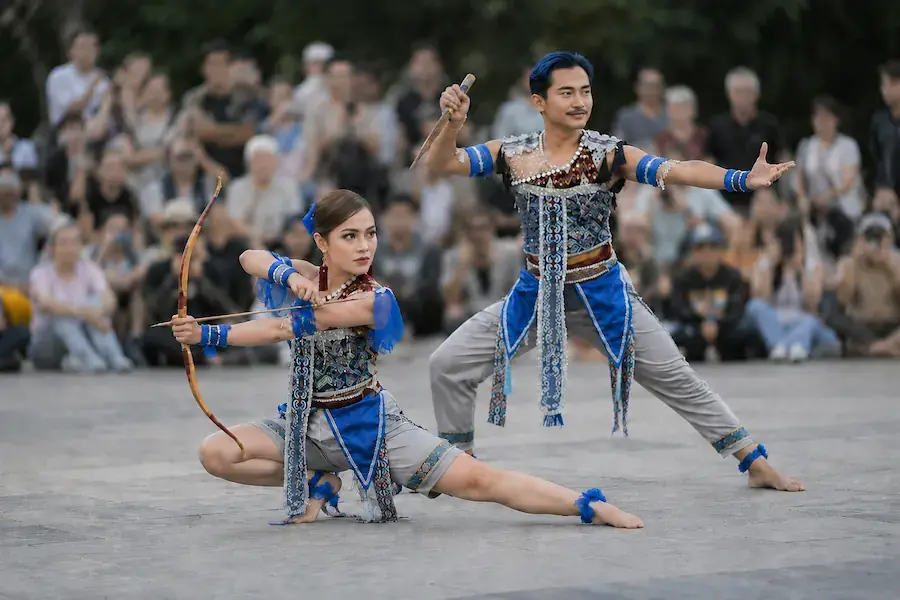
This dance portrays a warrior defending himself against various threats using a bow and arrows. Its movements are fast, dynamic, and full of energy, reflecting the readiness of a fighter who must confront attacks coming from different directions.
Through Baksa Dadap Dance, the Banjar people pass down an image of a resilient, alert, and determined warrior who never gives up.
The History of Baksa Dadap Dance from the Banjar Royal Court
Baksa Dadap Dance originates from South Kalimantan and belongs to the group of classical dances of the Banjar court. The existence of this dance has been known since the era of the Banjar Kingdom and was even recorded in reports written by Dutch visitors who visited the Banjar palace during the kingdom’s final years.
Its origins are believed to date back to the Hindu period before the spread of Islam in South Kalimantan. During the same era, various other Baksa dances also emerged, including Baksa Kembang, Baksa Lilin, Baksa Panah, and Baksa Tameng.
All of these dances became important elements of the royal performing arts tradition that developed within the Banjar Kingdom.
As a court dance, Baksa Dadap was originally performed exclusively within aristocratic circles and the royal family. Its performances formed part of palace traditions that reflected the values of heroism and the readiness of warriors to defend the kingdom.
The Meaning of the Name “Dadap” and the Weapons Used
The name "Dadap" refers to the primary props used in this dance: a bow and arrows. These weapons are carried directly by the dancer throughout the performance and serve as the key element that distinguishes Baksa Dadap from other Banjar dances.
The bow and arrows are not merely visual accessories but symbols of a warrior’s preparedness to face danger. Within royal culture, mastery of weapons was a highly valued skill because it was closely associated with the responsibility of safeguarding the realm and protecting the people.
The presence of the bow and arrows in Baksa Dadap Dance also demonstrates the dance’s close connection to the martial traditions that once flourished in South Kalimantan.
Distinctive Movements Full of Agility
One of the main attractions of Baksa Dadap Dance is its highly dynamic movement pattern. Unlike many classical Banjar dances that tend to be gentle and flowing, Baksa Dadap features swift and powerful movements.
Dancers frequently perform leaps while lifting one leg. These movements are repeated at a relatively fast tempo, creating an impression of agility and vigilance.
Within the choreography, the dancer appears to be confronting attacks from multiple directions and must constantly move to avoid danger.
This active movement style creates a performance atmosphere that differs significantly from welcoming dances or palace entertainment dances. Audiences can feel the tension and fighting spirit that lie at the heart of Baksa Dadap Dance.
Beyond its movements, the artistic elements of the dance are also evident in the decorative motifs used. Some ornaments feature stars and symbolic creatures carved in intricate detail, demonstrating the high aesthetic value of Banjar artistic traditions.
The Philosophy of Defensive Movements in Baksa Dadap Dance
Behind every energetic movement, Baksa Dadap Dance carries a profound philosophy. The dance does not merely depict scenes of combat but also conveys the noble values upheld by the Banjar people.
The one-legged jumping movements symbolize a warrior's agility in dealing with uncertain situations. A fighter must be able to move quickly, make accurate decisions, and maintain balance even under difficult circumstances.
The speed of the movements serves as a symbol of dexterity and vigilance. In real life, a royal guardian was expected not only to be brave but also capable of reading situations and responding swiftly to threats.
Meanwhile, the concept of defending oneself against attacks coming from all directions symbolizes the responsibility to protect the kingdom’s territory, family, community, and honor.
This philosophy demonstrates that courage is not always expressed through attack, but also through the ability to endure and safeguard what is valuable.
The balance required to perform the jumps also reflects a warrior’s mental equilibrium. Even when under pressure, he must remain calm, focused, and capable of self-control.
The Difference Between Baksa Dadap Dance and Baksa Panah Dance
At first glance, Baksa Dadap Dance and Baksa Panah Dance appear similar because both use a bow and arrows as their primary props. However, a closer look reveals that the two dances are based on different concepts.
Baksa Dadap Dance focuses on defensive movements. The dancer is portrayed as facing threats from various directions and attempting to defend himself using the weapons he carries.
The movements emphasize agility, vigilance, and the ability to survive under pressure.
In contrast, Baksa Panah Dance places greater emphasis on archery skills. Its choreography depicts a warrior’s ability to accurately aim at a target. The dance primarily highlights archery techniques, precision, and offensive capabilities.
In other words, Baksa Dadap portrays a warrior defending himself against attacks, while Baksa Panah portrays a knight demonstrating his mastery of archery.
The Influence of Warrior Culture in Classical Banjar Dance
Baksa Dadap Dance cannot be separated from the martial traditions that once flourished within Banjar society. The values of courage, agility, and readiness expressed through this dance reveal the influence of warrior culture on classical Banjar performing arts.
This influence can also be seen in several other Baksa dances, such as Baksa Panah and Baksa Tameng, both of which share themes of heroism and combat skills.
Together, these three dances represent the world of warriors that developed within the royal court.
However, historical developments eventually brought significant changes. Following the end of the Banjar War in 1859–1866 and the arrival of new cultural influences, the functions of court arts gradually underwent transformation.
Dances that once emphasized warfare and defense slowly evolved into forms of palace entertainment and ceremonial performances for welcoming guests.
This transformation is particularly evident in Baksa Kembang Dance, which places greater emphasis on hospitality, respect, and refined manners rather than martial values.
Nevertheless, Baksa Dadap Dance has retained its original character as a dance that embodies the spirit of struggle and self-defense.
Musical Accompaniment that Brings the Atmosphere of Battle to Life
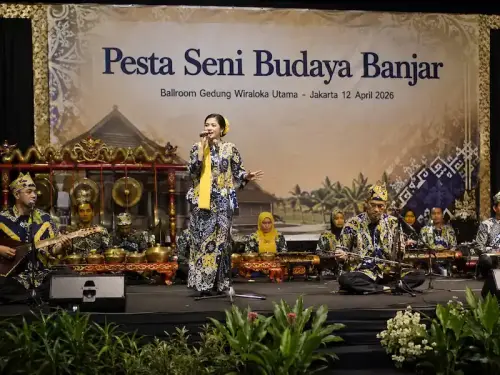
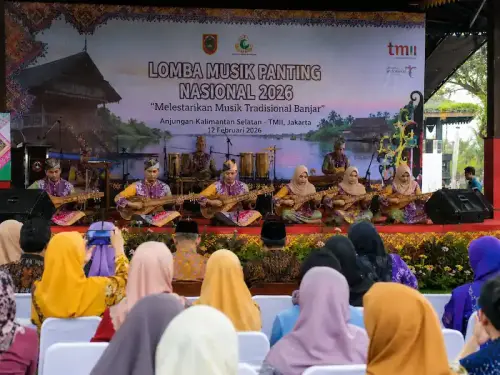
Like most other classical Banjar dances, Baksa Dadap Dance is accompanied by the sounds of the Banjar gamelan ensemble. The musical rhythms help create the atmosphere of the performance, making the dancers’ rapid movements feel even more vivid and engaging.
The resonance of the gamelan instruments blends with the dynamic choreography, creating the image of a warrior who is constantly prepared to face challenges. The music serves not only as accompaniment but also as an essential element that strengthens the heroic character of the dance.
A Legacy of Heroism in Banjar Culture
Baksa Dadap Dance is one of the cultural legacies that reflects the heroic spirit of the Banjar people in the past. Through its swift movements, agile leaps, and the use of bows and arrows, the dance portrays a warrior who courageously protects the honor and security of his land.
More than simply an artistic performance, Baksa Dadap Dance symbolizes the qualities of a true warrior—courage, resilience, discipline, and readiness to face various challenges.
These values remain relevant today and make Baksa Dadap Dance one of South Kalimantan’s cultural treasures worthy of preservation.
Amid the dominance of gentle and graceful welcoming dances, Baksa Dadap Dance serves as a reminder that Banjar culture also possesses a strong martial heritage, reflected in every step, leap, and defensive movement performed by its dancers.