
Sacred Rituals, Ancestral Masks, and Mystical Stories Still Alive in Banyiur Luar
Tari Manopeng, A Sacred Ancestral Tradition That Endures in Banjarmasin
Amid the rapid modernization of Banjarmasin, an ancient tradition continues to survive through the passage of time.
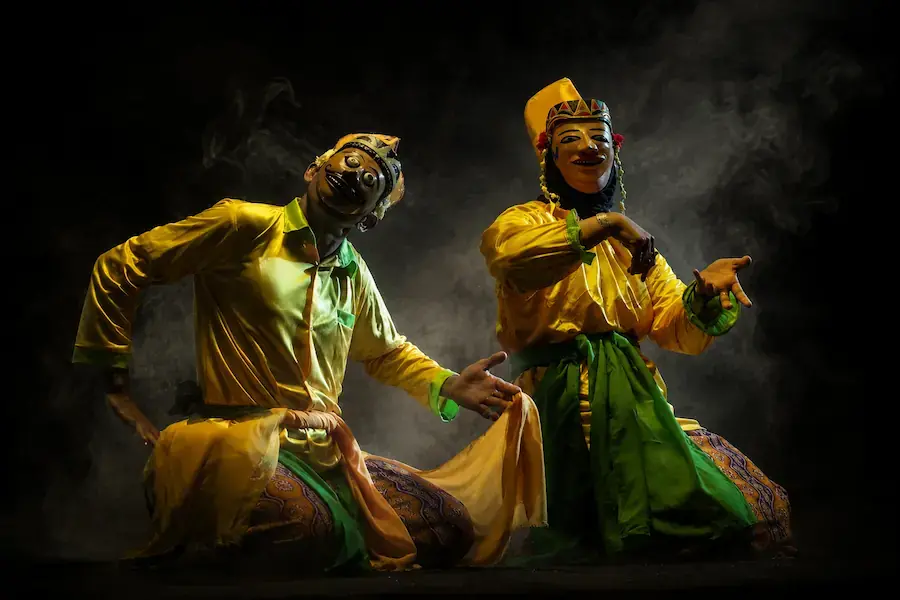
This tradition is known as Tari Manopeng, or Batopengan, a sacred masked ritual of the Banjar people that is still performed today by the descendants of Datu Mahbud in Banyiur Luar, Basirih Village, West Banjarmasin District, South Kalimantan.
To outsiders, Manopeng may appear to be a traditional cultural performance featuring dances and ancient masks.
For the community that preserves it, however, Manopeng is an ancestral ritual rich in spiritual values, prayers for protection, and a connection between humans and the unseen world that is believed to continue accompanying their lives.
This uniqueness has made Tari Manopeng one of the most mystical cultural traditions in South Kalimantan. Beyond its long historical significance, the ritual continues to preserve sacred elements rarely found in modern performing arts.
In recognition of its cultural and historical importance, Tari Manopeng has been officially designated as an Indonesian Intangible Cultural Heritage.
The History of Tari Manopeng and the Legacy of Datu Mahbud
The history of Tari Manopeng is inseparable from the figure of Datu Mahbud, who is regarded as the principal heir of this tradition. According to stories passed down through generations among his descendants, the ritual has been practiced for approximately 150 years and has survived through five generations.
Some oral traditions even trace the roots of Manopeng back to the era of the ancient Negara Dipa Kingdom that once flourished in South Kalimantan.
Although much of its history survives through folklore, the supporting community firmly believes that this tradition has been part of their family identity for centuries.
In its early development, Manopeng served as a spiritual ceremony when communities opened new lands for settlement. The ritual was believed to invoke protection for those who would inhabit the new area.
Over time, its function expanded into a harvest thanksgiving ritual, a means of strengthening family ties, a village-cleansing ceremony, and a ritual to ward off misfortune and seek protection from various calamities.
For the family entrusted with preserving the tradition, Manopeng is far more than a cultural obligation. It is regarded as a sacred ancestral mandate that must be maintained.
A long-held belief states that if the annual ritual is not performed according to tradition, various disturbances may affect the heirs, ranging from prolonged illness to events that are difficult to explain rationally.
This belief is one of the main reasons why the ritual continues to endure today.
An Annual Ritual Held Only During Muharram
Unlike ordinary performances that can be held at any time, Tari Manopeng is performed only once a year.
The Banjar community refers to this period as "turun bulan" , which occurs during Muharram, the first month of the Islamic calendar. This moment is considered the appropriate time to conduct rituals of protection and honor ancestral spirits.
The entire ceremony usually lasts for three days. The procession begins on Friday and concludes on Monday morning, while the main ritual takes place on Sunday when all the principal masks are performed in sequence.
Because it is held only once a year, many visitors travel from different regions to Banyiur Luar to witness this increasingly rare tradition.
Sacred Preparations Before the Performance Begins
In the Manopeng tradition, the dance performance itself is only one part of a much larger ritual sequence.
Before the dance begins, the host family prepares various offerings, known as piduduk, consisting of traditional Banjar foods. The offerings may include as many as 41 varieties of Banjar cakes, accompanied by bitter coffee, sweet coffee, coconut milk mixed with sugar, and numerous other ceremonial items.
Another important ceremony is melabuh, the ritual of floating some of the offerings on the Martapura River. This tradition serves as a form of respect for ancestors and symbolizes harmony between humans and nature.
Following this is the tampung tawar or batapung tawar ritual, in which blessed water is sprinkled around the performance area as a prayer for safety and protection throughout the ceremony.
As the music begins and the scent of incense fills the venue, the community believes that ancestral spirits arrive to witness the unfolding of the Manopeng ritual.
Sacred Ancestral Masks, the Soul of the Performance
The most important element of Tari Manopeng is the collection of sacred masks that have been passed down from generation to generation.
Today, approximately thirty ancestral masks are still preserved and used during the ritual. Each mask possesses its own character, purpose, and symbolic meaning.
The appearance of the Seven Heavenly Maidens usually opens the performance. These figures symbolize purity, beauty, and the beginning of the spiritual journey within the ritual.
They are followed by Panji, a character widely known throughout classical Indonesian literature. The masks Pantul or Pentul and Tembam or Tambam then appear as intermediary figures connected with the offerings and other ritual elements.
Numerous additional characters enrich the performance, including Gunung Sari, Kelana, Patih, Tumenggung, Lambang Sari, Ranggajiwa, Pamambi, Pamimdu, Arjuna, Bima, and an elderly female figure, each carrying distinct symbolic significance within Banjar tradition.
Yet among all these masks, one figure is regarded as the most sacred and eagerly awaited: Sangkala.
Sangkala, the King of Masks in the Manopeng Tradition
Sangkala occupies the highest position in the hierarchy of Manopeng masks. This figure is often referred to as the King of Masks and is also known in certain traditions as Batarakala or Gajah Barung.
Sangkala always appears at the conclusion of the performance. According to local belief, the figure serves to cleanse any negative energies that may have emerged during the ritual.
Sangkala is believed to drive away illness, malevolent spirits, misfortune, and various forms of negative influence that threaten the well-being of the community.
Another unique aspect concerns the selection of the Sangkala performer. There is no formal appointment process. Instead, the community believes that Sangkala itself chooses the person who will serve as its medium.
As a result, it is not uncommon for someone who initially attended only as a spectator to suddenly enter a trance state, don the Sangkala mask, and dance until the ritual concludes.
This phenomenon makes the final stage of Manopeng both the most anticipated and the most mysterious moment of the entire ceremony.
Manopeng Dancers and the Tradition of Trance
Unlike most traditional dances that emphasize technical training and choreography, Manopeng possesses a distinctly different character.
Traditionally, only descendants of Datu Mahbud are permitted to become principal performers. They are believed to share a spiritual connection with the ancestors who safeguard the ritual.
In practice, dancing ability is not always the primary requirement. Many stories recount individuals with no dance training suddenly moving gracefully and skillfully while in a trance state.
Trance possession is among the most frequently discussed aspects of the tradition. When the masks are worn, some dancers are believed to enter an altered state of consciousness. Their movements become more spontaneous, dynamic, and often unlike their everyday behavior.
During some ceremonies, spectators have reportedly experienced similar conditions and joined the dancers in the performance. Interestingly, most return to normal without special intervention and remember little or nothing about what occurred.
Distinctive Costumes Rich in Traditional Meaning
Beyond the sacred masks, Tari Manopeng also features distinctive attire that strengthens its visual identity.
The dancers wear a kupluk, a traditional head covering adorned with decorative ornaments resembling a jamangan and sumping decorations on both sides of the head. Their upper garments consist of short-sleeved tunics in bright colors such as red and yellow, symbolizing vitality and strength.
A chest covering known as a mongkron extends from the chest to the waist. The costume is complemented by a stagen or waist sash, which serves as a place to tuck a keris, symbolizing honor and protection.
Before being worn, the sacred masks are typically purified with incense smoke as part of the ceremonial preparations.
Mystical Tales and Living Legends
As a ritual that has endured for more than a century and a half, Manopeng is surrounded by numerous mystical stories passed down through generations.
One of the most famous beliefs is that not all spectators attending the ritual are human. Many locals believe that unseen beings also gather to witness the performance from places invisible to ordinary eyes.
There are also stories of people dancing for hours with their eyes closed without colliding with anyone. Afterward, they claim to remember nothing about the experience.
Other stories tell of individuals with no prior dancing ability suddenly performing complex and coordinated movements after entering a trance state.
Regardless of whether these accounts can be verified, they demonstrate the profound cultural significance of Tari Manopeng within Banjar society.
Tari Manopeng as a Living Heritage of Banjar Culture
Tari Manopeng is one of the most unique cultural legacies of South Kalimantan. The tradition combines performing arts, history, ancestral beliefs, ritual practices, and the cultural identity of the Banjar people.
Despite the changing times, the ritual remains alive and continues to be carried out by its hereditary custodians in Banyiur Luar. Its continued existence serves as proof that local traditions still hold an important place in modern society.
More than simply a masked dance, Manopeng reflects the relationship between humans, ancestors, nature, and beliefs that have been passed down for generations. Through this ritual, the Banjar people preserve their collective memory of the past while safeguarding one of South Kalimantan's most sacred cultural traditions.