
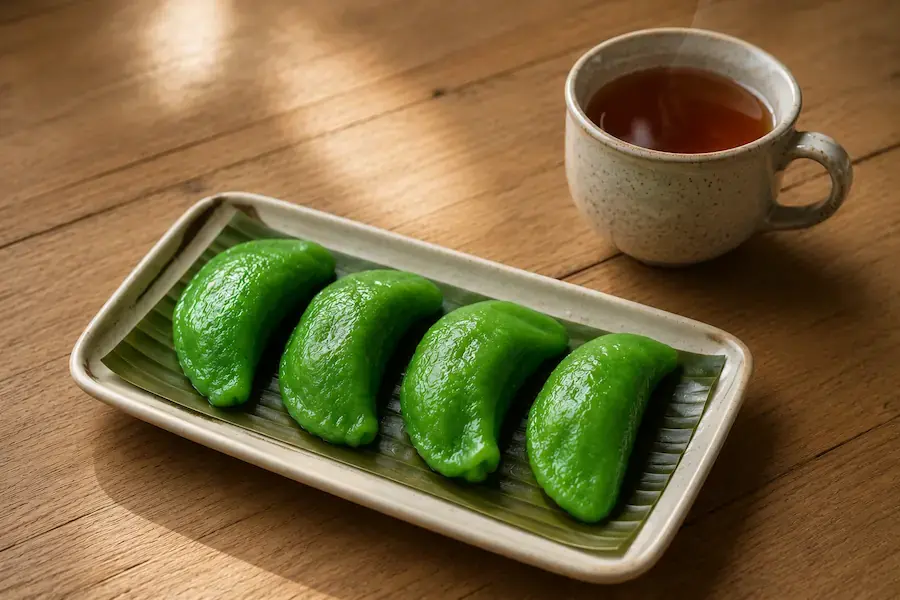
A Traditional Green Banjar Cake Rich in Philosophy, History, and the Meaning of Life
A Traditional Wadai that Preserves the Story of Banjar Culture
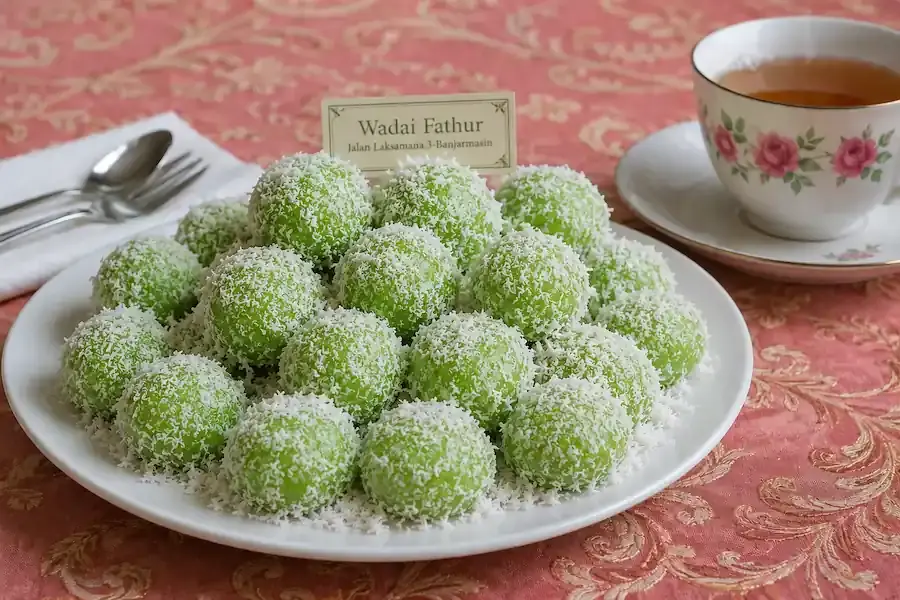
Among the dozens of traditional cakes of South Kalimantan that have been passed down through generations by the Banjar people, Wadai Bulungan Hayam stands out with its unique characteristics. Its striking green color, unusual shape, and the philosophy embedded in every part of it make this cake much more than just a traditional delicacy.
For the Banjar community, food serves more than merely satisfying hunger. Every color, shape, ingredient, and even the preparation process carries symbols, prayers, and hopes that have been inherited from one generation to the next.
Bulungan Hayam is one of the finest examples of how a simple cake can become a medium for conveying profound cultural values.
This cake belongs to the Wadai 41 group, a collection of forty-one traditional cakes that hold a special place in various Banjar traditional ceremonies.
Why Is It Called Bulungan Hayam?
The name Bulungan Hayam, also known as Balungan Hayam, originates from the Banjar language. The word "balungan" means bone or skeleton, while "hayam" means chicken. Literally, the name can be translated as "chicken bone."
Many people hearing the name for the first time assume that the cake is made from chicken meat or has a chicken flavor. In reality, this assumption is completely incorrect. Bulungan Hayam contains no chicken whatsoever.
The name comes from the cake's shape, which resembles part of a chicken bone or skeleton. In traditional Banjar culture, foods were often crafted to resemble specific objects with symbolic meanings.
For this reason, the name Balungan Hayam has remained in use to this day, even though its shape has undergone slight variations in different regions.
The Distinctive Green Color
The first thing that makes Bulungan Hayam easy to recognize is its bright and natural green color. This color comes from pandan leaf extract mixed into the glutinous rice dough.
For modern society, green may simply be viewed as a natural coloring that makes the cake look attractive. However, within Banjar culture, the color green carries a much deeper meaning.
Green symbolizes prosperity, fertility, and hope for a good life. It is also associated with noble values that serve as guiding principles for the community.
When Bulungan Hayam is served at a traditional ceremony, its green color becomes a symbolic prayer for the hosting family to receive prosperity and blessings in life.
This meaning makes the green color of Bulungan Hayam more than just an aesthetic element; it is part of a cultural message that has been passed down for centuries.
Simple Ingredients with Profound Philosophy
Bulungan Hayam is made from finely ground white glutinous rice mixed with pandan extract. Once shaped, it is filled with a mixture of grated coconut and palm sugar, known in Banjar tradition as hinti.
At first glance, these ingredients may seem simple. However, each component carries a powerful symbolic meaning.
Glutinous rice is chosen not only for its chewy texture. In Banjar cultural beliefs, its sticky nature symbolizes strong family bonds. It represents unity, togetherness, and relationships that are difficult to separate.
Meanwhile, the hinti filling symbolizes sincerity and kindness. The sweetness of palm sugar reflects the hope that life will always be filled with goodness and harmonious relationships among people.
When glutinous rice and hinti are combined in a single cake, they create a symbol of a family bound together by sincerity, affection, and heartfelt prayers.
The Philosophy of Hinti: A Symbol of Sincerity and Sweet Prayers
In many traditional Banjar cakes, hinti holds a very special place. It is not merely a filling but also a cultural symbol rich in meaning.
The palm sugar used in hinti symbolizes sincerity of heart. Its sweetness represents the kindness that a person extends to family members, relatives, and the surrounding community.
That is why many traditional Banjar cakes use hinti as an essential part of their recipes. Its presence serves as a prayer for life to be sweet, peaceful, and full of blessings.
In Bulungan Hayam, the combination of hinti and grated coconut symbolizes balance in life. The savory taste of coconut and the sweetness of palm sugar illustrate that life is always composed of many different flavors.
Happiness and hardship will come in turn, but both should be embraced with an open heart.
Historical Traces from the Era of the Ancient Banjar Kingdom
The history of Bulungan Hayam cannot be separated from the Wadai 41 tradition, which has been known among the Banjar people since ancient times.
This tradition is believed to have originated during the era of the Kingdom of Negara Dipa, long before Islam spread throughout South Kalimantan. At that time, various types of wadai were used in traditional rituals as symbolic offerings related to beliefs about nature and the spiritual world.
According to several records of Banjar culture, Balungan Hayam was once made as a representation of a type of chicken used in ritual offerings. Its shape, resembling a chicken bone, served as a symbolic representation of that offering.
When Islam began to spread in South Kalimantan, many elements of older traditions underwent adaptation. The Wadai 41 tradition did not disappear; instead, it transformed into a part of the social and religious activities of the Banjar people.
Bulungan Hayam later became a feature of events such as Baayun Maulid, Batamat Al-Qur'an, Badudus ceremonies, family thanksgiving gatherings, and various other traditional celebrations. This evolution demonstrates the ability of Banjar culture to adapt without losing its original identity.
Bulungan Hayam in the Wadai 41 Tradition
Among the forty-one traditional Banjar cakes, Bulungan Hayam occupies a significant position. It is one of the cakes that is almost always included in a complete Wadai 41 presentation.
Its presence not only helps fulfill the required number of cakes but also enriches the symbolic meaning of the entire collection.
In the philosophy of Wadai 41, each color has its own meaning. White symbolizes goodness, red symbolizes life and courage, yellow symbolizes honor and nobility, while green—represented by Bulungan Hayam—symbolizes prosperity.
Therefore, the presence of Bulungan Hayam is considered a symbol of hope for sustenance, well-being, and a better life for the family hosting the event.
A Tradition of Mutual Cooperation That Is Becoming Rare
In the past, Bulungan Hayam was almost always made collectively. Women from the family and neighborhood would gather to prepare ingredients, make the dough, prepare the hinti filling, and shape the cakes one by one.
Such gatherings were more than just cooking activities. They served as opportunities to strengthen social bonds, share stories, and pass knowledge on to younger generations.
It was in these humble kitchens that the values of togetherness within Banjar society were nurtured and preserved. Bulungan Hayam became a witness to how food can strengthen social ties within a community.
A Culinary Heritage Worth Preserving
Amid the rapid rise of modern foods, Wadai Bulungan Hayam continues to endure as one of the most distinctive culinary identities of the Banjar people. Its characteristic green color, soft texture, and sweet hinti filling make it beloved by people of all ages.
However, the greatest value of this cake lies not only in its taste. Bulungan Hayam is a cultural heritage that preserves a long history, a philosophy of life, symbols of family unity, and hopes for prosperity and sincerity.
Every bite of Bulungan Hayam carries a story about the Banjar people, the relationship between humanity and tradition, and the way ancestors conveyed life's values through food.
This is what makes Bulungan Hayam remain relevant and worthy of preservation as an important part of the cultural richness of South Kalimantan.