
The Origin and Meaning of Kelalapon: Rich in History and Cultural Significance
Kelalapon, also often spelled Kalalapon, is a traditional cake of the Banjar people originating from Martapura, a city in South Kalimantan.
Geographically, Martapura is one of the important regions in South Kalimantan Province, Indonesia. Kelalapon has become part of the culinary identity of the Banjar ethnic group and continues to be preserved within the community to this day.
In local tradition, Kelalapon is also known for its similarity to klepon, a traditional Indonesian rice cake found in other regions of the country. As a result, it is sometimes referred to as "kelepon" in certain areas.
However, within Banjar culture, Kelalapon holds a very special place because it is included in the Wadai 41, a collection of 41 traditional cakes that are mandatory in Banjar ceremonial feasts, where it occupies the sixth position on the list.
Ingredients, Characteristics, and Unique Features of Kelalapon
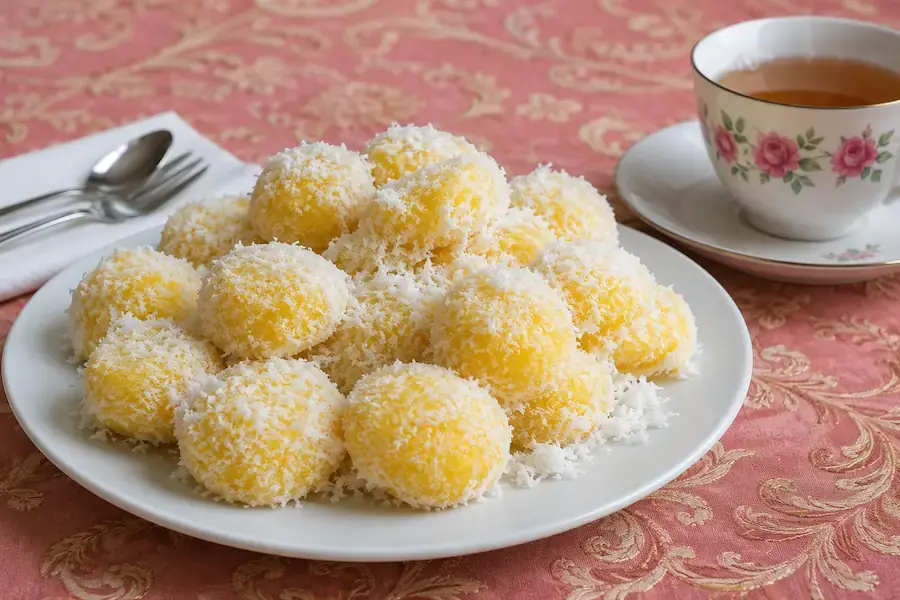
Kelalapon possesses unique characteristics that distinguish it from other traditional market snacks. Its main ingredient is glutinous rice flour, which is mixed with lime water (air kapur sirih) to create a chewy texture and suji leaf extract as a natural coloring agent, resulting in its distinctive yellowish-green appearance.
The filling consists of finely grated palm sugar, which melts when boiled and creates a sweet burst of flavor in the mouth. Once cooked, the cake is coated with grated coconut that has been lightly salted and steamed for approximately 15 minutes to enhance its aroma and shelf life.
It should be noted that there are variations of the recipe in some traditional sources. Certain versions mention rice flour as the primary ingredient. Nevertheless, in the Martapura tradition, Kelalapon is more commonly known as being made from glutinous rice flour.
The Traditional Process of Making Kelalapon
The preparation of Kelalapon begins with steaming grated coconut together with salt for about 15 minutes. The coconut is then set aside to be used as the final coating.
Next, the dough is prepared by mixing glutinous rice flour, lime water, suji leaf extract, and a small amount of salt until it becomes smooth, elastic, and non-sticky.
The dough is then divided into small portions, filled with finely grated palm sugar, and shaped into neat balls. These small balls are boiled in water until they float, indicating that the cakes are fully cooked.
After being removed and drained, the Kelalapon balls are rolled in the grated coconut until their entire surface is evenly coated and ready to be served.
Physical Characteristics and Flavor Profile of Kelalapon
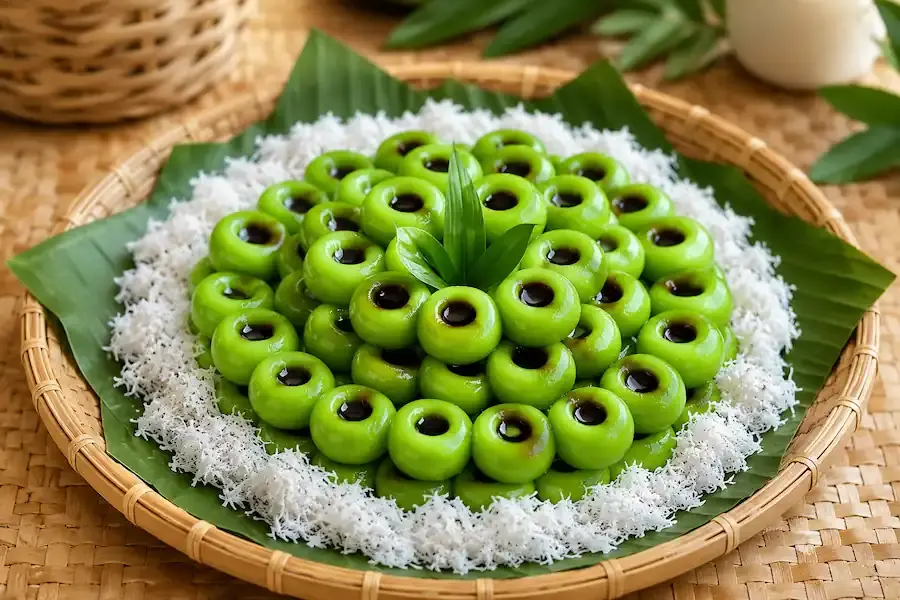
Kelalapon is shaped into small round balls resembling marbles, with a soft and pleasantly chewy texture. Its sweetness comes from the melted palm sugar filling, complemented by the savory taste of grated coconut on the outside.
The cake is generally yellow in color, derived naturally from suji leaves or other traditional coloring ingredients.
Overall, Kelalapon belongs to the category of moist traditional cakes or market snacks commonly found at various Banjar cultural events.
Kelalapon in the Banjar Wadai 41 Tradition
In Banjar cultural history, Kelalapon is more than just a food item; it is part of a sacred tradition known as Wadai 41.
This tradition dates back to the era of the Hindu Kingdom of Negara Dipa in the region formerly known as Hujung Tanah, which is now part of South Kalimantan.
Before the arrival of Islam, Wadai 41 was believed to serve as an offering to honor the guardian spirits of nature. Over time, the tradition evolved into an integral part of Banjar thanksgiving ceremonies and community celebrations.
In practice, the Banjar people believe that every ceremonial feast or celebration should feature all 41 traditional cakes, with Kelalapon being one of the mandatory items.
Serving Occasions and Social Function of Kelalapon
Kelalapon is commonly served during various traditional ceremonies and social gatherings. It is considered an essential dish at thanksgiving events, weddings, circumcision ceremonies, communal feasts, and traditional rituals such as badudus.
In addition, Kelalapon is enjoyed as an everyday snack, both in the morning and afternoon, and is often sold in traditional markets alongside treats such as getuk and cenil. During Ramadan, it is also widely available in wadai markets as a popular choice of iftar snack for breaking the fast.
The Philosophical Meaning of Kelalapon in Banjar Culture
Kelalapon carries not only culinary value but also deep philosophical meaning. The sticky glutinous rice symbolizes strong bonds within families and social relationships. The melted palm sugar inside represents the sweetness of prayers and hopes that continuously flow through life.
The grated coconut provides a balance between savory and sweet flavors, while its round shape symbolizes perfection, unity, and togetherness.
Kelalapon in Traditional Shared Serving Customs
In Banjar and broader Indonesian traditional snack culture, Kelalapon is often served alongside other cakes such as getuk, cenil, kue cucur, and various sweet traditional delicacies.
This combination enriches the culinary experience while reinforcing the values of togetherness and communal dining within traditional food culture.
Is Kelalapon the Same as Javanese Klepon?
Kelalapon is often considered identical to klepon because of its similar appearance and serving style. However, the two differ in both cultural background and primary ingredients.
Kelalapon originates from Martapura in South Kalimantan and is deeply rooted in Banjar culture. Klepon, on the other hand, comes from Java and has spread throughout many other regions of Indonesia.
In some traditions, Kelalapon is made from glutinous rice flour and features a natural yellow color, while klepon is typically made from glutinous rice flour colored green with pandan or suji leaves.
Some sources also mention alternative versions of Kelalapon made with rice flour, producing a slightly denser texture compared to klepon, which tends to be softer and stickier, similar to mochi.
Both cakes share similarities in their round shape, palm sugar filling, boiling method, and grated coconut coating. However, the main differences lie in their cultural origins, ingredient variations, and distinct texture and color characteristics.
Conclusion
Kelalapon is a traditional Banjar cake from Martapura, South Kalimantan, and an important part of the Wadai 41 tradition, which consists of 41 mandatory traditional cakes served at various Banjar cultural ceremonies.
The cake is round in shape, filled with palm sugar, and coated with grated coconut, offering a distinctive sweet and rich flavor.
More than just a food item, Kelalapon is a cultural heritage that appears in many significant occasions, including thanksgiving ceremonies, celebrations, communal feasts, and Ramadan markets.
The philosophy embedded within it reflects the Banjar values of togetherness, prayer, and balance in life.
Although it is often compared to Javanese klepon, Kelalapon possesses its own unique identity as part of the diverse and meaningful culinary heritage of the Indonesian archipelago.