
A Traditional Culinary Legacy in the Rich Collection of Banjar Wadai
Among the dozens of traditional wadai that form part of Banjar cultural heritage, Kikicak is one of the cakes that stands out for its simple appearance yet profound meaning. This traditional delicacy has long been present at customary ceremonies, thanksgiving gatherings, and family celebrations throughout South Kalimantan. Although small in size, its presence has never been considered insignificant, as it is an important part of the renowned tradition known as Wadai 41 Macam.
For the Banjar people, traditional food is more than just something to satisfy hunger. Every type of wadai carries symbolic values that have been passed down from generation to generation. Kikicak represents how culinary traditions and culture have grown together, shaping a community identity that continues to endure today.
A Simple Shape with a Distinctive Flavor
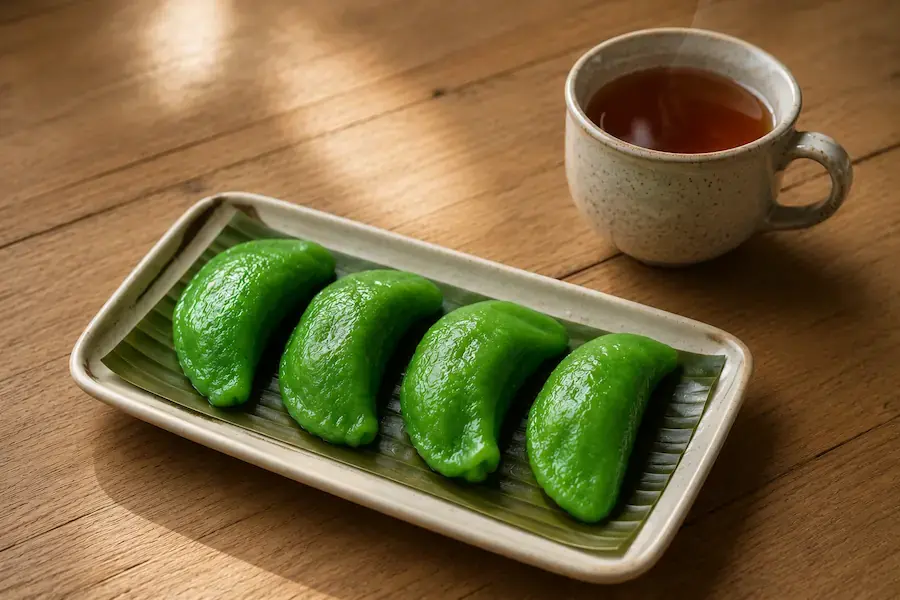
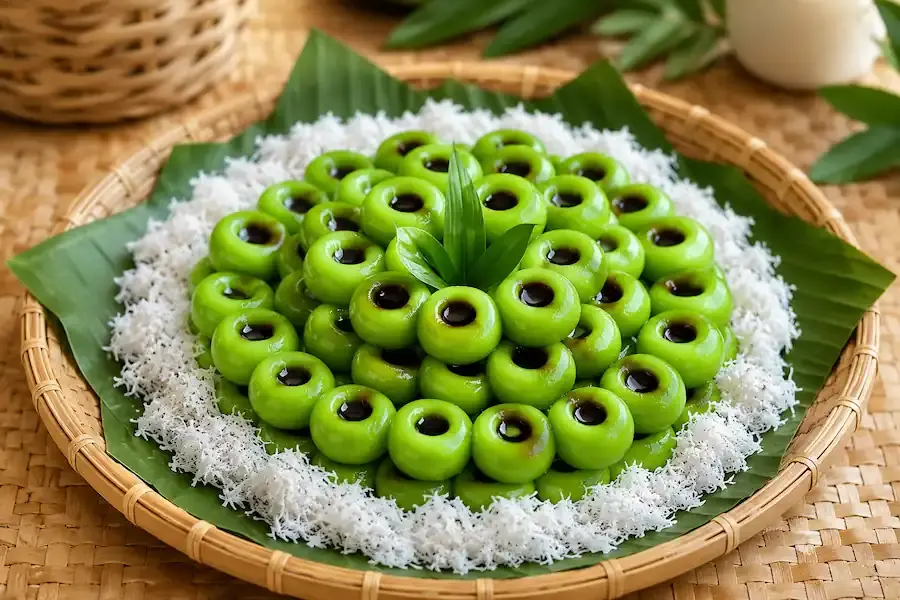
At first glance, Kikicak appears as small green balls with a smooth and glossy surface. Its green color comes from pandan leaves, which also provide the cake with its signature fragrant aroma. Its small size makes it easy to recognize among the many varieties of Banjar wadai.
The texture is chewy because glutinous rice flour is used as the main ingredient. When bitten, the soft outer layer combines with a sweet coconut filling known among the Banjar people as unti. The combination of savory coconut, palm sugar sweetness, and pandan fragrance creates a simple yet highly appealing taste experience.
It is no surprise that Kikicak remains one of the most beloved traditional cakes despite the continuous emergence of modern foods and desserts. Its uniqueness lies precisely in its simplicity.
The Philosophy Behind Kikicak’s Green Color
In Banjar tradition, color is more than an aesthetic element. Each color carries symbolic meanings that reflect hopes and values in life.
Kikicak is closely associated with the color green. This color is often interpreted as a symbol of fertility, prosperity, and the continuity of life. Green represents nature as a source of life and embodies hopes for ever-growing blessings and sustenance.
This meaning is deeply connected to the lives of the Banjar people, who have long depended on rivers, agriculture, trade, and other natural resources. Therefore, the green color of Kikicak not only enhances its appearance but also serves as a symbolic prayer for a life blessed with abundance and well-being.
Kikicak in the Tradition of Wadai 41 Macam
When discussing Kikicak, it is difficult to separate it from the tradition of Wadai 41 Macam, one of the most unique cultural heritages of South Kalimantan.
In various Banjar traditional ceremonies, especially thanksgiving events, communal prayers, and family celebrations, people traditionally prepared forty-one different types of wadai as part of the ceremonial offerings. This tradition has been passed down through generations and serves as a symbol of respect for ancestral cultural values.
The inclusion of Kikicak within the Wadai 41 arrangement demonstrates that each cake has its own place and significance. No wadai is considered superior or inferior to another. Together, they form a unified whole that symbolizes harmony in life.
This tradition also reflects the Banjar community’s strong appreciation for togetherness. Various shapes, colors, and flavors of wadai are brought together in a single grand presentation, just as people from diverse backgrounds coexist harmoniously within society.
The Sacred Meaning of the Number 41
The number 41 holds a special place in Banjar culture. In many local traditions, this number is regarded as having deep symbolic and spiritual significance.
Some people believe that the number is associated with the completeness of a ceremonial arrangement. Others connect it to religious and cultural traditions that have developed within Banjar society since ancient times.
As time has passed, the interpretation of Wadai 41 has gradually evolved into a symbol of gratitude, hopes for safety and well-being, and respect for ancestral cultural heritage. These values are what keep the tradition alive in memory, even though it is not always practiced in its complete form as it once was.
A Symbol of Harmony in Life
When examined more deeply, Wadai 41 Macam reflects the philosophy of life embraced by the Banjar people. The various colors represented within it symbolize different aspects of life that complement one another.
White symbolizes purity, sincerity, and good intentions. Red represents courage and vitality. Yellow signifies nobility, honor, and dignity. Meanwhile, the green color associated with Kikicak symbolizes fertility and prosperity.
Together, these four colors create a harmonious representation of the Banjar people's hopes for a balanced life. Human beings need not only courage but also sincerity. They seek not only prosperity but also honor and wisdom in navigating life.
Within this context, Kikicak becomes more than merely a traditional cake. It stands as a symbol of hope for a life that continues to grow, flourish, and bring blessings.
A Culinary Heritage That Remains Relevant
Amid the rapid pace of modernization, Kikicak continues to play an important role in Banjar culinary identity. Its presence serves as a reminder that traditional foods preserve not only flavors but also history, social values, and a community’s philosophy of life.
Each small piece of Kikicak carries a long story about a culture that values togetherness, gratitude, and balance in life. From its calming green color to the sweet filling hidden inside, Kikicak teaches that the simplest things often hold the deepest meanings.
For this reason, Kikicak deserves to be remembered not only as one of the traditional Wadai 41 Macam of Banjar culture but also as a cultural heritage worth preserving, continuously connecting present generations with the wisdom of their ancestors that has endured for centuries.