
A Culinary Heritage Rooted in Banjar Cultural Traditions
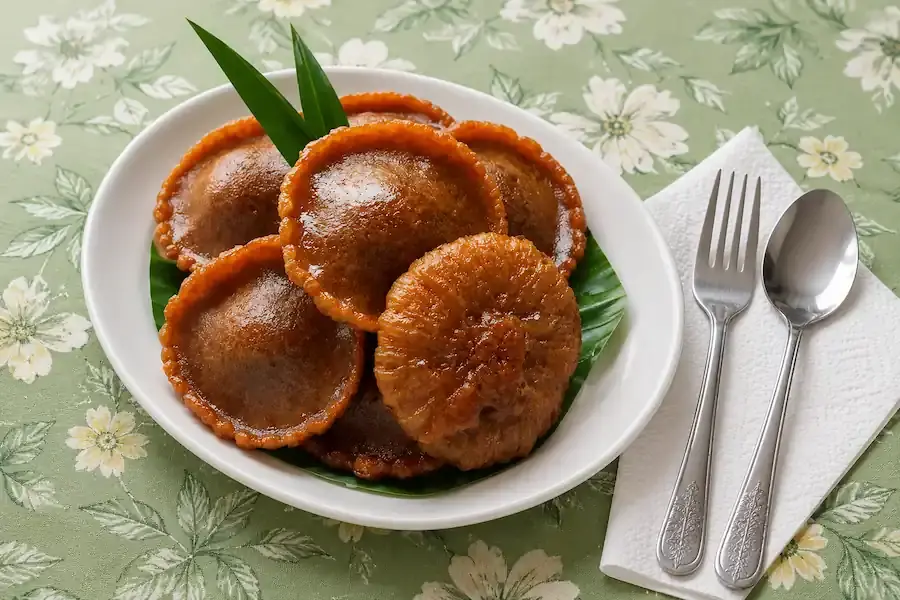
When discussing the traditional cuisine of South Kalimantan, one name that almost always comes up is Cucur Banjar. This round-shaped cake, with its thick center and thin, crispy edges, has been part of Banjar society for generations.
For many people, cucur may simply be known as a sweet and filling traditional market snack. However, within Banjar culture, it holds a far more significant place. This cake is not merely a traditional food but also a part of customary ceremonies, a symbol of gratitude, and an essential element of various rituals passed down through generations.
To this day, Cucur Banjar can still be found at family gatherings, religious celebrations, and traditional ceremonies that continue to be preserved by the people of South Kalimantan.
Discovering the Uniqueness of Cucur Banjar
At first glance, Cucur Banjar may appear similar to other versions of cucur found throughout the Indonesian archipelago. It has a round shape with a raised center resembling a small hill, while its edges spread outward into beautiful ripples formed during the frying process.
However, the difference becomes apparent as soon as it is tasted.
Cucur Banjar has a distinctive texture. Its outer layer is slightly crispy, while the center is soft, dense, and rich in flavor. Its characteristic brown color comes from the use of gula habang, or palm sugar, which is widely used in traditional Banjar cuisine.
The fragrant aroma of this cake also sets it apart. Many makers of Cucur Banjar add pandan leaves or vanilla to create a softer, more enticing fragrance. When served warm, the combination of coconut milk, palm sugar, and pandan creates an unforgettable sensory experience.
What Makes Cucur Banjar Different from Other Regional Versions?
Although cucur can be found in many regions of Indonesia, each area has developed its own characteristics according to local culinary traditions.
The most notable difference lies in the use of coconut milk in the batter. In many other regional versions, the batter is typically made only from rice flour and sugar. Cucur Banjar, however, incorporates coconut milk, resulting in a softer texture, richer flavor, and a more fragrant aroma.
The coconut milk adds a savory layer of flavor that blends perfectly with the sweetness of palm sugar. The result is a cake that is not only sweet but also possesses a deeper and more complex taste profile.
In addition, the use of Banjar-style gula habang gives the cake a darker brown color and a strong natural caramel flavor. This ingredient has become one of the culinary identities of the Banjar people, distinguishing many traditional South Kalimantan dishes from those of other regions.
Some traditional recipes even include special ingredients that have been passed down through generations within families of traditional cake makers. This creates unique flavor characteristics that are difficult to find in cucur from other regions.
While cucur elsewhere is often known simply as a market snack, Cucur Banjar maintains a close connection to the social and cultural life of its community.
The Long History of Cucur in Indonesian Culture
The existence of cucur has long been recognized within the culinary traditions of the Indonesian archipelago. One written reference frequently cited by researchers is its appearance in the Serat Centhini during the 18th century.
This document shows that cucur is far from a modern creation. The cake has been part of the cultural life of communities across Indonesia for hundreds of years.
In South Kalimantan, the Banjar people later developed their own version, adapting it to local ingredients, regional tastes, and cultural needs. From this evolution emerged the Cucur Banjar that is known today.
For centuries, this cake has survived not only as a traditional food but also as an important component of various customary rituals carrying deep cultural meaning.
Cucur in the Baayun Anak Tradition
One of the traditions most closely associated with Cucur Banjar is Baayun Anak, also known as Batimbang Anak.
This tradition is usually held during the month of Safar. According to traditional Banjar beliefs, the ritual is intended to seek protection for children, shielding them from harmful influences and ensuring their safety throughout life.
During the ceremony, the child is placed in a specially decorated swing. Various traditional ceremonial items are prepared as part of the ritual, including an assortment of traditional cakes that carry symbolic meanings.
Among these various traditional cakes, cucur often appears as one of the most important offerings. Its presence is not merely as food but as a symbol of hope, prayer, and gratitude from parents for their child's growth and well-being.
Through this tradition, Cucur Banjar becomes part of a person's life journey from an early age.
The Role of Cucur in the Baayun Mulud Tradition
In addition to Baayun Anak, Cucur Banjar also plays an important role in the Baayun Mulud tradition, which takes place during the month of Rabiulawal to commemorate the birth of the Prophet Muhammad (PBUH).
This tradition is one of the most famous cultural heritages of the Banjar people and continues to be preserved today.
The swings used during Baayun Mulud are typically decorated with artistic woven young coconut leaves. Various traditional cakes are also hung from or arranged around the swings as part of the ritual decoration.
Cucur is one of the cakes frequently used to beautify these ceremonial swings. Its presence reflects the community's gratitude while symbolizing hopes for blessings, health, and safety for the children participating in the ceremony.
Through this tradition, food and culture merge into an inseparable unity.
The Philosophy of Cucur in Banjar Society
The Banjar people view traditional food as more than just nourishment. Every cake carries a deeper meaning beyond its flavor.
Cucur is often interpreted as a symbol of togetherness and blessing. Its shape, spreading outward from a central point, represents the hope that life will continue to grow and bring benefits to many people.
At various traditional ceremonies, the presence of cucur also symbolizes gratitude for the blessings and sustenance that have been received. This is why the cake is almost always present at important Banjar celebrations.
As part of the tradition known as Wadai 41 Macam (Forty-One Traditional Cakes), Cucur Banjar also represents the values of mutual cooperation, social harmony, and the strong bond between people and their ancestral traditions.
A Cultural Heritage That Endures
Amid changing times and the emergence of countless modern foods, Cucur Banjar continues to maintain its place in society. This simple cake has survived not only because of its delicious taste but also because of the cultural meaning embedded within it.
Every layer of sweetness, every aroma of coconut milk and palm sugar, and every ripple along its surface carries a long story about the life of the Banjar people. It serves as a bridge between the past and the present, connecting ancestral traditions with future generations.
For this reason, Cucur Banjar is far more than just a traditional snack. It is a living part of South Kalimantan's cultural identity—preserved, passed down, and celebrated from one generation to the next.