
Coconut-Filled Glutinous Rice Cake in the Tradition of 41 Banjar Wadai with Sweet Unti Coconut Filling
Among the many traditional Banjar wadai passed down through generations, Papare holds a unique place. This traditional cake is known not only for its resemblance to bitter melon but also for its philosophy, history, and role in various Banjar cultural traditions.
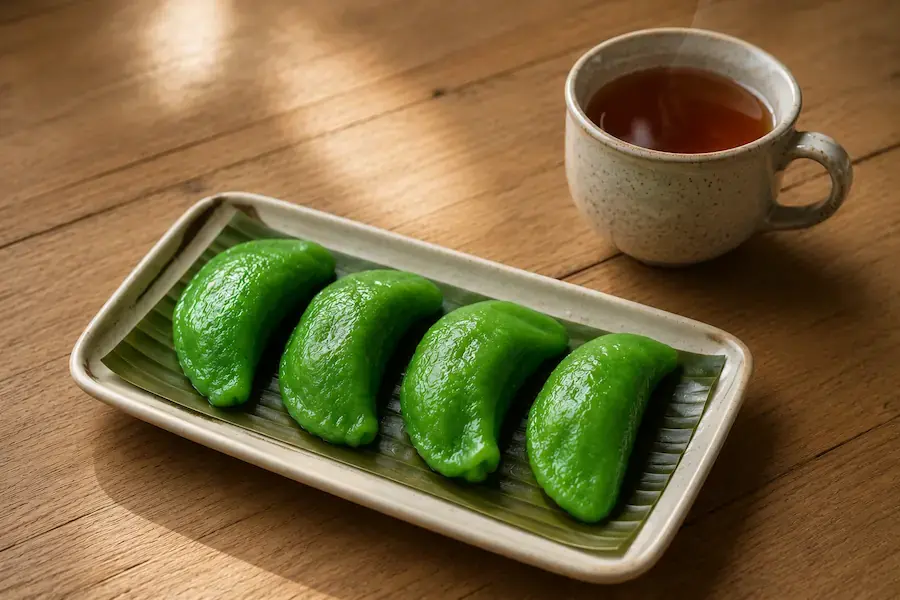
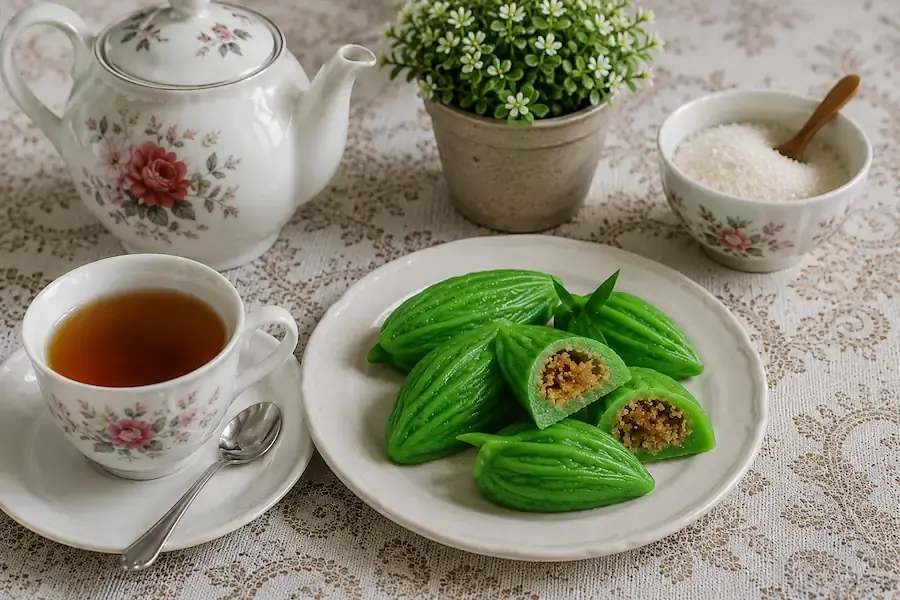
At first glance, it appears simple with its attractive green color and distinctive ridged texture, yet behind its appearance lies a long story that reflects the cultural wisdom of South Kalimantan.
Papare is one of the culinary heritage foods still found at traditional ceremonies, family celebrations, and Ramadan food markets. This cake remains an important part of Banjar culinary identity despite changing times.
The Origins of Papare, a Traditional Cake from South Kalimantan
Papare, also known as Papari, Pare, Pepare, or Wadai Paria, originated in the Banjarmasin area and later spread throughout South Kalimantan. It is one of the traditional cakes of the Banjar people that has been known for generations.
The name Papare comes from its resemblance to bitter melon, also known as pare or paria. The outer shape of the cake is elongated with grooves that mimic the texture of bitter melon skin. In the Banjar language, the term "hirip" is often used to describe this resemblance.
Because of its striking similarity to bitter melon, the community came to call it Papare or Papari. Although it resembles a vegetable famous for its bitterness, Papare actually has a sweet and savory flavor, creating an interesting contrast between its appearance and its filling.
Historical Roots of Papare in Banjar Tradition
Papare is one of the members of the Wadai 41 Macam group, a collection of traditional cakes that hold an important place in Banjar culture.
The Wadai 41 tradition is believed to have very ancient historical roots. Some cultural studies associate it with the era of the Negara Dipa Kingdom, which flourished before the establishment of the Banjar Sultanate.
During that period, various types of wadai were used in rituals and offerings related to local beliefs.
When Islam spread throughout South Kalimantan and the Banjar Sultanate was established in the 16th century, many older traditions underwent a process of cultural adaptation.
Ritual functions previously linked to earlier belief systems gradually evolved into social and religious activities within the Banjar Muslim community.
Over time, Wadai 41 Macam, including Papare, came to symbolize gratitude, safety, and prayers for the well-being of families and communities. To this day, it continues to be preserved in various traditional ceremonies and religious events.
Distinctive Characteristics That Set Papare Apart from Other Banjar Cakes
One of Papare's greatest attractions is its distinctive shape. Few Banjar cakes resemble a particular vegetable as closely as Papare does.
The outer layer of Papare is typically made from glutinous rice flour mixed with coconut milk, lime water, and extract from suji or pandan leaves. This combination produces a chewy texture and a fragrant aroma.
The inside is filled with unti, a mixture of grated coconut and palm sugar cooked until rich and caramelized. After shaping, the surface is given ridges using traditional molds or areca flower stalks, making it resemble a real bitter melon.
The natural green color from suji and pandan leaves further enhances its resemblance to bitter melon while adding a distinctive and appetizing aroma.
How Papare Differs from Other Banjar Wadai
Among the dozens of Banjar cakes, Papare possesses several distinctive characteristics.
While Bingka uses potatoes, eggs, coconut milk, and wheat flour as its main ingredients, Papare relies on glutinous rice flour as the base for its outer layer.
Meanwhile, Amparan Tatak and Kue Cucur use more rice flour, giving them textures quite different from Papare's chewy consistency.
Kelalapon also uses glutinous rice flour and contains a sweet filling, but it is round in shape and boiled during preparation.
Papare, on the other hand, resembles bitter melon and is generally steamed until fully cooked.
Unlike Wajik, which is made from glutinous rice without any filling, Papare offers a delightful surprise inside with its rich filling of coconut unti and palm sugar.
Its unique shape, color, texture, and filling make Papare easily recognizable among the many varieties of Banjar wadai.
Does Papare Have Different Filling Variations?
Traditionally, Papare is always filled with coconut unti and palm sugar. This combination is considered an essential characteristic inseparable from Papare's identity.
The grated coconut provides a naturally savory flavor, while the palm sugar contributes a distinctive sweetness. Together, they create a balanced taste that has been enjoyed by the Banjar community for generations.
In modern times, some cake makers have introduced innovations by adding chocolate, sweetened condensed milk, peanuts, and even fruit jams as alternative fillings.
Nevertheless, the traditional version with coconut unti and palm sugar remains the most recognized and authentic form.
The Philosophical Meaning Behind the Bitter Melon Shape
One of the most fascinating aspects of Papare is the philosophy attached to its shape.
Bitter melon is widely known as a vegetable associated with a bitter taste. However, Papare's bitter melon-like appearance conceals a sweet filling. This contrast conveys a profound moral message for the Banjar people.
Papare teaches that something should not be judged solely by its outward appearance. What seems unattractive is not necessarily bad, and what appears good does not always possess true value.
Beneath its bitter melon-like exterior, Papare hides a sweet filling symbolizing kindness, sincerity, and the virtues hidden within a person.
In addition, the ridges on Papare's surface are often interpreted as symbols of perseverance, patience, and carefulness. The meticulous process required to make it serves as a reminder that good results are usually achieved through patience and dedicated effort.
On What Occasions Is Papare Served?
In Banjar society, Papare is more than just a snack. It appears at many important occasions connected to tradition and social life.
Papare is frequently served during thanksgiving ceremonies, communal prayers, and family celebrations as part of the Wadai 41 Macam assortment. Its presence symbolizes hopes for safety and blessings for both the host and the guests.
It can also be found at wedding celebrations, Batamat Al-Qur'an ceremonies, Baayun Maulid events, and the Badudus tradition. During Ramadan, Papare is commonly sold at juadah markets and is one of the community's favorite iftar treats.
In some areas, Papare is even included in family mourning traditions as part of the refreshments prepared for visiting relatives and guests.
Papare as an Enduring Banjar Culinary Heritage
Despite the influx of modern foods, Papare continues to hold a special place in South Kalimantan's culinary culture. This cake offers not only a distinctive sweet taste and chewy texture but also carries historical significance, philosophical meaning, and the cultural identity of the Banjar people.
Its bitter melon-like shape serves as a symbol of a simple yet profound life lesson: do not judge something solely by its outward appearance.
Just as Papare looks like a bitter vegetable but contains a sweet filling, life often hides goodness behind things that may seem ordinary at first glance.
For this reason, Papare is more than just a traditional cake. It is a cherished part of Banjar cultural heritage that continues to be remembered, preserved, and passed down from one generation to the next.