
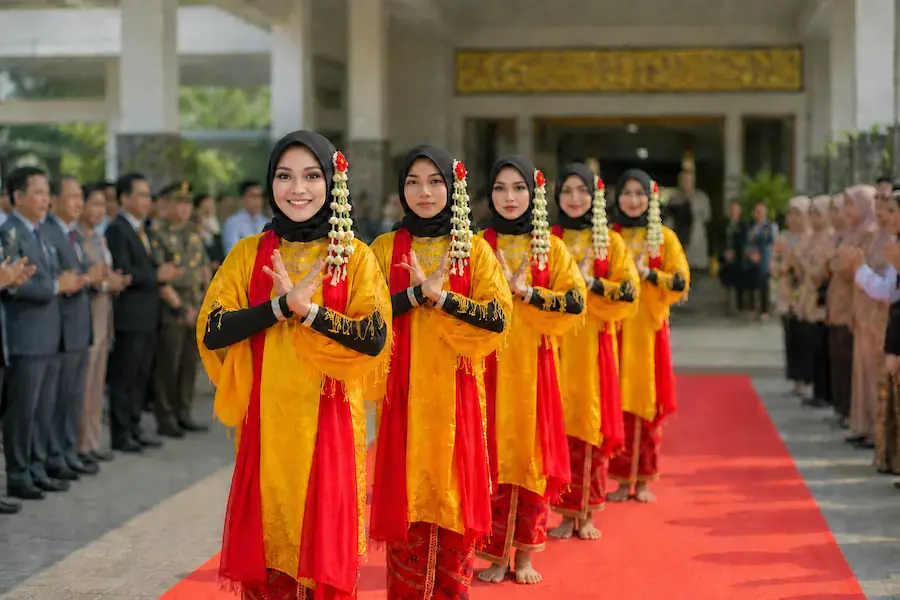
A Sacred and Classical Banjar Dance Rich in Symbolism of Protection and Blessings
A Banjar Cultural Heritage from Banjarmasin
Radap Rahayu Dance is one of the most famous traditional dances of the Banjar people in South Kalimantan. Originating from the Banjarmasin region, this dance is known as a classical performance with deep roots in the spiritual life and traditions of the Banjar community dating back to the royal era.
For the Banjar people, Radap Rahayu Dance is more than just an artistic performance. Behind every movement, musical accompaniment, and ceremonial attribute lies a legacy of prayers, hopes, and symbols of protection that have been passed down through generations.
For this reason, the dance holds an important place within the cultural heritage of South Kalimantan.
To this day, Radap Rahayu Dance is frequently performed at official ceremonies, welcoming events for distinguished guests, and cultural festivals as a representation of Banjar hospitality and identity.
The Origin of the Name Radap Rahayu
The name Radap Rahayu carries a meaning closely connected to the philosophy of Banjar life. The word "Radap" refers to a group of women or beautiful maidens performing together in a dance. Meanwhile, the word "Rahayu" means safety, prosperity, security, and blessings.
As a whole, Radap Rahayu Dance can be interpreted as a dance of protection and well-being for the Banjar community. The name reflects the original purpose of the dance as a medium for prayer and a plea for divine protection in human life.
The synchronized movements of the dancers also symbolize togetherness, harmony, and mutual cooperation, values that are highly respected in Banjar culture.
The History of Radap Rahayu During the Banjar Kingdom Era
The history of Radap Rahayu Dance can be traced back to the ancient kingdoms of South Kalimantan. Stories about this dance are recorded in the Hikayat Lambung Mangkurat, one of the most important historical sources of Banjar culture.
According to the chronicle, the Prabayaksa ship once became stranded in the Pambatanan area, now known as Lok Baintan, along the banks of the Martapura River.
During this event, the ship’s passengers conducted religious ceremonies and rituals for protection by performing the Radap Adat Dance.
At that time, Radap Adat Dance served a deeply sacred purpose. It was performed as a means of seeking protection, safety, and assistance from higher spiritual powers.
Over time, Prince Tumenggung of the Negara Daha Kingdom refined the Radap Adat Dance. Through this process, the form of dance that later became known as Radap Rahayu Dance was created.
This transformation allowed the dance to evolve beyond its ritual function and become part of royal court arts with high aesthetic value.
From a Ritual of Protection to a Welcoming Dance
In the past, Radap Rahayu Dance was known as a ritual performance used in various traditional ceremonies. The Banjar people believed that the dance could ward off misfortune, drive away evil spirits, and invoke protection for individuals and communities alike.
The dance was often performed when communities faced disasters, disease outbreaks, or situations believed to require spiritual protection.
Through the performance, people offered prayers for healing, peace, and prosperity.
As times changed, the sacred function of Radap Rahayu Dance gradually transformed. Today, it is most commonly performed as a welcoming dance for honored guests at governmental events, cultural activities, and important celebrations within the Banjar community.
Although its entertainment aspect has become more prominent, the spiritual values embodied in Radap Rahayu Dance continue to be respected and preserved.
Sacred Meaning and the Philosophy of Heavenly Maidens
One of the unique features of Radap Rahayu Dance lies in the philosophy behind it. In Banjar tradition, the dancers are portrayed as heavenly maidens descending to earth to offer help and blessings to humanity.
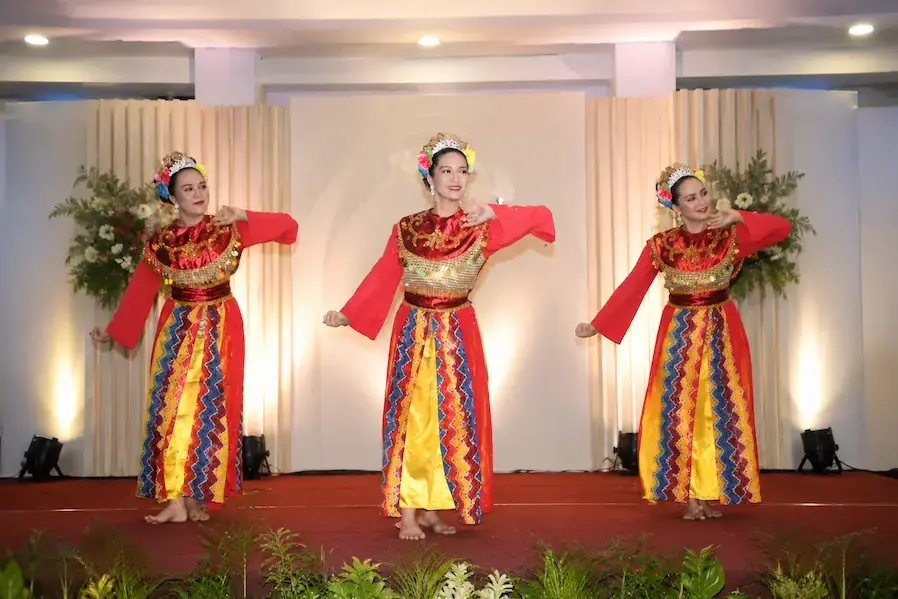
This imagery is reflected in the colorful costumes, graceful movements, and flowing scarves that move in harmony with the rhythm of the dance. Together, these elements create the impression that the dancers come from a celestial realm, bringing protection and blessings.
Another spiritual aspect can be seen in the Tapung Tawar or Batapung Tawar ritual, which forms an important part of Banjar tradition. This ritual symbolizes prayers for protection, the warding off of misfortune, and hopes for a safe and prosperous life.
In the traditional Banjar worldview, dance and musical accompaniment are inseparable. Both are believed to create a sacred atmosphere filled with prayers and positive intentions.
The Thirteen Signature Movements of Radap Rahayu Dance
Radap Rahayu Dance consists of thirteen principal movements that shape the entire performance. The sequence begins with Terbang Layang, which depicts light and floating motions resembling flight.
This is followed by Limbai Kibas, highlighting the beauty of scarf movements, and Dandang Mangapak, characterized by open and dynamic footwork. Mendoa symbolizes prayers to the Creator, while Mambunga represents gentleness through the handling of flowers.
The sequence continues with Alang Manari, Lontang Penuh or Gagoreh Srikandi, Mantang, and Tarbang Layang, each adding vitality to the performance. One of the most significant movements is Tapung Tawar, which symbolizes protection and safety.
The choreography then proceeds through Puja Bantam and Angin Tutus before concluding with Lontang Penuh, the final movement marking the end of the performance.
Together, these movements create a dance that is energetic, rhythmic, and dynamic while maintaining the gracefulness traditionally associated with Banjar women.
Distinctive Costumes and Performance Attributes
The beauty of Radap Rahayu Dance is not only reflected in its movements but also in the costumes and ceremonial attributes used by the dancers.
The dancers wear colorful attire symbolizing the beauty of heavenly maidens. These bright colors create a festive impression while reinforcing the sacred atmosphere associated with the dance.
In addition to their costumes, the dancers carry scarves used throughout various movements. These scarves serve as important visual elements that enhance the performance while symbolizing elegance and grace.
Another distinctive attribute is a bowl filled with flower petals. During the performance, the flowers are scattered as symbols of prayer, protection, blessings, and goodwill for those in attendance.
Spirited Traditional Musical Accompaniment
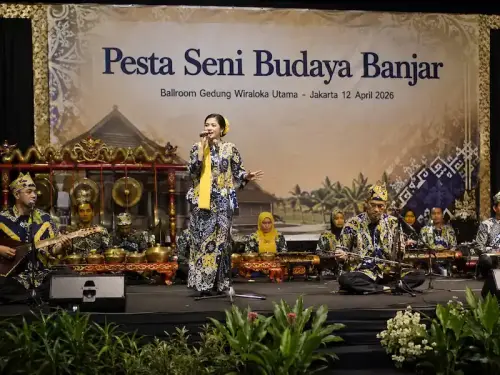
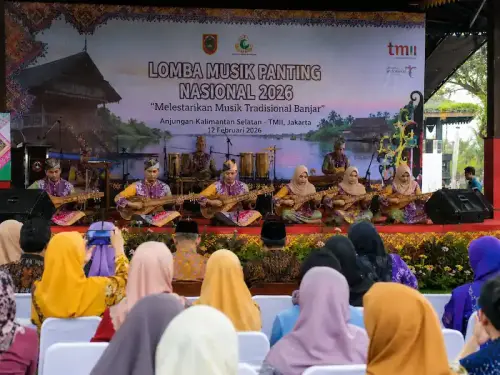
Radap Rahayu Dance is accompanied by traditional Banjar music performed using gamelan instruments.
The music is characterized by dynamic, rhythmic, and lively melodies. Its steady beats help the dancers maintain synchronized movements while creating an energetic atmosphere.
The musical accompaniment also carries symbolic significance, as it is considered part of the prayers that accompany the performance. Therefore, the music serves not only as entertainment but also as an expression of deep cultural and spiritual values.
When Is Radap Rahayu Dance Performed?
In earlier times, Radap Rahayu Dance was performed during traditional rituals associated with protection and well-being. It was used in Tapung Tawar ceremonies, rituals to ward off misfortune, the expulsion of evil spirits, and prayers for the healing of the sick.
Today, its use is broader and more flexible. Radap Rahayu Dance is frequently performed to welcome distinguished guests, open official ceremonies, enliven cultural festivals, and become part of various traditional celebrations within Banjar society.
On each of these occasions, the dance symbolizes respect, gratitude, joy, and hopes for safety and prosperity for everyone present.
The Dancers of Radap Rahayu
Traditionally, Radap Rahayu Dance is performed by adult women. The number of dancers is usually odd, such as three, five, seven, or nine performers.
The use of an odd number is part of a long-standing tradition. The dancers are also expected to display grace, courtesy, and the heavenly-maiden character that serves as the central symbol of the dance.
The synchronized beauty of their movements remains one of the main attractions of Radap Rahayu Dance.
Radap Rahayu as a Symbol of Banjar Social Harmony
Beyond its visual beauty, Radap Rahayu Dance conveys a powerful social message. The dance reflects harmony, togetherness, mutual cooperation, and gratitude, all of which are important aspects of Banjar community life.
Every movement, flower scattering, and musical rhythm teaches the importance of living harmoniously with others while continually seeking God's protection and blessings.
It is therefore no surprise that Radap Rahayu remains one of the most respected cultural icons of South Kalimantan today.
Conclusion
Radap Rahayu Dance is a treasured Banjar cultural heritage that originated from traditional rituals of protection and later evolved into a graceful and meaningful welcoming dance.
Originating from the royal environment of Banjarmasin, the dance carries a long history connected to the Hikayat Lambung Mangkurat and Banjar traditions dating back to the kingdom era.
With its thirteen principal movements, colorful heavenly-maiden-inspired costumes, scarves and flower petals as distinctive attributes, and the dynamic accompaniment of Banjar gamelan music, Radap Rahayu stands as one of Indonesia’s most unique traditional dances.
More than merely an artistic performance, Radap Rahayu Dance is a symbol of prayers for protection, gratitude, harmony, and hopes for a peaceful life for the Banjar people across generations.