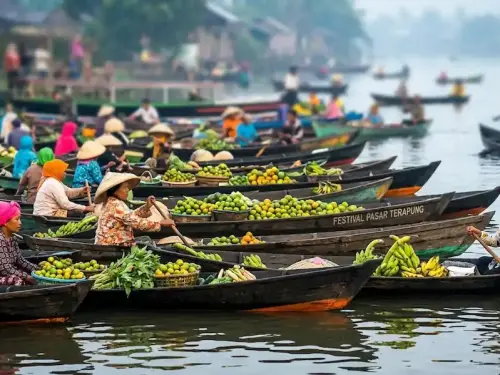

Banjar Religious Handicrafts Known Around the World
A Craft Heritage from the City Known as the Veranda of Mecca
Martapura, the capital of Banjar Regency in South Kalimantan, has long been recognized as a center for gemstone and jewelry craftsmanship. The city has even earned the titles "Diamond City" and "Veranda of Mecca" because of its important role in the development of Islamic education and culture in South Kalimantan.
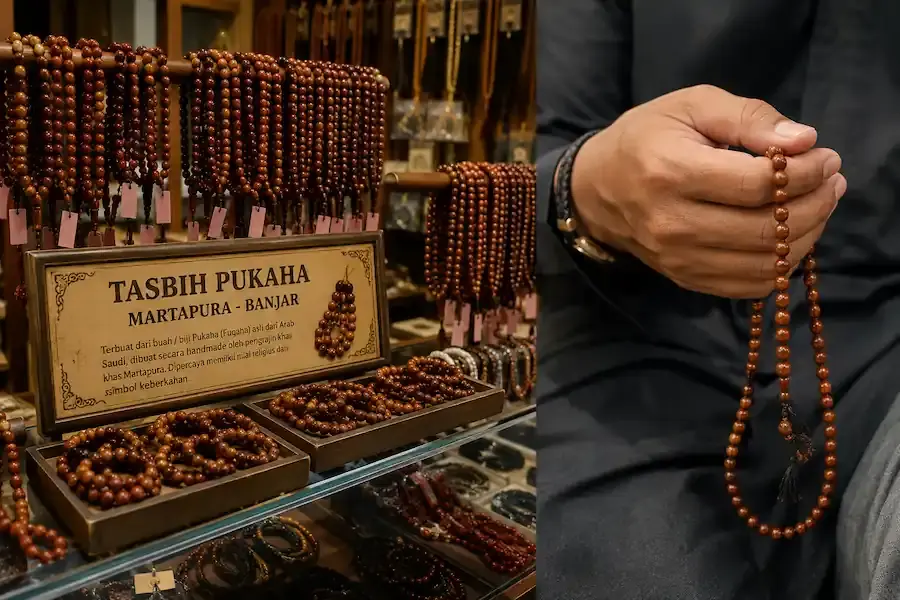
However, behind the glittering diamonds and precious stones lies another remarkable traditional craft, namely the pukaha prayer beads. This craft has become an integral part of the cultural and economic identity of the Banjar people for many years and remains one of the most sought-after souvenirs for visitors to Martapura.
Pukaha prayer beads are made from the fruit or seeds of the pukaha plant (also known as kaukah, fukaha, fuqaha, or pukah), which are imported from the Middle East, particularly Saudi Arabia.
These natural materials are then transformed by skilled Banjar artisans into prayer beads, bracelets, necklaces, rings, and various other accessories that hold both artistic and religious significance for Muslim communities.
The Origin and History of Pukaha Prayer Beads
The history of pukaha prayer beads began through trade relations between the Banjar people and merchants from the Middle East. Since the 17th century, during the golden age of the Banjar Sultanate's trading activities, Arab and Indian merchants regularly visited Banjarmasin to purchase pepper and other local commodities.
Along with their trade goods, they also brought various materials from the Arabian Peninsula, including pukaha seeds, which eventually became popular among the Banjar community.
The pukaha seed itself is believed to come from the plant Eurycoma longifolia, which grows in desert and semi-desert regions of the Middle East. Arab communities have long used these seeds to create prayer beads because they are considered to possess deep spiritual value.
When pukaha seeds arrived in Banjar lands, local artisans began processing them using their own distinctive techniques, creating products that were unique and different from their original Arab counterparts.
The development of pukaha prayer beads in Martapura accelerated during the 20th century, as the city emerged as a major center for gemstone craftsmanship. Artisans who had previously focused primarily on precious stones began producing pukaha prayer beads as a more affordable alternative that still carried strong religious significance.
Today, pukaha prayer beads remain one of Martapura's most distinctive handicraft products and are recognized internationally.
Religious Value and Spiritual Significance
For many Banjar people, pukaha prayer beads are more than simply handicrafts or souvenirs. They carry a deeper meaning because of their close connection to Islamic traditions that have long been rooted in local society. Martapura itself is widely known as the "Veranda of Mecca" due to its significant role in the development of Islamic education and culture in South Kalimantan.
Numerous Islamic boarding schools, madrasas, and educational institutions are located in the city, making it an important center for the spread of Islamic teachings throughout Kalimantan.
The close association of pukaha materials with the Arab world has led many people to regard these prayer beads as having special symbolic value. Many pilgrims performing Hajj and Umrah encounter similar materials while in the Holy Land, making pukaha prayer beads a reminder of a spiritual journey and a means of strengthening daily worship.
These prayer beads are commonly used for reciting dhikr, salawat, and prayers, making them practical and highly valued tools of devotion.
Although these spiritual associations are largely based on local traditions and beliefs, they have given pukaha prayer beads a unique appeal compared to many other handicrafts. For many people, using pukaha prayer beads is not merely about aesthetics, but also a form of respect for religious values and local wisdom.
A Craftsmanship Process That Relies on Skilled Hands
The production of pukaha prayer beads requires great precision and patience because the entire process is still carried out manually. After the raw materials arrive in Martapura from Saudi Arabia, the fruits or seeds are carefully selected based on their size and quality. Seeds that are damaged or not uniform are excluded to ensure the quality of the final product.
The selected materials are then cut according to requirements, split, drilled, and carefully perforated using traditional tools such as hand drills and small saws. This stage requires specialized expertise because pukaha seeds have a hard texture yet can crack easily if handled improperly.
Each bead is then shaped to achieve a uniform size. The smoothing process is carried out by repeatedly polishing the beads using soft cloths and natural abrasive materials to create a smooth surface that is comfortable to handle.
The final step involves stringing the beads into prayer beads or other accessories using cotton cords, nylon strings, or gold threads, depending on the desired design.
In several craft centers in Martapura, production is carried out through a cooperative or group-based system. Some artisans specialize in cutting materials, others focus on drilling, while some concentrate on polishing and assembly. This division of labor allows production to operate more efficiently while maintaining consistent quality.
The most famous centers for pukaha prayer beads crafts are in Kramat Wangi Village (East Martapura) and Teluk Selong Ulu (West Martapura District) in Martapura.
An Iconic Handicraft of Martapura
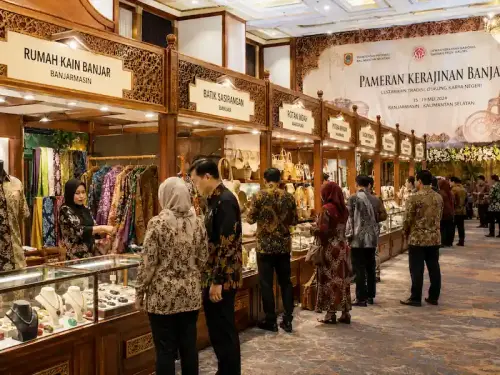
Visitors exploring souvenir centers or the famous Martapura Market can easily find pukaha prayer beads displayed alongside gemstones, diamonds, and various other Banjar handicrafts. Their presence has become an important part of Martapura's creative economy and one of the city's cultural tourism attractions.
The price of pukaha prayer beads varies widely, ranging from tens of thousands to hundreds of thousands of Indonesian rupiah. Price differences are generally influenced by bead size, material quality, craftsmanship complexity, and design. Prayer beads with larger beads and smoother finishes naturally command higher prices than those with smaller beads.
Some artisans even accept custom orders featuring specific designs and carvings to meet customer demands from various regions, including for Hajj, Umrah, wedding ceremonies, and thanksgiving celebrations.
In addition to being marketed throughout South Kalimantan, these products have reached major Indonesian cities such as Jakarta, Surabaya, Medan, and Yogyakarta.
Through trade networks and digital marketing platforms such as Tokopedia, Shopee, Instagram, and Facebook, pukaha prayer beads can now be found in international markets including Saudi Arabia, Malaysia, Brunei, and Singapore as one of the Banjar handicrafts that has gained global recognition.
Preserving Tradition Amid Modern Development
Despite the widespread availability of factory-made products and modern accessories, pukaha prayer beads have successfully maintained their existence. The uniqueness of the material, the largely handmade production process, and the cultural values attached to them distinguish these prayer beads from mass-produced alternatives.
Pukaha prayer beads also utilize natural materials that are environmentally friendly, making them well aligned with the growing popularity of sustainable products in the modern era.
For the Banjar people, pukaha prayer beads are not merely handcrafted products but also part of a cultural heritage that reflects the skill, perseverance, and religious identity of the people of Martapura. For this reason, the artisans who produce these prayer beads play an important role in preserving tradition while introducing Banjar cultural heritage to a wider audience.
Several cultural institutions and local government agencies have also begun supporting artisans through training programs, financial assistance, and craft exhibitions to help them further develop their products.
Today, pukaha prayer beads remain one of Martapura's most recognized traditional souvenirs. They are simple creations made from natural materials that successfully unite art, culture, and spirituality within a meaningful string of beads.
Pukaha prayer beads are not merely handicrafts, but also a symbol of identity for the Banjar people—religious, creative, and continually adapting to changing times without losing their cultural roots.