
The Favorite Breakfast of the People of South Kalimantan
The Historical Journey of Banjar Yellow Rice from the Kingdom Era to the Present Day
Yellow rice is one of the traditional culinary treasures of the Indonesian archipelago with a long and rich history. In South Kalimantan, Banjar Yellow Rice developed as part of the traditions of the Banjar people, whose culture has been known since the era of the Hindu kingdoms.
Several historical sources suggest that the tradition of yellow rice dates back to the Majapahit era around the 13th century and later blended with the local Banjar culture.
During its early development, yellow rice was not an everyday meal. It held a special status and was served only during important occasions such as religious ceremonies, traditional rituals, and noble weddings. Its presence symbolized respect, gratitude, and prayers for safety and well-being.
In the past, yellow rice was commonly shaped into a cone. This form symbolized the relationship between humans and the divine powers believed in by people during the Hindu kingdom era. For this reason, yellow rice carried philosophical values that extended far beyond its function as food.
Over time, the social role of yellow rice changed. While it was once enjoyed only by certain groups, Banjar Yellow Rice has now become one of the most popular breakfast dishes in South Kalimantan. Throughout the cities of Banjarmasin, Martapura, and many other areas, yellow rice vendors can easily be found from the early morning hours.
The Deep Philosophical Meaning Behind the Yellow Color
One of the most distinctive characteristics of Banjar Yellow Rice is its bright yellow color, which immediately stimulates the appetite. This color comes from turmeric, which is used as a natural coloring agent during the cooking process.
In traditions influenced by Hindu culture, the color yellow holds a very special meaning. Yellow symbolizes nobility, purity, prosperity, and hopes for a good life. Because of these meanings, yellow rice became closely associated with celebrations and important life events.
It is therefore not surprising that the Banjar people have preserved the tradition of yellow rice for centuries. The yellow color is not merely an aesthetic element but also a cultural symbol passed down from generation to generation.
Why the Rice Is Yellow
Within Banjar culinary traditions, there is no dish that holds a cultural status comparable to yellow rice while using a red color. This is closely related to the philosophy of colors that developed during the kingdom era.
Turmeric has long been available as a natural ingredient that provides both a yellow color and a distinctive aroma. Besides being readily accessible, turmeric also carries strong symbolic significance in many traditions across the Indonesian archipelago. In contrast, there has never been a traditional red coloring ingredient with a similar cultural meaning in the context of ritual rice dishes among the Banjar people.
Since its earliest appearance, yellow rice has become a culinary identity closely associated with the Banjar community. As a result, the tradition has continued to survive until today without evolving into a red rice variant that serves the same cultural function.
The Unique Characteristics of Banjar Yellow Rice Compared to Other Regions
Although it is commonly known as yellow rice throughout Indonesia, the Banjar version has distinctive characteristics that set it apart from yellow rice found in Java or Sulawesi.
The first difference lies in the type of rice used. Traditionally, the Banjar people use Siam rice or local rice varieties that have a firmer and less sticky texture. As a result, the rice is not overly sticky or soft like Javanese yellow rice.
Another difference can be found in the seasoning. While Javanese yellow rice commonly uses a variety of spices such as lemongrass, Indonesian bay leaves, and kaffir lime leaves, Banjar Yellow Rice is much simpler in its preparation. Turmeric and pandan leaves are the two primary ingredients that provide its distinctive color and aroma.
This simplicity of seasoning actually allows the flavor of the coconut milk to stand out more prominently. The coconut milk used during the cooking process creates a mild savory taste that has become the defining characteristic of Banjar Yellow Rice.
In terms of flavor, Banjar Yellow Rice is known for its unique combination of sweetness and savoriness. This character differs from Javanese yellow rice, which tends to be aromatic and savory, and Sulawesi yellow rice, which is generally stronger in flavor and often served with spicy sambal.
The Secret Behind the Delicious Taste of Banjar Yellow Rice
The delicious taste of Banjar Yellow Rice comes from a combination of simple ingredients prepared using traditional cooking techniques. Local rice is cooked with coconut milk, turmeric-infused water, salt, and pandan leaves, resulting in a beautiful natural yellow color.
Once the rice is fully cooked, the aromas of pandan and turmeric become immediately noticeable. This fragrance is one of the signature characteristics that makes Banjar Yellow Rice easy to recognize.
Its texture also differs from most yellow rice dishes found in other regions. The firmer rice variety produces well-separated grains, making the rice feel light when eaten while still retaining the softness provided by the coconut milk.
This combination of turmeric aroma, savory coconut milk, and distinctive texture gives Banjar Yellow Rice a remarkably strong culinary identity.
Traditional Side Dishes That Complete the Meal
Banjar Yellow Rice is almost never served on its own. A variety of traditional side dishes always accompany it to complete the dining experience.
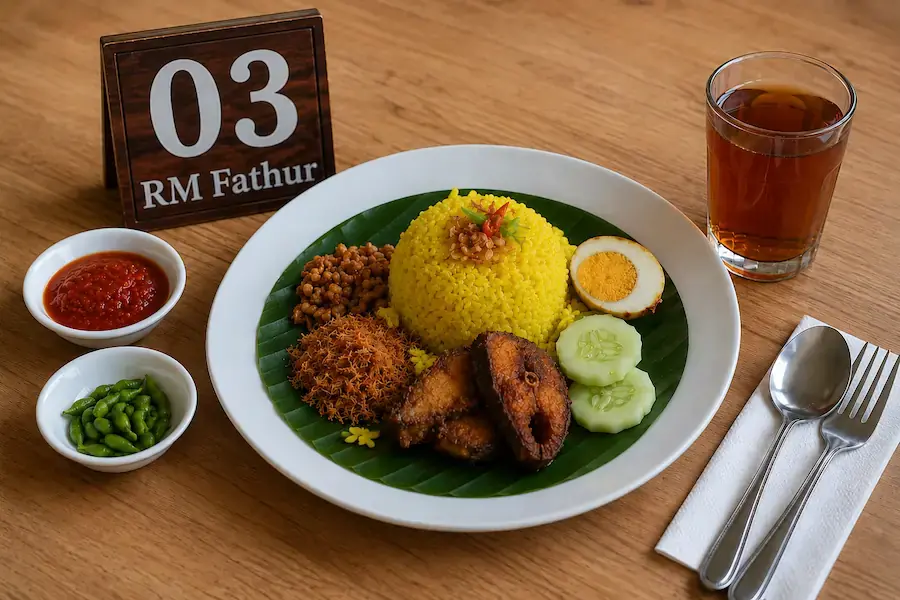
One of the most famous accompaniments is haruan fish, also known as snakehead fish. This freshwater fish native to Kalimantan has firm meat and a rich savory flavor that pairs perfectly with yellow rice.
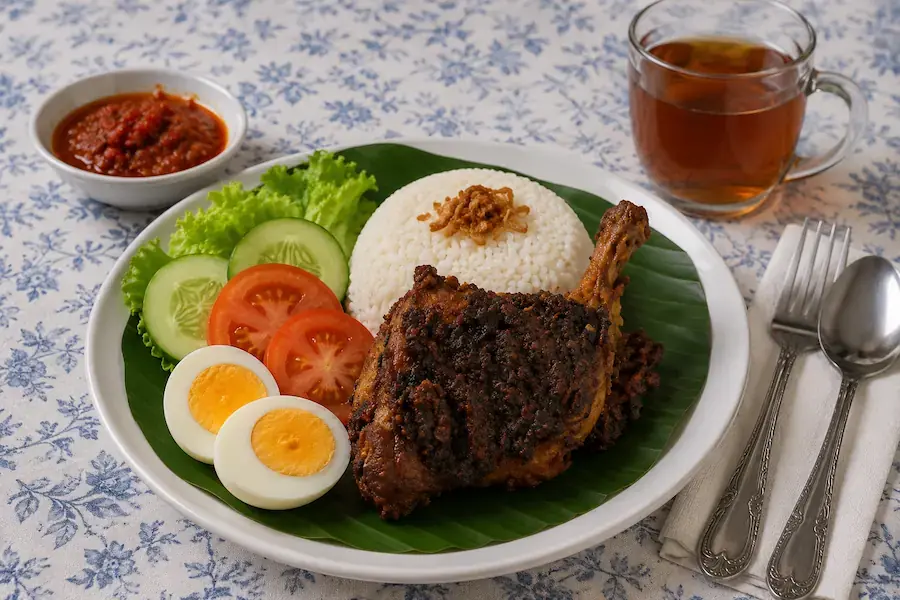
Besides haruan fish, ayam masak habang is another highly popular pairing. Masak habang is a traditional Banjar dish prepared with red chilies and selected spices, creating its distinctive sweet and savory flavor.
Other common accompaniments include boiled eggs, mie tongseng, sambal goreng, coconut serundeng, and a topping of crispy fried shallots. The serundeng adds a crunchy and savory element that enhances the complexity of flavors in every bite.
When all of these components come together, they create a dish rich in texture, aroma, and authentic Banjar flavors.
A Flavor Experience That Keeps People Coming Back for More
The first bite of Banjar Yellow Rice usually delivers the gentle aromas of turmeric and pandan. Soon after, the savory richness of coconut milk gradually takes over the palate, followed by a subtle sweetness that is characteristic of Banjar cuisine.
The rice's moderately firm texture allows each grain to be distinctly felt when chewed. When paired with ayam masak habang or seasoned haruan fish, the savory and sweet flavors become even richer and more satisfying.
The coconut serundeng provides a crunchy contrast to the softness of the rice, while sambal goreng adds a touch of spiciness that enriches the overall dining experience.
This combination makes Banjar Yellow Rice not only filling but also memorable, leaving a lasting impression that is difficult to forget.
From a Noble Delicacy to the Favorite Breakfast of the Banua People
The long journey of Banjar Yellow Rice demonstrates how a traditional food can evolve alongside changing times. In the past, this dish was reserved for traditional ceremonies, religious rituals, and celebrations among the nobility.
Today, Banjar Yellow Rice has become an integral part of everyday life in South Kalimantan. From the early morning hours, numerous food stalls and street vendors offer yellow rice as a practical and satisfying breakfast option.
Although it has become an everyday meal, the cultural significance attached to yellow rice remains well preserved. It is still frequently served at traditional ceremonies, weddings, thanksgiving gatherings, and many other important celebrations.
Banjar Yellow Rice, the Culinary Identity of South Kalimantan
Banjar Yellow Rice is far more than simply yellow-colored rice. Behind every serving lies a long history rooted in royal traditions, cultural philosophies, and the rich culinary heritage of the Banjar people.
The unique use of local firm-textured rice, the prominent role of coconut milk, the simple seasoning, and the presence of traditional side dishes such as haruan fish and ayam masak habang distinguish Banjar Yellow Rice from yellow rice found in other regions of Indonesia.
From a ceremonial dish of the kingdom era to a favorite breakfast among modern communities, Banjar Yellow Rice continues to endure as one of the most important culinary symbols of South Kalimantan. Every bite offers not only its distinctive sweet and savory flavor but also tells a long story of the history, culture, and identity of the Banjar people.