
Kandangan Coconut Milk Ketupat: A Culinary Heritage of the Banjar People
South Kalimantan is home to a rich variety of traditional culinary treasures. Among the many Banjar specialties that have survived to this day, there is one simple yet uniquely flavorful dish known as Katupat Balamak.
The Banjar people also refer to it as Ketupat Balamak, a dish made from ketupat cooked in coconut milk, resulting in a rich savory flavor that permeates every grain of rice.
Katupat Balamak originates from Kandangan, South Hulu Sungai Regency (HSS), South Kalimantan. It is one of the 41 traditional Banjar cakes and foods that have been passed down from generation to generation.
Although it appears simple, its preparation requires considerable time and careful attention to detail to achieve the perfect texture and flavor.
The Meaning Behind the Name Katupat Balamak
The name Katupat Balamak comes from the Banjar language. The word “katupat” means ketupat, rice cooked inside a woven young coconut leaf casing. Meanwhile, “balamak” means rich coconut milk or creamy fat with a savory taste.
Together, Katupat Balamak can be interpreted as “ketupat cooked in savory coconut milk.” The name reflects the dish’s defining characteristic: the generous use of coconut milk that is fully absorbed into the ketupat.
It is no surprise that its natural savory taste is the most distinctive feature of this traditional Kandangan delicacy.
A Culinary Heritage from Kandangan, South Hulu Sungai
For the people of South Hulu Sungai, especially those in Kandangan, Katupat Balamak is more than just food. It has long been part of the local culinary culture and continues to appear on many important occasions.
Its existence demonstrates how the Banjar people transform simple ingredients into a dish with a strong cultural identity.
In its place of origin, Katupat Balamak can still be found in traditional markets, specialty food stalls, and the Ramadan Wadai Market, which attracts large crowds every fasting month.
This dish remains one of the symbols of Banjar gastronomy that has endured despite the rise of modern foods.
Simple Ingredients with Extraordinary Flavor
The uniqueness of Katupat Balamak lies in the simplicity of its ingredients. The dish is made from selected rice placed inside woven young coconut leaf casings.
Typically, around half a kilogram of rice is divided among 10 to 12 ketupat casings for a single batch.
Besides rice, the other key ingredient is fresh coconut milk extracted from mature coconuts. This coconut milk is the secret to Katupat Balamak’s delicious taste.
The fragrance of pandan leaves and a small amount of salt complete the ingredient list, creating a savory flavor without the need for artificial seasonings.
When served, Katupat Balamak can be paired with side dishes such as fried haruan fish, chicken opor, sambal, or chayote vegetables.
However, many people enjoy it without any side dishes because the rich coconut milk flavor alone provides a satisfying experience.
A Preparation Process That Takes Hours
Making Katupat Balamak is not a quick process. The rice is first washed thoroughly and then soaked with pandan leaves for about an hour so that the aroma is absorbed.
After adding salt and draining the rice, it is placed into the ketupat casings until they are about three-quarters full, leaving room for expansion during cooking.
The ketupat is then boiled in a large pot of water for four to five hours. This lengthy process ensures that the rice is fully cooked and develops a firm, chewy texture.
During boiling, the water level must be monitored continuously and replenished as needed so that the ketupat remains completely submerged.
Once cooked, the ketupat is usually rinsed with cold water to remove any surface residue. It is then hung to dry before moving on to the next stage: the balamak process, or the addition of coconut milk.
Two Methods of Preparing Katupat Balamak
The people of Kandangan recognize two methods of making Katupat Balamak. The first involves boiling the ketupat directly with coconut milk and salt until the coconut milk reduces and dries.
This method allows the coconut milk to penetrate deeply into the ketupat, producing a denser texture and a stronger savory flavor. Once all the coconut milk has been absorbed, the ketupat can be eaten without any additional sauce.
The second method involves first preparing a coconut milk sauce using fresh coconut milk, pandan leaves, salt, and a little water. The cooked ketupat is then added to the sauce and simmered again until it thickens.
The result is ketupat with a delicate coconut milk flavor and an even more fragrant aroma.
Both methods produce delicious Katupat Balamak. The difference lies only in the thickness of the coconut milk and the serving style preferred by each family.
Distinctive Appearance and Flavor
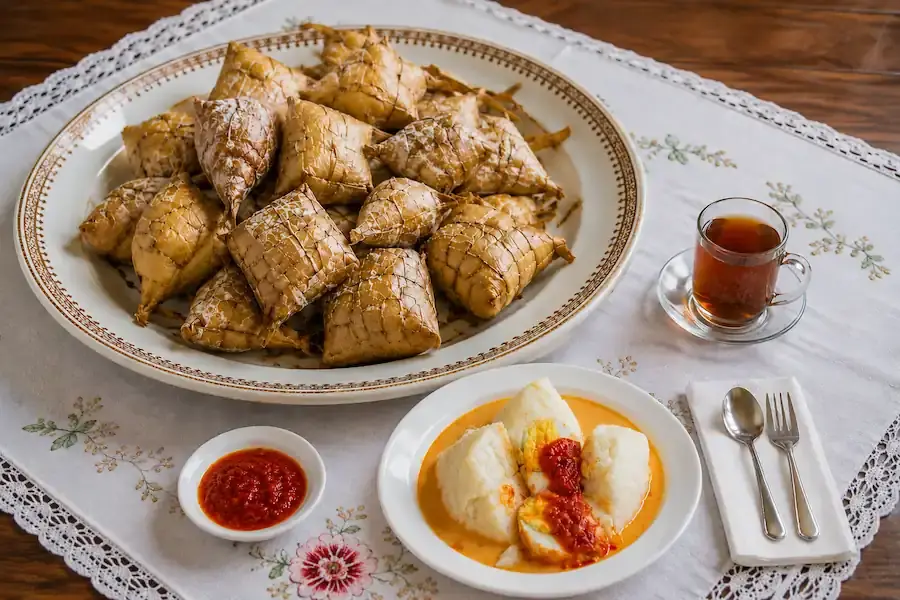
Katupat Balamak has a simple yet appetizing appearance. The ketupat remains white, with a slight creamy-yellow tint from the coconut milk.
Its texture is denser than ordinary ketupat because the coconut milk has fully penetrated the interior.
When eaten, the rich savory flavor of coconut milk is immediately noticeable without requiring complicated seasonings. The chewy texture of the ketupat combined with the creaminess of the coconut milk creates a distinctive sensation rarely found in other ketupat dishes.
The thickened or dried coconut milk formed during cooking also provides a richer layer of flavor compared to ketupat boiled only in water.
Because of these characteristics, Katupat Balamak is often compared to coconut milk ketupat dishes from other regions. However, its distinctive Banjar flavor and cooking technique give it a unique identity among Indonesia’s many ketupat varieties.
When Is Katupat Balamak Served?
Katupat Balamak is often served during important moments in Banjar society. During Eid al-Fitr celebrations, it becomes one of the favorite dishes served alongside various side dishes.
It is also commonly found at traditional ceremonies such as weddings, thanksgiving gatherings, and circumcision celebrations.
Although it carries strong traditional value, this food is not limited to festive occasions. In Kandangan, Katupat Balamak is also enjoyed as an everyday meal that is both filling and flavorful.
The Difference Between Katupat Balamak and Ketupat Kandangan
One common misconception is that Katupat Balamak and Ketupat Kandangan are the same dish. In reality, they have distinct characteristics despite originating from the same region.
Katupat Balamak is ketupat cooked with coconut milk until the milk is absorbed or even completely dried out. Traditionally, it is served without sauce or additional side dishes. Its flavor relies entirely on the natural richness of coconut milk infused into the ketupat.
Ketupat Kandangan, on the other hand, is a more complete dish. The ketupat is boiled separately in water and then topped with a thick, spice-rich coconut milk gravy flavored with ingredients such as lemongrass, aromatic ginger, and galangal.
This dish is almost always served with seasoned and smoked haruan fish (snakehead fish).
The presence of haruan fish is one of the defining characteristics of Ketupat Kandangan. Fresh fish is typically seasoned with tamarind water, salt, and turmeric before being smoked for approximately six hours using coconut shells.
The lengthy smoking process produces a distinctive aroma that is one of the dish’s main attractions.
While Katupat Balamak highlights the simplicity of coconut milk absorbed into the ketupat, Ketupat Kandangan offers a more complex flavor profile through its spiced coconut gravy and smoked haruan fish.
Surviving Varieties of Ketupat Kandangan
Interestingly, the people of South Hulu Sungai recognize two types of gravy for Ketupat Kandangan. The first is a white gravy with a fresher and slightly sweeter flavor, commonly found in Wasah and Simpur, South Amandit District.
The second is a savory yellowish gravy that contains more coconut milk and spices, commonly found in the Hulu Amandit area.
This diversity reflects the richness of Kandangan’s culinary traditions, which have evolved according to the character of each community and region.
A Banjar Culinary Heritage Worth Preserving
Katupat Balamak proves that traditional dishes do not require expensive ingredients or complicated seasonings to achieve exceptional flavor.
The combination of rice, coconut milk, pandan leaves, and salt creates a dish that is simple yet rich in flavor and cultural significance.
As one of the Banjar culinary treasures from Kandangan, South Hulu Sungai, Katupat Balamak offers not only delicious taste but also a story of tradition, patience in cooking, and local wisdom passed down through generations.
This is why Katupat Balamak remains one of South Kalimantan’s traditional foods that deserves to be known, enjoyed, and preserved.