
Traces of Arab Culture and Islamic Preaching in Captivating Movements
Japin Dance is one of the traditional performing arts most closely associated with the lives of the Banjar people in South Kalimantan. This dance is widely recognized as a social dance that combines entertainment, Islamic preaching, and Malay cultural elements into a dynamic performance.
Its rhythmic movements, the dominance of rapid footwork, and religious-themed poetic verses distinguish Japin Dance from many other traditional dances across the Indonesian archipelago.
Although it has become an integral part of South Kalimantan’s cultural identity today, Japin Dance actually has historical roots that extend as far as the Arabian Peninsula. Through a long process of cultural acculturation, the dance evolved into a uniquely Banjar art form while retaining the Islamic values that accompanied it from the beginning.
The Origins of Japin Dance from Arabia
Japin, or Zapin Dance, originated from Arab culture, particularly from Yemen, which for centuries maintained close connections with the Malay world. According to several sources, Zapin was even known as a dance that once flourished in the royal courts of Persia before spreading throughout various Islamic regions.
The name Zapin is believed to derive from the Arabic word zafn or al-zappin, meaning "swift foot movements." This meaning perfectly reflects the dance’s defining characteristic, which emphasizes agile and rhythmic footwork.
Zapin spread to the Indonesian archipelago through Arab scholars, merchants, and missionaries who traveled to the Malay region via Indian trade routes and the Strait of Malacca.
From there, the art form developed widely across North Sumatra, Riau, the Riau Islands, West Kalimantan, East Kalimantan, South Kalimantan, and even among the Betawi community in Jakarta.
In Malay oral tradition, there is a story linking the origins of Zapin movements to the Hijrah of Prophet Muhammad (PBUH) from Mecca to Medina.
As Islam began to flourish, the Prophet’s companions are said to have expressed their joy through rhythmic foot movements as a form of gratitude for the rise of Allah’s religion. This story is often associated with the spiritual values embodied in Japin Dance.
From a Medium of Islamic Preaching to a Social Dance
During its early development, Zapin was more than just entertainment. It served as a medium for Islamic preaching, conveying religious teachings to the community. For this reason, the accompanying verses typically contained moral advice, religious teachings, praises to Allah SWT, and examples from the life of Prophet Muhammad (PBUH).
Over time, Japin Dance evolved into a social dance enjoyed by people from all walks of life. It is commonly performed at community celebrations, traditional ceremonies, family gatherings, cultural festivals, and religious events.
Although its entertainment function became increasingly prominent, its preaching element has been preserved through verses rich in moral messages and Islamic values.
Japin Dance in South Kalimantan
In South Kalimantan, Japin Dance developed into an art form with its own distinctive character. The Banjar people regard it as an important part of their local culture, and one of its best-known variants is Zapin Kuala.
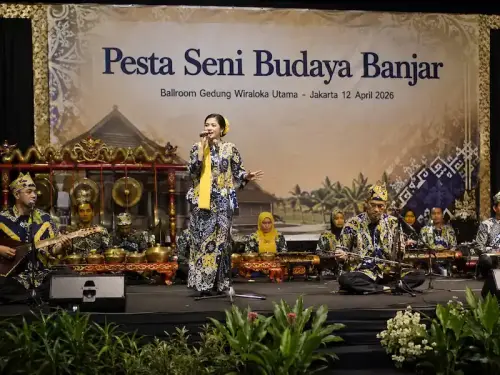
Unlike in some other Malay regions, Banjar Japin Dance is characterized by the use of the gong as a primary musical accompaniment and the presence of a poet who recites religious-themed verses throughout the performance.
The combination of dance movements, musical rhythms, and poetic recitations creates a unique atmosphere. Audiences not only enjoy the beauty of the dancers’ movements but also receive life lessons conveyed through the verses.
For this reason, Japin Dance in South Kalimantan is often regarded as a harmonious blend of performing arts and religious education.
Characteristics of Japin Dance Movements
The most prominent characteristic of Japin Dance is its dominance of rapid and rhythmic footwork. This aligns with the origin of the word zafn, which specifically refers to foot movements.
The dance does not place excessive emphasis on rigid choreography. Instead, it is known for its flowing and rhythmic movements, allowing dancers a certain degree of freedom to express themselves according to the music.
Nevertheless, Japin Dance in South Kalimantan features several distinctive movement patterns, including Sisit, Siksak, Tahtul, Matjus, Langkah Lima, Susun Sirih, Goyang Bahu, Siuk, and Buang Anak.
Additional variations include forward steps, turning movements, and lateral gliding motions that enrich the performance’s dynamics.
The Philosophical Meaning of the Nine Japin Movement Variations in South Kalimantan
Behind its seemingly simple movements, each variation in Japin Dance carries philosophical meanings closely connected to Islamic teachings.
Sisit, the fundamental movement, symbolizes sincerity and obedience in following religious guidance. Meanwhile, Siksak, performed in a zigzag pattern, is often interpreted as a symbol of Prophet Muhammad’s Hijrah journey to Medina, filled with challenges and struggles.
Tahtul represents humility and submission before God. Matjus, performed with forward steps, symbolizes courage in spreading Islamic teachings and the determination to continue moving toward goodness.
One of the most meaningful movements is Langkah Lima (Five Steps). The five steps are often interpreted as symbols of the Five Pillars of Islam or the five daily prayers that form the foundation of a Muslim’s life.
Susun Sirih symbolizes the orderly practice of remembrance (dhikr) and prayer. Goyang Bahu represents the unity of Muslims in fostering brotherhood and social bonds. Siuk reflects hospitality in welcoming guests according to Islamic ethical teachings.
Meanwhile, Buang Anak is interpreted as a symbol of letting go of negative traits, sins, and undesirable behavior.
Together, these movements make Japin Dance more than just an entertaining performance; they transform it into a medium for conveying life values rooted in Islamic teachings.
Islamic Values in Japin Dance
Japin Dance is widely recognized as a dance deeply inspired by Islamic values. Nearly every element within it contains religious significance, whether expressed through movement or poetic recitation.
Devotion to God is reflected in movements such as Alif and Tahto, which are also known in the broader Malay Zapin tradition. Values of brotherhood and kinship are illustrated through synchronized steps performed harmoniously by pairs or groups of dancers.
Other values conveyed include perseverance, sincerity, hard work, mutual cooperation, and respect for fellow human beings. These values are communicated subtly through artistic expression, making them easily accepted by society.
For this reason, Japin Dance has long been used as an effective medium for Islamic preaching, particularly within Malay communities and Islamic boarding schools.
Distinctive Musical Accompaniment
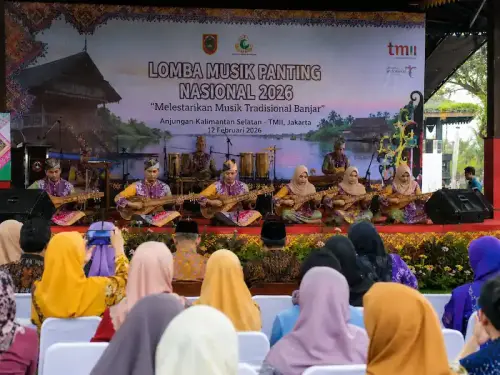
Music is an inseparable part of Japin Dance. In many Malay regions, Zapin is generally accompanied by the gambus and marwas, musical instruments originating from Arab traditions.
In South Kalimantan, however, Japin Dance possesses its own unique characteristics. In addition to traditional instruments, performances are often accompanied by the sound of a gong and poetic verses recited by a poet. These verses typically contain religious teachings, moral advice, and messages about life.
The rhythms used tend to follow patterns that harmonize with the dancers’ footwork, creating a lively and energetic performance.
Costumes of Japin Dancers
The costumes worn in Japin Dance reflect a blend of Malay culture and Islamic influence.
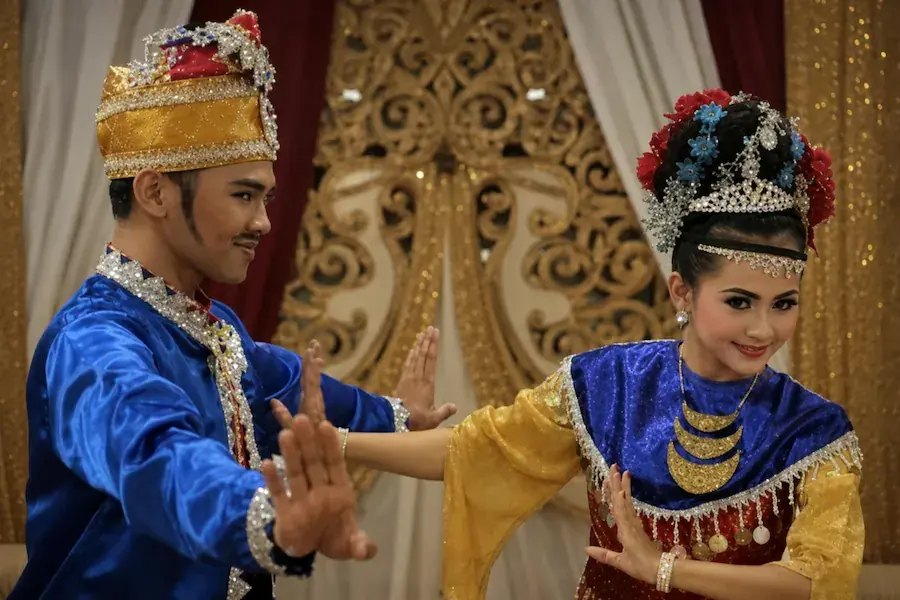
Male dancers typically wear a kopiah (traditional cap), paired with a kampret shirt, batik trousers, a sarong, and a sash. This attire creates an appearance that is simple yet dignified.
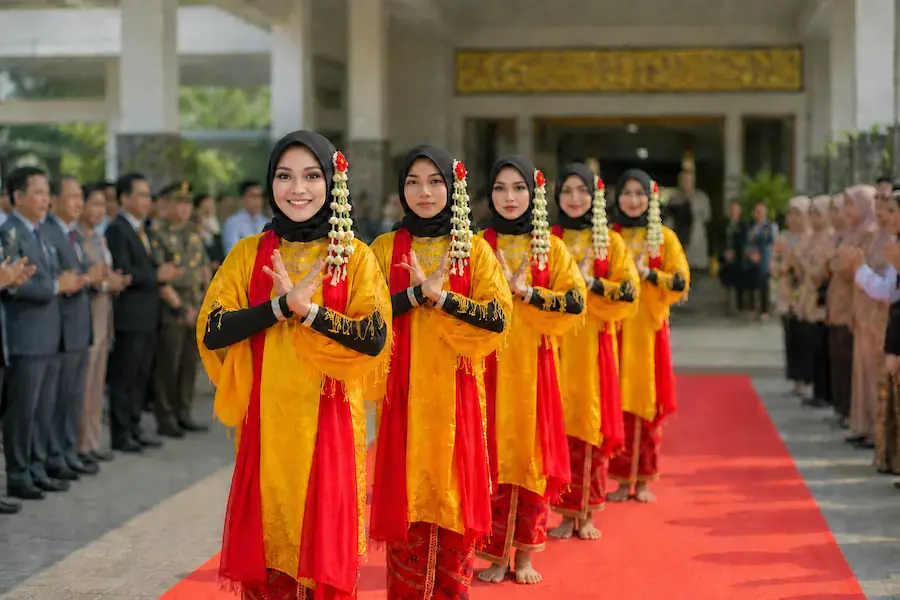
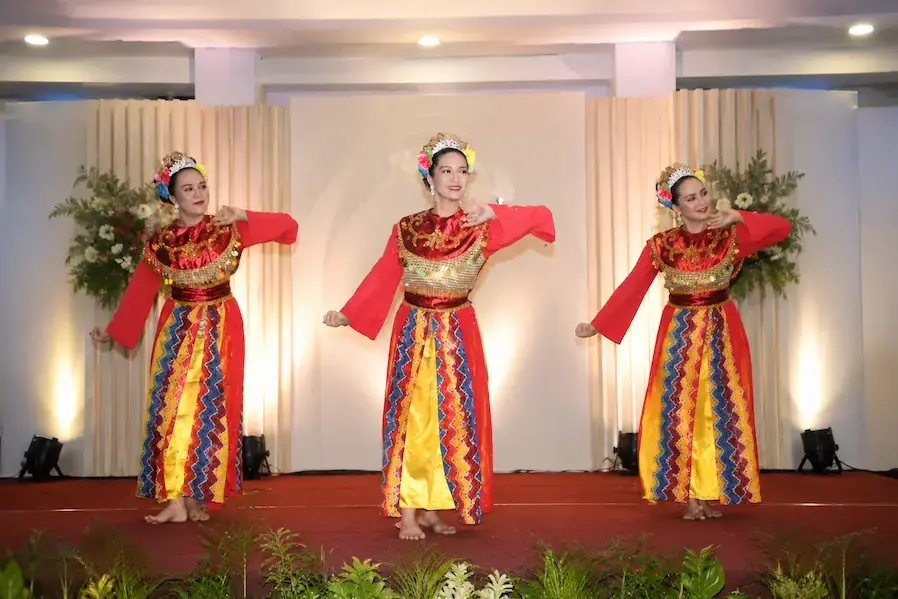
Female dancers wear the baju kurung, one of the iconic garments of Malay culture. This outfit is complemented by a sarong and a crown-like headpiece adorned with feathers.
The colors used are generally bright and vibrant, including red, yellow, green, and blue. These colors contribute to the festive atmosphere of the performance while reflecting the spirit and joy of Malay society.
Differences Between South Kalimantan Japin and Riau Malay Zapin
Although they share the same cultural roots, South Kalimantan Japin Dance differs in several ways from the Zapin traditions that developed in Riau and other Malay regions.
The most notable difference lies in the variety of movements. South Kalimantan Japin features nine distinctive movement patterns: Sisit, Siksak, Tahtul, Matjus, Langkah Lima, Susun Sirih, Goyang Bahu, Siuk, and Buang Anak. These movement variations are not found in their complete form within Riau Malay Zapin.
Musically, South Kalimantan Japin is known for its use of the gong and poetic recitations, while Riau Zapin is more closely associated with the gambus and marwas as its primary accompaniment.
Philosophically, Banjar Japin emphasizes symbols related to Islamic preaching, such as the Hijrah, the Five Pillars of Islam, dhikr, and moral development. In contrast, Riau Malay Zapin tends to focus more on values of courtesy, determination, patience, and social relationships within Malay society.
Despite these differences, both traditions clearly demonstrate their shared roots as part of the Islamic and Malay cultural heritage.
A Living Cultural Heritage
To this day, Japin Dance remains one of the most widely recognized traditional arts in South Kalimantan. It is not only featured in cultural events and festivals but also serves as a symbol of Banjar identity, reflecting a harmonious blend of art, religion, and tradition.
As a product of Arab and Malay cultural acculturation, Japin Dance demonstrates how an art form can evolve with the times without losing its historical roots.
Behind its swift footwork and rhythmic movements lies a message about devotion to God, the importance of maintaining social bonds, the spirit of Islamic preaching, and life values that remain relevant today.
That is why Japin Dance is more than just a social dance—it is a living legacy of Islamic-Malay culture and a source of pride for the people of South Kalimantan.