
Chinese-Banjar Cuisine and the Influence of Milk in Peranakan Cuisine
Among the many traditional dishes of South Kalimantan, Sop Mutiara holds a unique place. This dish is not merely an ordinary chicken soup, but a culinary creation that reflects the long history of cultural acculturation in Banjarmasin.
Sop Mutiara is recognized as one of the traditional Banjar specialties that continues to be served at various family celebrations, particularly during important occasions within the Peranakan Chinese community in South Kalimantan, including Lunar New Year festivities.
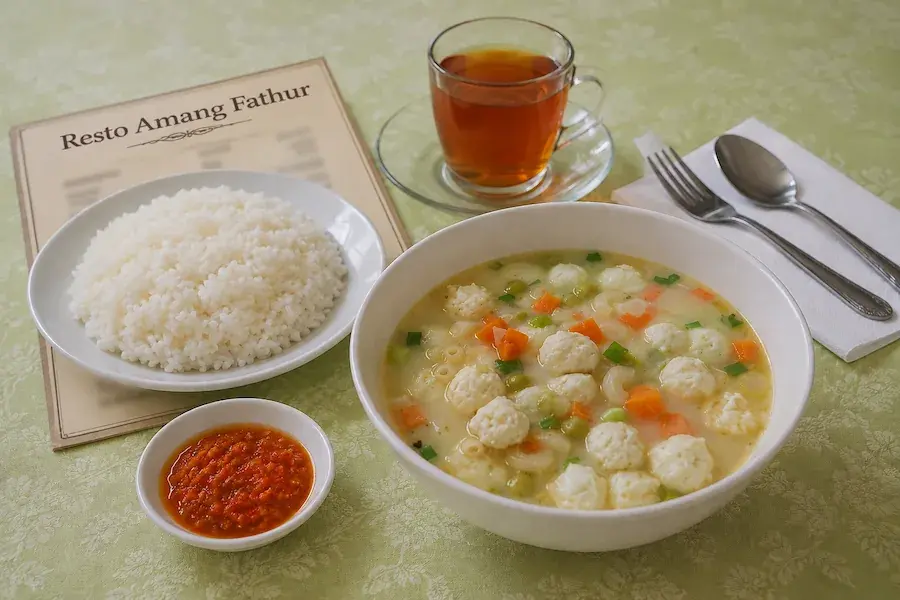
The name “Mutiara” (Pearl) comes from its signature filling, which resembles small pearl-like beads. These round pieces are made from a mixture of ground chicken and mashed boiled potatoes, then shaped into small balls resembling mini meatballs.
This distinctive appearance is the hallmark of Sop Mutiara and sets it apart from typical chicken soups.
In addition to its unique shape, another attraction of Sop Mutiara lies in its creamy white broth. The broth is created by combining chicken stock with evaporated milk and milk powder, resulting in a smooth, creamy, and savory texture.
The combination of chicken stock and milk produces a rich flavor rarely found in traditional Indonesian soup dishes.
Unique Characteristics That Distinguish Sop Mutiara
At first glance, Sop Mutiara may appear to be an ordinary chicken soup. However, upon closer inspection, several characteristics make it distinctly different.
While traditional Indonesian chicken soups generally feature whole chicken pieces and a clear broth, Sop Mutiara presents small chicken-and-potato balls that serve as its defining identity.
The broth is also not clear but creamy white due to the use of evaporated milk.
The ingredients in Sop Mutiara are also more diverse. In addition to carrots and chicken, the dish is usually complemented with green peas, boiled macaroni, sliced beef sausages, and a topping of fried shallots and celery.
These ingredients create an appealing combination of textures, blending the smoothness of the milk-based broth, the chewiness of macaroni, and the savory taste of the pearl-shaped balls.
In terms of flavor, Sop Mutiara offers a richer character than ordinary chicken soup. The chicken stock provides a savory foundation, while the milk contributes a creamy and slightly sweet sensation that makes the broth feel smoother on the palate.
This is why Sop Mutiara is often described as having a “legit” flavor, a term in Banjar culinary tradition that refers to a balanced blend of savory and sweet tastes.
Traditional Banjar-Style Sop Mutiara Recipe
The preparation of Sop Mutiara begins with making its signature pearl balls. Finely ground chicken fillet is mixed with mashed boiled potatoes, egg yolks, milk powder, margarine, salt, and pepper.
The mixture is then stirred until evenly combined before being shaped into small balls. Afterward, the balls are boiled until cooked and floating.
Meanwhile, the broth is prepared by sautéing onions and garlic in margarine until fragrant. Pieces of chicken and carrots are then added and cooked until partially done before water is poured in.
Once the broth reaches a boil, green peas, sausages, macaroni, and the pearl balls are added to the pot.
The final step is adding seasonings such as salt, pepper, nutmeg, and evaporated milk. It is the milk that transforms the broth into its creamy white color while giving Sop Mutiara its distinctive flavor.
Once fully cooked, the dish is served with a garnish of fried shallots and celery, then enjoyed alongside warm steamed rice.
The Beginning of Chinese Acculturation in the Land of Banjar
To understand the origins of Sop Mutiara, it is important to look at the long-standing relationship between the Banjar people and the Chinese community. Historical records indicate that Chinese traders had been coming to the Indonesian archipelago for centuries.
Their presence in South Kalimantan has been documented since around the 13th century and became increasingly significant when Banjarmasin developed into a major pepper trading center during the 16th century.
Trade interactions that lasted for hundreds of years created opportunities for cultural exchange. Many Chinese traders eventually settled in the region, married local women, and formed Peranakan Chinese communities.
From this process emerged various forms of cultural acculturation, including in the field of cuisine.
The Peranakan community became a bridge that brought together Chinese cooking techniques and local Banjar ingredients. Many recipes passed down from generation to generation were gradually adapted to suit the environment and culinary preferences of the local population.
How Chinese Cuisine Adapted to Banjar Culture
The process of culinary acculturation did not happen overnight. Many dishes that originally used traditional Chinese ingredients were gradually modified to be more acceptable to the Banjar community, the majority of whom are Muslim.
Ingredients such as pork were progressively replaced with chicken, beef, or shrimp. The use of local spices also became increasingly prominent, resulting in flavors distinct from those of traditional Chinese cuisine.
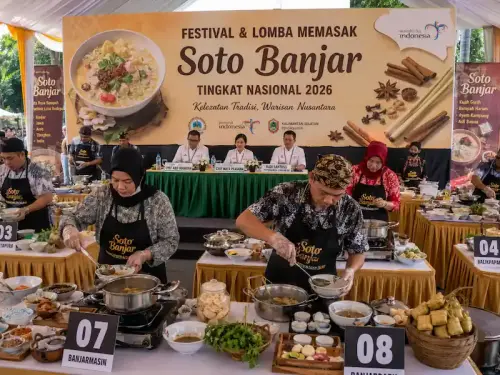
This influence can be seen in many dishes that are now considered part of Indonesia’s culinary identity. Soto Banjar, for example, is believed to be linked to the Chinese terms “jao to” or “cao do,” which refer to offal-based preparations.
Over time, the dish evolved into the distinctive Banjar-style soto known today.
A similar phenomenon can also be observed in dishes such as bakso, wontons, rice vermicelli, noodles, kway teow, and cap cay, all of which have become part of everyday Indonesian cuisine.
Sop Mutiara as a Symbol of Peranakan Cuisine
Sop Mutiara is one of the most fascinating examples of Peranakan cuisine in South Kalimantan. The chicken balls that resemble meatballs reflect the influence of Chinese meat-processing techniques. However, the ingredients used have been fully adapted to local cultural traditions.
Within the Peranakan Chinese community of Banjarmasin, Sop Mutiara also holds symbolic significance, as it is frequently served during Lunar New Year celebrations and important family gatherings.
The dish represents the harmonious relationship between Chinese heritage and Banjar culture that has developed over centuries.
Dutch Influence in the Use of Milk
The uniqueness of Sop Mutiara is not derived solely from Chinese influences. The use of milk in its broth also reflects European cultural influence, particularly from the Dutch.
In traditional Indonesian cuisine, coconut milk is typically the primary ingredient used to create rich and savory broths. However, in several Peranakan dishes and foods influenced by the colonial era, milk began to be used as an alternative.
The use of milk creates a different flavor profile—smoother, creamier, and characterized by a distinctive aroma not found in coconut milk-based dishes.
In South Kalimantan, this influence can also be seen in certain variations of Soto Banjar that use evaporated milk to produce a thicker broth. This culinary tradition is likewise reflected in Sop Mutiara.
Why Milk Gives Sop Mutiara Its Distinctive Character
The addition of evaporated milk and milk powder plays an essential role in shaping the identity of Sop Mutiara. In terms of texture, milk makes the broth thicker and smoother.
Visually, it transforms the broth into a creamy white color that immediately distinguishes it from ordinary chicken soup.
In terms of flavor, milk creates a more complex savory profile. The chicken stock provides a strong flavor foundation, while the milk contributes a smooth richness that balances spices such as nutmeg and pepper.
The final result is a broth that feels rich and flavorful while remaining light and enjoyable to eat.
This combination makes Sop Mutiara one of the finest examples of the successful blending of multiple culinary traditions within a single bowl.
Soto Banjar and the Meeting of Five Cultures
When discussing culinary acculturation in South Kalimantan, Soto Banjar is often regarded as the most comprehensive example. The dish is the result of an encounter between several distinct cultural influences.
Chinese traditions contributed to the concept of soto and various ingredient-processing techniques. Dutch influence can be seen in the use of milk and the soup-based style. India contributed a rich array of spices that resemble the characteristics of curry.
Arab culture introduced spices such as cloves, cinnamon, and fennel. Meanwhile, the Banjar people added a local touch through the use of regional ingredients and distinctive spices.
The meeting of these five cultures gave birth to a completely new culinary identity unique to South Kalimantan.
Cultural Heritage in a Bowl of Sop Mutiara
Sop Mutiara is more than just a homemade dish. It serves as tangible evidence of how cultures can blend and create something new without losing their individual identities.
The small pearl-like chicken balls reflect Chinese culinary roots. The smooth milk-based broth reveals Dutch influence. The use of spices introduces elements of Arab, Indian, and Banjar traditions that blend harmoniously together.
All of these elements come together in a single dish that is now recognized as part of Banjarmasin’s culinary heritage.
For this reason, Sop Mutiara deserves to be viewed not only as a traditional Banjar specialty but also as a symbol of historical journeys, trade, cultural encounters, and centuries of acculturation that have taken place in South Kalimantan.