

The Princess Who Became the Ancestor of the Banjar Kings
Putri Junjung Buih, the Most Famous Legend in Banjar History
When discussing the history and culture of South Kalimantan, no figure is more legendary than Putri Junjung Buih. Her story exists at the intersection of history, mythology, and the beliefs of the Banjar people, passed down from generation to generation for centuries.
For the Banjar people, Putri Junjung Buih is not merely a character from folklore. She is a symbol of royal origins, a source of political legitimacy, and a sacred figure believed to be the ancestor of the kings of South Kalimantan.
Her story began during the era of the Kingdom of Negara Dipa, when the newly established kingdom needed a ruler with noble blood and the legitimate right to sit upon the throne.
This is where the legend of Putri Junjung Buih begins.
Ampu Jatmika’s Final Wish That Changed History
According to the Hikayat Banjar, the founder of the Kingdom of Negara Dipa was Ampu Jatmika, a wise leader who successfully established a great kingdom in the region of South Kalimantan during the 14th century.
However, there was one major concern that troubled him in his old age. Although he was the founder of the kingdom, Ampu Jatmika did not come from a royal lineage. In the royal traditions of that era, a person without noble blood was not considered a legitimate ruler.
This realization led Ampu Jatmika to refrain from appointing himself or his children as successors to the kingdom. Near the end of his life, he instructed his two sons, Empu Mandastana and Lambung Mangkurat, to seek a leader who possessed the rightful claim to become the ruler of Negara Dipa.
This command marked the beginning of a spiritual journey that would give birth to one of the greatest legends in the history of Kalimantan.
Lambung Mangkurat’s Meditation by the River
After receiving their father’s mandate, the two brothers chose the path of meditation and ascetic practice to seek guidance from the supernatural realm.
Empu Mandastana meditated in the mountains, while Lambung Mangkurat secluded himself along the banks of a peaceful river.
In the beliefs of the ancient Banjar people, rivers were more than just sources of life. They were regarded as bridges between the human world and the spiritual realm. Rivers were places where life began, trade routes flourished, and sacred traditions were honored.
For days, weeks, and even months, Lambung Mangkurat continued his meditation and spiritual discipline. Then one day, an extraordinary event occurred.
In the middle of the calm river, a cluster of white foam appeared and gradually grew larger. The foam swirled upon the water’s surface and emitted an unusual glow.
Lambung Mangkurat watched the phenomenon in amazement. From within the swirling foam, a remarkably beautiful woman slowly emerged.
The Emergence of the Princess from the Foam
The woman who emerged from the river foam was described as possessing beauty beyond comparison. Her face radiated light, her garments shimmered brilliantly, and her presence brought a profound silence to the surrounding area.
In the mythological version of the Hikayat Banjar, she is believed to have come from the supernatural world or the realm of the gods. She appeared as the answer to Lambung Mangkurat’s meditation and as the ruler destined to govern Negara Dipa.
Because she was found emerging from foam floating upon the river, she became known as Putri Junjung Buih. The name carries deep symbolic meaning.
The word "Junjung" means honored, revered, and elevated to a high position. Meanwhile, "Buih" refers to the mysterious foam from which she emerged on the river’s surface.
Symbolically, the name Putri Junjung Buih can be interpreted as a figure born in purity and raised to be honored by all the people.
The Philosophical Meaning of Foam in Banjar Culture
In the worldview of the ancient Banjar people, emerging from foam was far from an ordinary event.
Water symbolized life, fertility, and prosperity. Rivers served as the lifeblood of South Kalimantan’s communities since ancient times.
The appearance of a queen from river foam symbolized that royal authority originated from nature itself and carried the blessing of a higher power.
This legend also reflects the close relationship between the Banjar people and their rivers. It is therefore unsurprising that nearly all centers of ancient Banjar civilization developed along the major rivers that traverse South Kalimantan.
The Princess’s Conditions Before Becoming Queen
When Lambung Mangkurat asked the princess to rule Negara Dipa, Putri Junjung Buih did not immediately agree.
She presented several conditions that had to be fulfilled first. One of them was the construction of a special palace made from Batung Batulis, a sacred bamboo believed to possess spiritual power.
She also requested a magnificent cloth woven by dozens of selected maidens within an extraordinarily short period. These demands were not merely tests of the abilities of the people of Negara Dipa.
In Banjar cultural interpretation, these conditions symbolized a kingdom’s readiness to receive its rightful ruler. Before a queen could govern, the people had to demonstrate unity, cooperation, and sincere dedication.
After all the requirements were successfully fulfilled, Putri Junjung Buih finally agreed to leave the water and enter the royal capital.
Putri Junjung Buih Becomes the Queen of Negara Dipa
The arrival of Putri Junjung Buih brought significant change to the Kingdom of Negara Dipa.
She was subsequently crowned as the supreme ruler of the kingdom. Meanwhile, Lambung Mangkurat chose to remain as the kingdom’s chief minister and principal advisor.
This decision carried significant political meaning. By placing Putri Junjung Buih on the throne, Negara Dipa gained a form of legitimacy believed to originate from a sacred lineage blessed by the forces of the universe.
In various Banjar folk traditions, the reign of Putri Junjung Buih is portrayed as a period of peace, prosperity, and abundance.
Marriage to Prince Suryanata
The legend of Putri Junjung Buih did not end with her coronation as queen.
To strengthen the kingdom, Lambung Mangkurat sought a worthy consort for the princess.
His choice fell upon a nobleman from Majapahit known as Prince Suryanata. The marriage between Putri Junjung Buih and Prince Suryanata carried profound symbolic significance.
From a cultural-historical perspective, this union represented the meeting of two great worlds. Putri Junjung Buih symbolized the indigenous power of Kalimantan, while Prince Suryanata embodied the influential civilization of Java and the Majapahit Empire.
From their union emerged a royal lineage that would later rule various kingdoms throughout South Kalimantan.
Ancestor of the Banjar Kings
The most important role of Putri Junjung Buih in Banjar history lies in her position as the ancestor of the region’s rulers.
According to Banjar royal tradition, the lineage of Putri Junjung Buih continued through the Kingdom of Negara Daha and later extended to the Banjar Sultanate.
For this reason, many rulers in Kalimantan sought to trace their ancestry back to Putri Junjung Buih. Such genealogical connections became a highly important source of political legitimacy.
A king was considered to possess the rightful authority to rule if he could demonstrate descent from Putri Junjung Buih.
This legend even extends beyond the borders of South Kalimantan. Several kingdoms in Central Kalimantan and West Kalimantan also preserve traditions linking their ancestral origins to the figure of Putri Junjung Buih.
Putri Junjung Buih in Modern Beliefs and Traditions
Although centuries have passed, the name of Putri Junjung Buih remains alive in the collective memory of the people of South Kalimantan.
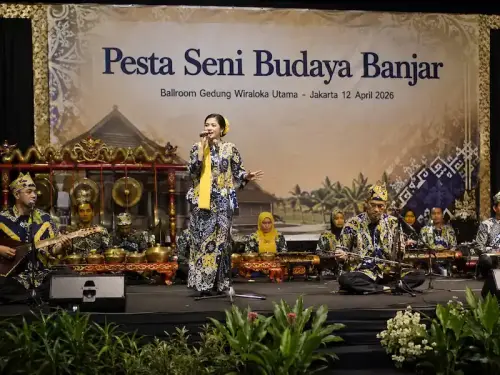
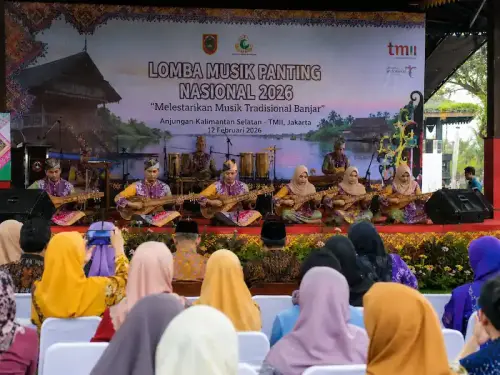
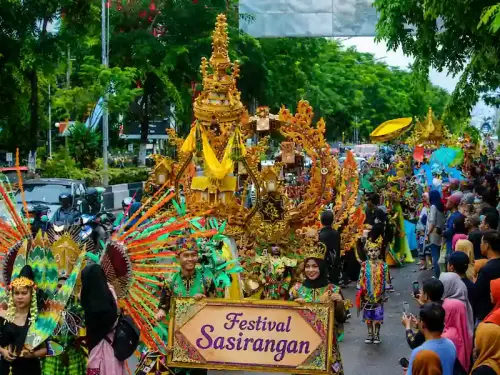
Her story is taught through folklore, performed in traditional cultural arts, and continues to serve as an important part of Banjar cultural identity.
In the Amuntai region, particularly around the Candi Agung archaeological site, the legend of Putri Junjung Buih remains especially strong. Many local residents associate the area with the golden age of Negara Dipa and the story of the princess’s miraculous appearance.
For many people, Putri Junjung Buih is not merely a legendary figure but also a symbol of wisdom, honor, and unity.
The Enduring Legacy of the Princess from the River Foam
The tale of Putri Junjung Buih is one of South Kalimantan’s most treasured cultural heritages. It is not merely the story of a princess who emerged from river foam, but also a reflection of how the Banjar people understood the origins of authority, the relationship between humanity and nature, and the importance of legitimacy in governance.
Along the rivers that flow across South Kalimantan, the legend of Putri Junjung Buih continues to live on from generation to generation. It serves as a reminder that Banjar history was shaped not only by historical events and kingdoms, but also by great stories that continue to define the identity, pride, and spirit of its people to this day.