
Early Traces of the Heir to the Banjar Throne
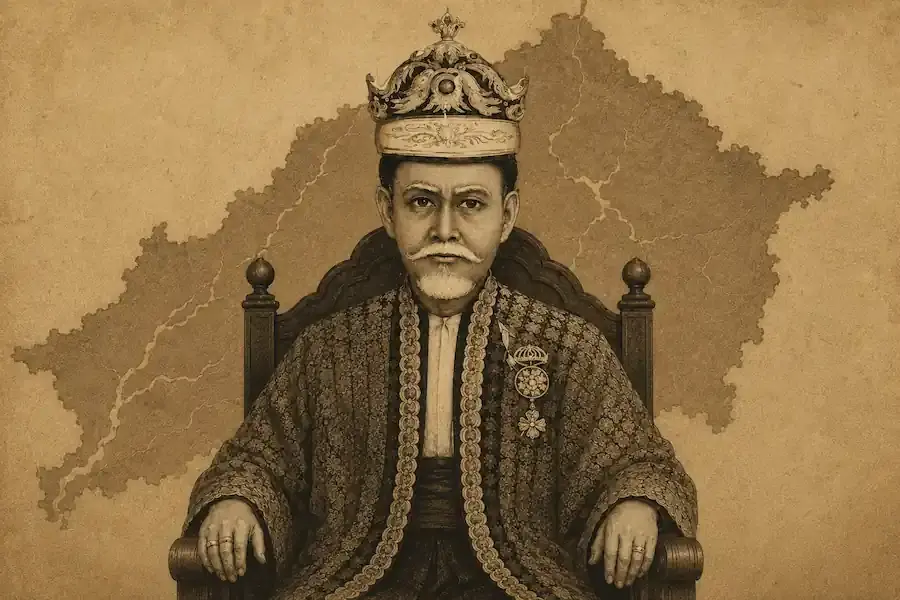
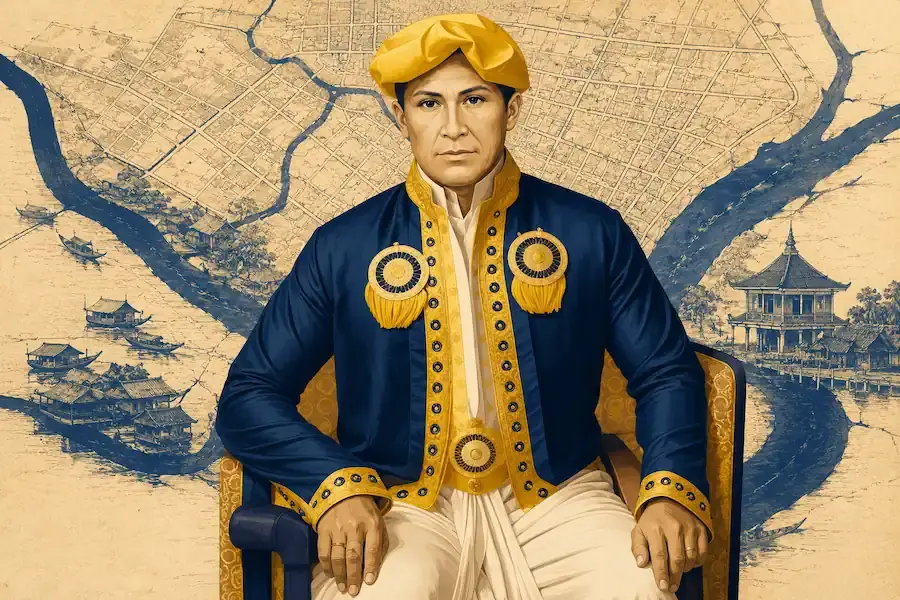
In the long history of the Banjar Sultanate, the name Pangeran Hidayatullah, born as Gusti Andarun, stands as one of the most important and complex figures in the power struggle against Dutch colonial rule. He was born around 1821–1822 in Martapura, South Kalimantan, into a noble family of the Banjar Sultanate.
His father was Sultan Muda Abdurrahman (Pangeran Ratu), while his mother was Ratu Siti, and he was the grandson of Sultan Adam Alwasikibillah, one of the great sultans of Banjar.
Throughout history, he was known by several honorary titles such as Pangeran Hidayatullah, Hidayatullah II, and his full title Al Sulthan Hidayatullah Alwasikibillah or Sultan Hidayatullah Halil Illah.
These titles were not merely symbolic, but reflected the strong legitimacy attached to him within the succession structure of the Banjar Sultanate.
However, the journey to the throne was never simple. He grew up amid political dynamics increasingly influenced by Dutch intervention, until he eventually became a central figure in the major conflict known as the Banjar War (1859–1863).
A Disputed Throne: Between the Sultan’s Testament and Colonial Interests
The early peak of the conflict occurred when Sultan Adam Alwasikibillah issued a testament on 12 Safar 1259 H (1855 CE), appointing Pangeran Hidayatullah as the rightful successor to the Banjar Sultanate. In the context of royal law, this made him the legitimate de jure heir with full authority.
However, this decision did not align with Dutch colonial interests. The colonial government instead appointed Pangeran Tamjidillah (Tamjidullah II) as the Sultan of Banjar.
This marked the beginning of a sharp dualism of power. Hidayatullah represented legitimacy according to custom and royal will, while Tamjidillah represented the Dutch-installed ruler.
The situation escalated further when the people of Banjar in various regions, especially Banua Lima, recognized Hidayatullah as sultan in a de facto sense. For the people, he was not only the heir to the throne but the leader they genuinely acknowledged amid political crisis and colonial pressure.
The Mangkubumi Who Became Commander of Resistance
Before becoming a symbol of resistance, Pangeran Hidayatullah served as Mangkubumi, the deputy of the sultan in the administrative structure of the Banjar Sultanate. In this role, he was actively involved in building relationships with the people and regional leaders, strengthening social and political networks across various areas.
When the conflict with the Dutch escalated, his role changed drastically. He was no longer just a royal official, but became the main commander of the Banjar War.
In this war, he organized resistance strategies across Martapura, Banua Lima, and Tanah Dusun, using a broad and scattered warfare pattern involving the full strength of the people.
In 1859 in Amuntai, another major resistance figure, Pangeran Antasari, even appointed Hidayatullah as the highest leader of Banjar with the title Sultan Hidayatullah. From that moment, he became the central figure of the Banjar people’s resistance against colonialism.
The Dutch themselves referred to him as “hoofdopstandeling”, meaning “chief rebel leader.” This term highlights how significant his role was in organizing a structured and widespread resistance movement.
War Strategy and the Spirit of Nationalism that Mobilized the People
The resistance led by Pangeran Hidayatullah was not random or unorganized. He developed strategies that involved all layers of society, from nobles to common people.
Historical records show that he had the ability to read social conditions and transform them into a powerful force of resistance.
At a meeting on 3 November 1857 in Martapura, a key political principle emerged that became the foundation of the conflict: opposing Sultan Tamjidillah is equivalent to opposing the Dutch . This statement clarified Hidayatullah’s political stance as a representation of anti-colonial resistance.
Behind all of this were strong personal values. He was known for his sense of shared fate with the people, strong family bonds, great responsibility, hard work, and social concern. These values made him not only respected as a nobleman but also loved as a people's leader.
Two Sultans in Conflict: Hidayatullah vs Tamjidillah
The main conflict in the history of the Banjar Sultanate was not merely about succession, but a struggle between two forms of legitimacy.
On one side, Pangeran Hidayatullah held strong legitimacy from Sultan Adam’s testament, popular support, and recognition from resistance leaders such as Pangeran Antasari. He was both de jure and de facto sultan in the eyes of the Banjar people.
On the other side, Pangeran Tamjidillah (Tamjidullah II) was appointed by the Dutch without any royal testament basis. He became a symbol of colonial power and is often described in historical records as a puppet sultan used to control the Banjar Sultanate from within.
This difference created severe tension that eventually erupted into the Banjar War of 1859–1863, one of the longest and most significant wars in Kalimantan.
Arrest and Exile to Cianjur
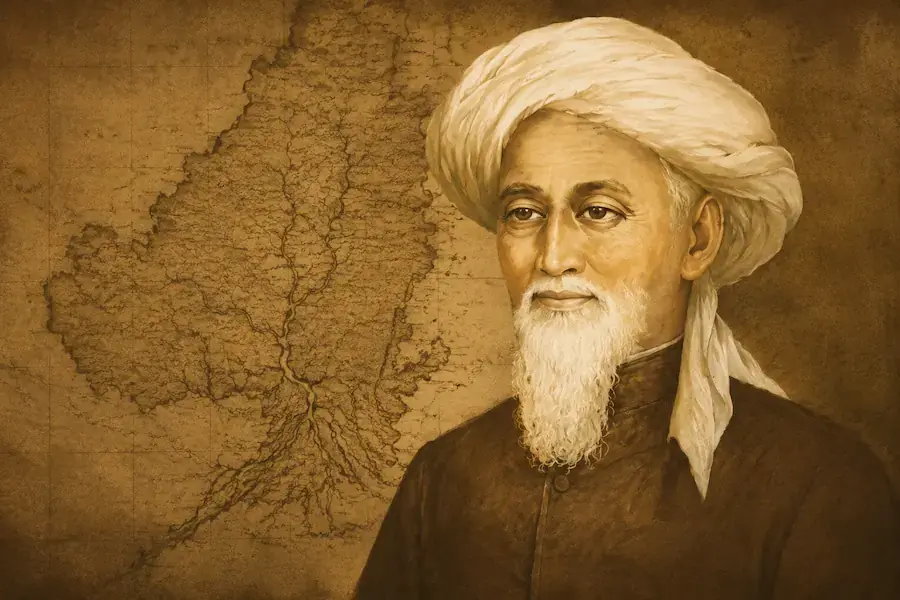
After a long resistance, Pangeran Hidayatullah was eventually captured by the Dutch. He was first exiled to Batavia, before being transferred to Cianjur, West Java, as a political prisoner under city surveillance.
It was in exile that the final phase of his life began, though not as the end of his struggle. In Cianjur, he became known as the “Yellow-Robed Ulama”, a title given by the local community due to his religious activities.
He taught classical Islamic texts (kitab kuning), adhered to Ahlussunnah wal Jama’ah, and practiced the Sammaniyyah Sufi order he had learned in Martapura. From a military commander, he transformed into a respected spiritual figure.
Until his death on 24 November 1904 in Cianjur, he continued his religious mission. In Cianjur, he is even regarded as one of the great heroes of the Banjar resistance history.
Character, Legacy, and Historical Footprint
Pangeran Hidayatullah is known as a figure who refused to become a Dutch puppet, a principle that defines his entire life journey. He did not grow up in palace luxury, as much of his childhood was spent in Martapura among the local community with his mother.
His leadership character was evident in his ability to organize resistance systematically while maintaining strong religious values until the end of his life. The combination of political leader and religious scholar makes him a unique figure in Nusantara history.
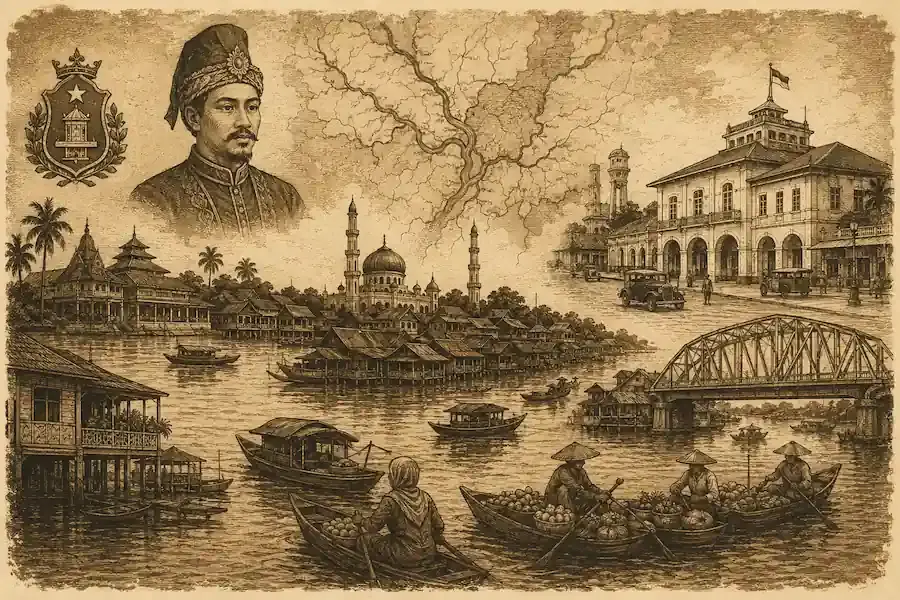
His legacy still lives on today. One of the most well-known examples is the Pangeran Hidayatullah Bridge in Banua Anyar, Banjarmasin, marking his lasting presence in both geography and collective memory of South Kalimantan society.
A Symbol of Resistance and Banjar Dignity
Pangeran Hidayatullah was not merely a historical figure, but a symbol of the struggle between local sovereignty and colonial power. He was the legitimate sultan according to royal testament, a war leader recognized by the people, and a respected religious scholar in exile.
The dispute between him and Tamjidillah was not only an internal royal conflict, but the main trigger of the Banjar War, marking a crucial chapter in the history of resistance in the Nusantara region.
To this day, his name is remembered as a representation of firm resistance: refusing to submit, refusing to become a tool of colonialism, and choosing to stand with the people until the end of his life.