
The Last Sultan of Banjar to Hold Absolute Power
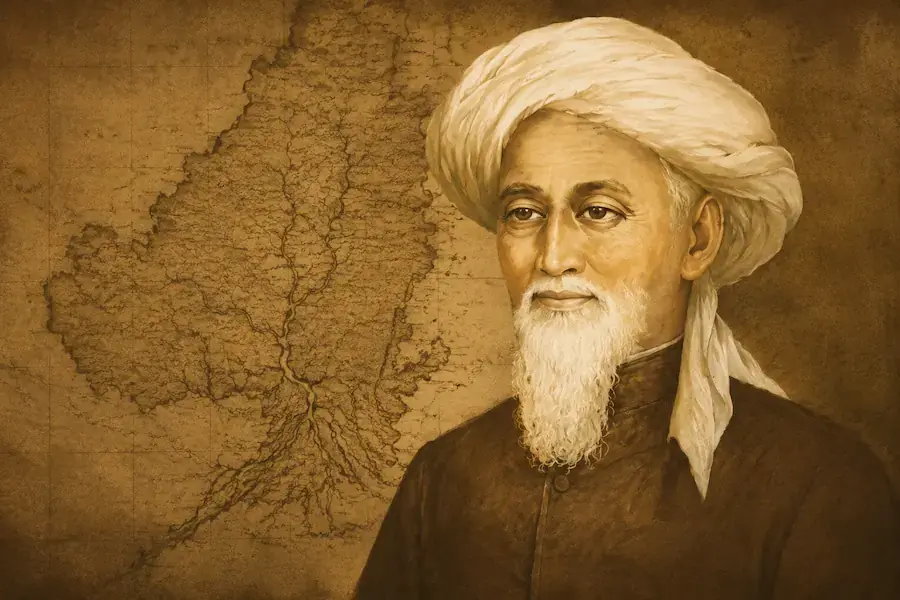
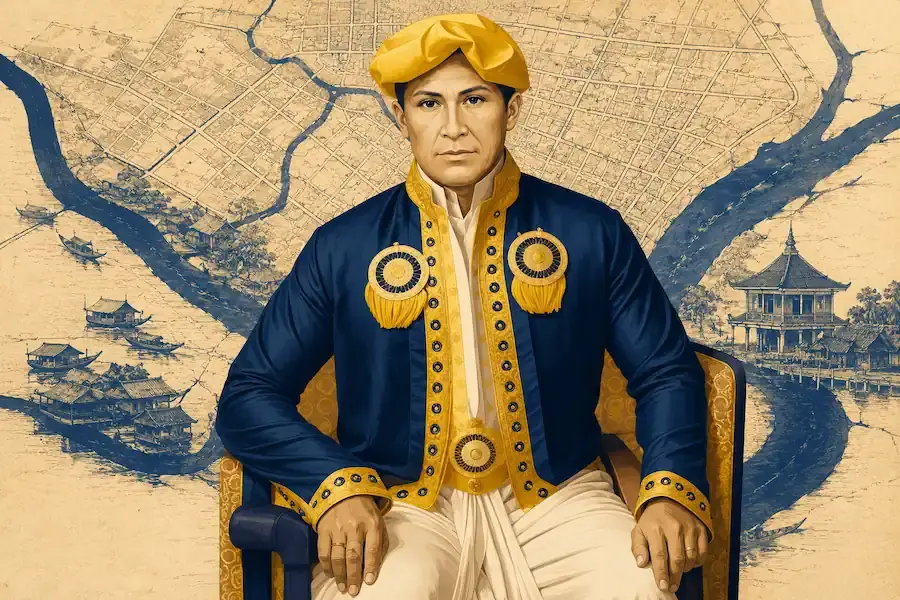
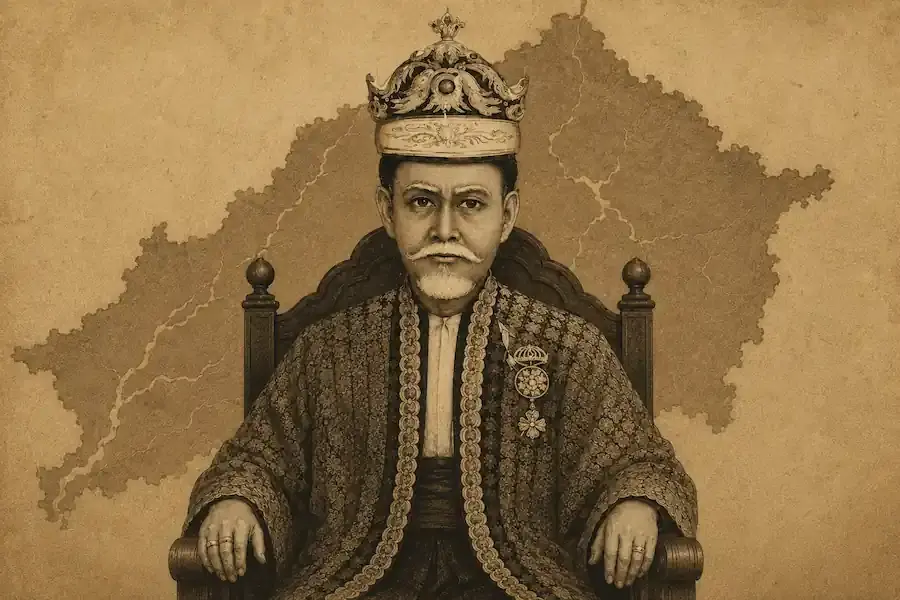
The name Sultan Sulaiman Saidullah II holds an important place in the history of the Banjar Sultanate. He is remembered as one of the finest rulers ever to lead the kingdom and as the last Sultan to enjoy absolute authority before Dutch colonial intervention increasingly dominated the government of South Kalimantan.
In various historical records, he is also known by the titles Sulaiman al-Mu'tamid 'alā'Llāh and Sulaiman Rahmatullah.
His reign marked a crucial period in history, standing between two major eras: the time when the Banjar Sultanate exercised full sovereignty and the period when Dutch influence began to grow stronger in the political, economic, and administrative affairs of the kingdom.
His rule, which lasted from 1801 to 1825, is remembered as one of the most prosperous and significant periods in the history of the Banjar Sultanate.
During this time, considerable efforts were made to preserve the kingdom’s sovereignty, reclaim territories that had previously been ceded to the Dutch, and uphold the dignity of Banjar amid increasing colonial pressure.
Born into the Royal Lineage of Banjar
Sultan Sulaiman Saidullah II was born on January 16, 1761, in Karang Intan, a region that was an important part of the Banjar Sultanate. He was the son of Susuhunan Nata Alam, also known as Sunan Nata Alam or Panembahan Batu. Through his mother, he was the son of Princess Lawiyah bint Muhammad.
The noble blood that flowed through his veins came from a long line of Banjar rulers. His grandfather was Sultan Tahmidullah II, one of the most influential figures in the kingdom’s history. This royal lineage eventually established Sulaiman Saidullah as the legitimate heir to the throne of the Banjar Sultanate.
From a very young age, his future as a royal leader had already been carefully prepared. In 1767, when he was only six years old, he was granted the title of Sultan Muda by his father.
The conferment of this title was not merely honorary. It was a strategic political move designed to strengthen the line of succession and ensure stability within the kingdom for generations to come.
Karang Intan as the Center of Royal Power
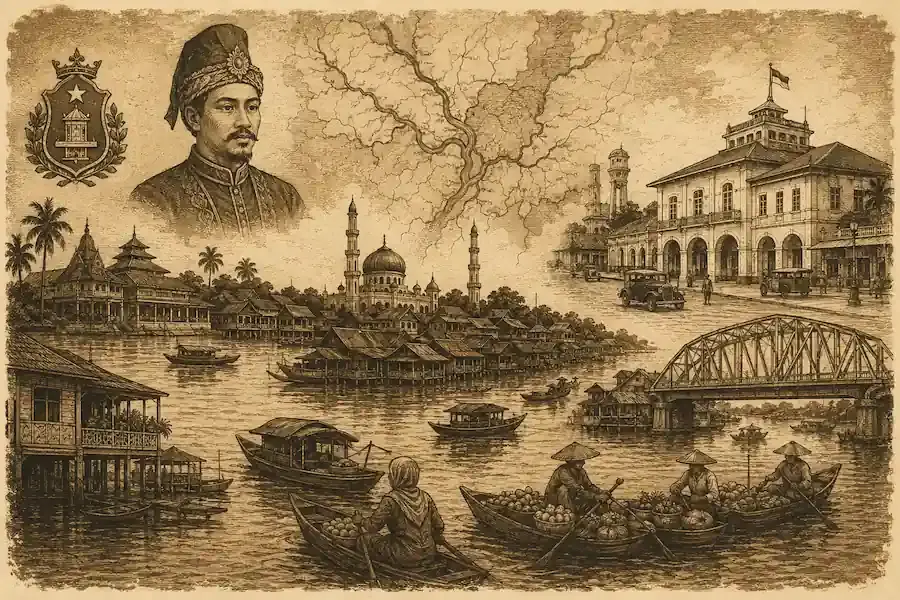
Karang Intan was not only the birthplace of Sultan Sulaiman Saidullah II. The region also played a vital role as the administrative center of the Banjar Sultanate during his reign.
During his leadership, the royal palace was relocated to Karang Anyar in Karang Intan. Previously, the kingdom’s center had been located in the Sungai Basar area, known as Karang Keraton.
The relocation of the royal court highlighted the growing importance of Karang Intan as the political and administrative hub of the kingdom in the early nineteenth century.
The presence of the palace transformed Karang Intan into a center of government, trade, and diplomatic relations between the Banjar Sultanate and various external powers, including the Dutch.
Ascension to the Throne of Banjar
After a long succession process, Sultan Sulaiman Saidullah II finally ascended the throne of Banjar in 1801. He succeeded Sultan Tahmidullah II and assumed leadership during a politically challenging period.
Although some historical sources suggest that his effective rule began in 1808, most records indicate that he held the reins of government from 1801 until his death in 1825.
In the historical chronology of the kingdom, Sultan Sulaiman Saidullah II is recognized as the nineteenth ruler of Banjar during the Hindu era and the eleventh Sultan during the Islamic era.
This position reflects the long and rich history of the Banjar Sultanate before it entered a period of intensified colonial influence.
The Last Banjar Sultan with Absolute Authority
One of the reasons Sultan Sulaiman Saidullah II remains such an important figure in history is that he is regarded as the last Sultan of Banjar to wield absolute power.
During his reign, major decisions concerning governance, law, diplomacy, and territorial administration remained entirely under the authority of the Sultan. He exercised full control over the affairs of the kingdom without significant external interference.
However, his reign also marked the beginning of a major transformation. Dutch influence in South Kalimantan continued to expand, and growing colonial pressure gradually reduced the independence of the Banjar Sultanate. For this reason, Sultan Sulaiman’s era is often viewed as a transitional period between full royal sovereignty and the rise of colonial domination.
Reclaiming Territories Lost to the Dutch
The greatest achievement of Sultan Sulaiman Saidullah II was his success in reclaiming territories that had previously been surrendered to the Dutch.
This accomplishment demonstrated that he was more than a capable administrator; he was a ruler with a clear vision for preserving the sovereignty and territorial integrity of his kingdom.
Historical records frequently cite these territorial recoveries as one of the primary reasons why his reign is regarded as one of the most successful periods in the history of the Banjar Sultanate.
His achievements also reflected his courage in confronting colonial pressures at a time when Dutch influence was steadily expanding throughout the Indonesian archipelago.
Political Conflict with the Dutch Colonial Government
The relationship between Sultan Sulaiman Saidullah II and the Dutch colonial government was often strained. In fact, the Dutch authorities refused to recognize him as the legitimate Sultan of Banjar.
This situation gave rise to significant political tensions. The colonial administration sought to pressure Sultan Sulaiman into renewing and redeeming various agreements that had previously been made between Banjar and the Dutch.
These disputes illustrate the broader strategy employed by the Dutch to expand their influence over local kingdoms throughout the archipelago. The Banjar Sultanate was among the kingdoms that faced this pressure directly.
The Story of the 26-Carat Diamond That Became Part of Banjar History
One of the most famous events during the reign of Sultan Sulaiman Saidullah II took place on September 9, 1809.
On that occasion, Sultan Sulaiman handed over a 26-carat diamond that was valued at approximately 50,000 guilders, or about 25,000 reals.
The transfer of the diamond was not a form of tribute to the Dutch. Instead, it was part of a political strategy aimed at regaining control of Dutch forts on Pulau Tatas, an area that is now part of the city of Banjarmasin, as well as the fort at Tabonio Beach.
This event took place during the administration of Herman Willem Daendels as Governor-General of the Dutch East Indies. Sultan Sulaiman’s decision demonstrated his skill in using diplomacy and negotiation to advance the interests of the kingdom.
The story of the 26-carat diamond remains one of the historical narratives most closely associated with the name of Sultan Sulaiman Saidullah II.
The Transition Toward the Era of Sultan Adam
Toward the end of his reign, Dutch influence grew increasingly stronger in the political life of the Banjar Sultanate. This situation became a major challenge for the kingdom.
When Sultan Sulaiman passed away in 1825, the throne was succeeded by his son, Sultan Adam Alwasih Billah. Sultan Adam ruled until 1857 and faced a far more complex political environment as Dutch intervention had become significantly greater than in previous years.
For this reason, Sultan Sulaiman is often regarded as the bridge between the independent golden age of the Banjar Sultanate and the period leading up to the outbreak of the Banjar War in 1859.
Death and Burial in Lihung Village
Sultan Sulaiman Saidullah II passed away on June 3, 1825, corresponding to 4 Rabiul Awal 1240 AH.
He was laid to rest in Lihung Village, Karang Intan District, Banjar Regency, South Kalimantan. The tomb complex is located approximately 20 meters from the banks of the Karang Intan River and continues to be well maintained by the local community.
Originally, the tomb structure resembled a traditional Banjar Bubungan Tinggi house. Over time, the building underwent several modifications and now features a concrete dome inspired by mosque architecture.
The local community also refers to the burial site as Makam Datu Keramat. The location has become one of the important historical sites connected to the legacy of the Banjar Sultanate.
Annual Haul and Tribute to Sultan Sulaiman
To this day, the name of Sultan Sulaiman Saidullah II continues to be remembered by the Banjar people through various religious and historical commemorations. Every year, a haul is held to mark the anniversary of his passing on June 3, 1825.
The annual commemoration is usually held at his tomb complex in Lihung Village, Karang Intan. The event serves not only as a tribute to the Sultan’s contributions but also as an important means of preserving Banjar history and culture for younger generations.
On several occasions, academics and historians such as Dr. Andin Sofyanoor have participated in the event, delivering presentations on Sultan Sulaiman’s significant role in the history of the Banjar Sultanate.
The Historical Legacy of Sultan Sulaiman Saidullah II
Sultan Sulaiman Saidullah II left an enduring legacy for the Banjar people. He is remembered as a ruler who courageously defended the sovereignty of his kingdom, successfully reclaimed lost territories, and became the last Sultan of Banjar to exercise absolute authority.
His leadership became a symbol of resilience in the face of colonial pressure while also marking the end of the era of complete royal independence.
His reign from 1801 to 1825 remains one of the most significant periods in the history of South Kalimantan, as it laid the foundation for many major events that followed, including the reign of Sultan Adam and the political developments that eventually culminated in the Banjar War.
Therefore, Sultan Sulaiman Saidullah II was not merely a king, but a pivotal transitional figure who helped shape the course of Banjar Sultanate history. His name continues to be remembered as one of the greatest sultans ever to rule the land of Banjar during a time of profound historical change.