

An Important Chinese Figure in the History of the Banjar Sultanate
The Architect of the Early History of Banjarmasin's Chinatown
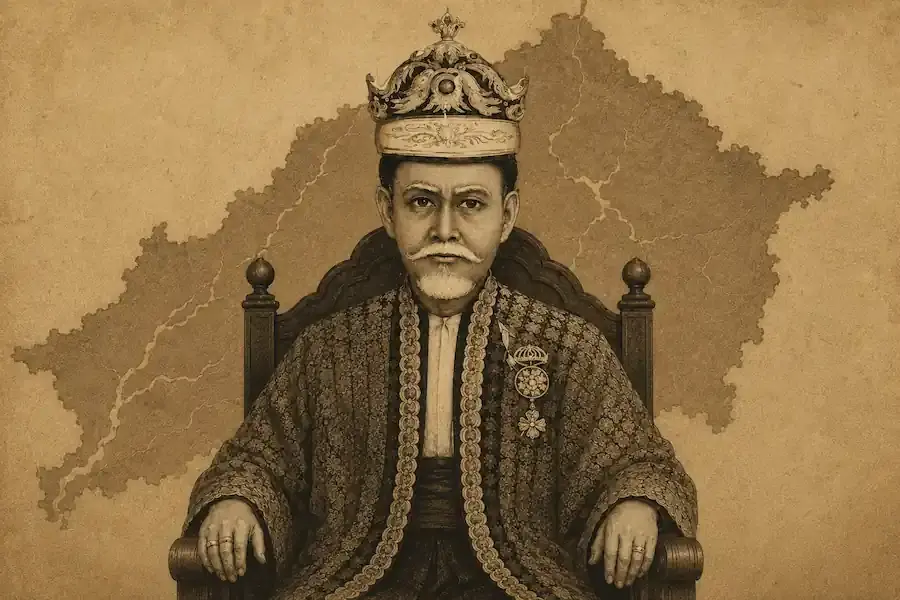
The name Liem Bian Kho, which is also written in some sources as Lin Bien Ko, is regarded as one of the most influential Chinese figures in the early history of the city of Banjarmasin.
In the early 18th century, when the Banjar Sultanate was under the rule of Sultan Hamiddullah, he was entrusted with the strategic position of Captain Syahbandar at Tatas Harbor, the main port that served as an international trading hub at the mouth of the Martapura River.
This position made Liem Bian Kho not only the leader of the Chinese community in Banjarmasin but also an important link between the Banjar Sultanate and regional trade networks that extended to China, the Indonesian Archipelago, and Europe.
His role was so significant that his name appears in numerous historical records concerning the development of trade and Chinese settlements in South Kalimantan.
The Presence of Chinese People in the Land of Banjar for Centuries
The relationship between the Land of Banjar and China had actually been established long before Liem Bian Kho emerged on the historical stage.
Since around the 14th century, Chinese trading vessels had sailed to the region of South Kalimantan to obtain valuable commodities, particularly forest products and spices.
When the Banjar Sultanate was founded in 1526, the Chinese community was already known and had settled in several trading areas. These economic ties grew even stronger in the early 18th century when Banjar pepper became one of the commodities most sought after on international markets.
At that time, Chinese merchants arrived from major ports in southern China, including Amoy (Xiamen), Canton (Guangzhou), Macau, and several other important port cities.
Their presence encouraged the growth of economic activities in Banjarmasin, which at the time had become one of the most important trading centers on the island of Kalimantan.
The Appointment of Liem Bian Kho as Captain Syahbandar
As trade became increasingly busy, the Banjar Sultanate needed a figure capable of bridging the interests of the kingdom and the Chinese merchant community.
Liem Bian Kho was subsequently entrusted with the position of Captain Syahbandar at Tatas Harbor during the first decade of the 18th century, around 1700–1710.
The office of Syahbandar held a highly important position at that time. The Syahbandar was responsible for supervising merchant ship traffic, regulating commercial activities, managing relations with foreign traders, and ensuring economic revenues for the kingdom.
As Captain Syahbandar, Liem Bian Kho also served as Kapitan Cina, or the official leader of the Chinese community in Banjarmasin.
He represented his community in dealings with the government of the Banjar Sultanate while also overseeing various administrative and economic matters related to Chinese residents.
Tatas Harbor, the Heart of Banjarmasin's Trade
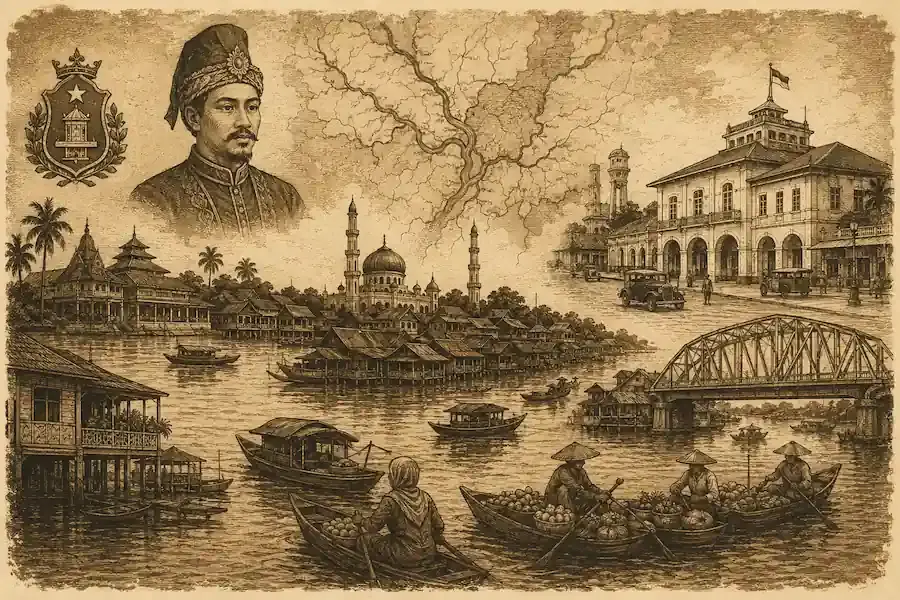
To understand the importance of Liem Bian Kho's role, it is necessary to look at the strategic position of Tatas Harbor during that era. Located at the mouth of the Martapura River, the harbor served as the main gateway for the trade of the Banjar Sultanate.
Through Tatas Harbor, a wide range of commodities such as pepper, rattan, damar resin, ironwood (ulin), beeswax, and other forest products were traded across various parts of Asia.
Ships from Java, Sulawesi, Malacca, China, and even Europe arrived continuously, bringing goods and establishing economic relations with the Banjar Sultanate.
Amid these intensive trading activities, Liem Bian Kho played a central role in organizing the arrival of Chinese vessels, facilitating commercial transactions, and maintaining good relations between foreign merchants and the royal government.
A Diplomat of the Banjar Sultanate in Relations with European Powers
The Sultan's trust in Liem Bian Kho was not limited to trade affairs. On several occasions, he was also entrusted with representing the Banjar Sultanate in negotiations with European powers that were beginning to expand their influence throughout the Indonesian Archipelago.
His deep understanding of international commerce made Liem Bian Kho an invaluable figure to the kingdom. He served as a bridge of communication between the Banjar Sultanate and the foreign merchants and representatives who arrived in Banjarmasin.
This diplomatic role demonstrates that his position extended far beyond that of merely a leader of the Chinese community. He was an important part of the governmental and commercial system of the Banjar Sultanate during his time.
Political Conflict and His Removal from Office in 1736
Despite his considerable influence, Liem Bian Kho's career did not end smoothly. In 1736, he was removed from his position by Sultan Hamiddullah.
This event was related to the Sultanate's efforts to strengthen its control over trade and its relations with the Chinese community, which at that time held significant economic influence in Banjarmasin.
His dismissal marked an important shift in the Banjar Sultanate's policies toward the Chinese community and commercial activities within its territory.
After losing his position as Captain Syahbandar, Liem Bian Kho's authority and influence within the government came to an end. Interestingly, however, the consequences of this event opened a new chapter in the history of the Chinese community in Banjarmasin.
The Beginning of Chinatown in Banjarmasin
The year 1736 is also recognized as the early period of the establishment of Chinatown in Banjarmasin. Following the removal of Liem Bian Kho, Sultan Hamiddullah granted permission for the Chinese community to establish a more organized residential settlement.
The settlement eventually developed into Kampung Pecinan (Chinatown), located in the area now known as Jalan Veteran in Central Banjarmasin. Over the centuries, this district became a center of Chinese economic, commercial, and cultural activities.
As the city continued to grow, another area known as Pecinan Laut, or Chinatown by the River, emerged along the banks of the Martapura River, particularly around Jalan Pierre Tendean. The term Laut ("sea" or "waterfront") was used because the area was oriented toward river transportation routes, which had long served as the lifeblood of trade in Banjarmasin.
The Role of the Chinese Community in Banjarmasin's Economic Development
The growth of Chinatown had a major impact on Banjarmasin's economic development. Chinese merchants were actively involved in regional trade, goods distribution, shipping enterprises, and financial activities.
Several historical sources also indicate that the Chinese community played a role in introducing the wider use of currency in commercial transactions throughout the Land of Banjar.
Before that, the barter system remained one of the most common methods of exchange in local trade.
Through their extensive trading networks, the Chinese community helped connect Banjarmasin with major economic centers across Southeast Asia and China. This contributed significantly to the city's emergence as one of the principal trading hubs in Kalimantan.
Klenteng Suci Nurani: A Lasting Legacy of Banjarmasin's Chinatown
The historical legacy of Banjarmasin's Chinese community can still be seen today through the existence of Klenteng Suci Nurani, also known as Sen Sen Kung. Built in 1898, the temple is located in the Pecinan Laut district near the intersection of Jalan Pierre Tendean and Jalan Veteran.
The temple was established by Kapitan Cina The Sinyoe together with Anglim Thay and is now recognized as one of Banjarmasin's important cultural heritage buildings. In addition to serving as a place of worship, the temple stands as a symbol of the enduring history of the Chinese community, which has lived alongside the Banjar people for centuries.
The Historical Legacy of Liem Bian Kho in Banjarmasin
Although his name is not as widely known as some of the other prominent figures in the history of the Banjar Sultanate, Liem Bian Kho made an exceptionally important contribution to the development of modern Banjarmasin.
He served as a bridge between the kingdom and the world of international trade, strengthened economic relations with China, and helped lay the foundation of the Chinese community that would later become an integral part of the city's social and economic life.
Ironically, his removal from office in 1736 became the starting point for the emergence of Chinatown, which would later grow into one of Banjarmasin's major commercial and business districts.
By the mid-19th century, the Chinese population of the city had exceeded two thousand residents, demonstrating the community's significant influence on the region's development.
To this day, traces of Liem Bian Kho's legacy can still be found in Banjarmasin's Chinatown districts, its long-standing river trading traditions, and the harmonious relationship that has existed for generations between the Banjar and Chinese communities.
For this reason, Liem Bian Kho, also known as Lin Bien Ko, deserves to be remembered as one of the key figures in the history of trade, diplomacy, and the multicultural development of the city of Banjarmasin.