
A Banjar Dance That Requires Its Dancers to Master Silat
Tari Bagandut is one of the traditional arts of the Banjar people that was once extremely popular in Banjarmasin and various regions of South Kalimantan. This dance is not only a form of folk entertainment but also carries a long history of social life, youth interactions, and performance traditions that have developed since the era of the Banjar Sultanate. Behind its lively and interactive movements, Tari Bagandut possesses a rich history, rules, and cultural values that distinguish it from other traditional dances across the Indonesian archipelago.
Tari Bagandut, a Traditional Banjar Social Dance on the Verge of Disappearance
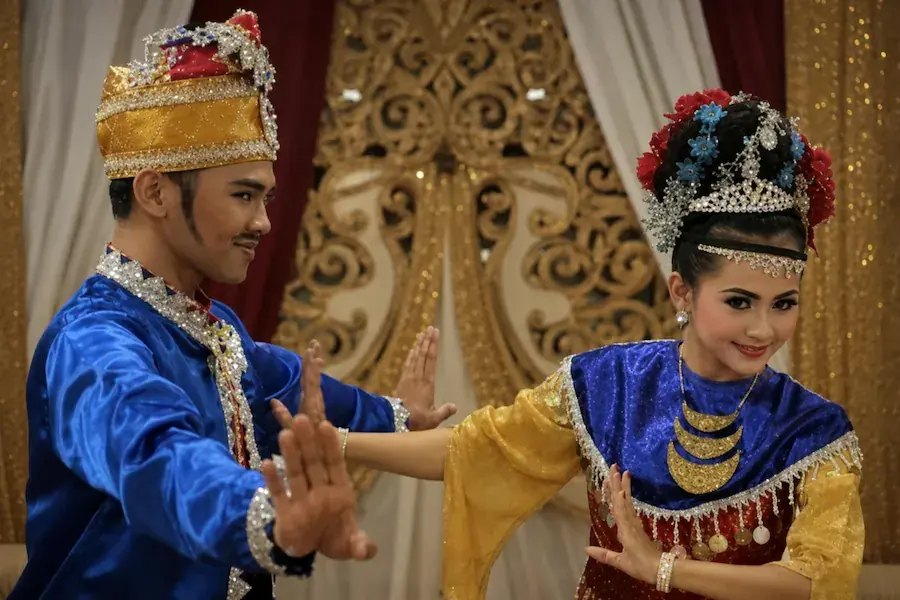
Within the cultural heritage of the Banjar people, Tari Bagandut is known as a paired dance performed by male and female dancers. The dance portrays a friendly social atmosphere filled with humor and interaction between two individuals who respond to each other through dance movements.
The name "Bagandut" is derived from the word "gandut", which refers to the female dancer in the performance. Meanwhile, her male counterpart is called a "bagandut". In traditional performances, the pair dances together and interacts while following the rhythm of distinctive Banjar music.
The uniqueness of Tari Bagandut lies in its improvisational nature. Not all movements are strictly choreographed. Dancers are given the freedom to be creative and adapt their movements to the atmosphere of the performance, the musical rhythm, and the responses of their dance partners.
The History of Tari Bagandut: From the Royal Court to the General Public
Tari Bagandut is believed to have developed since the 19th century. During its early years, the dance was part of the entertainment within the Banjar royal court or palace environment. Its existence was well known until around the 1860s.
Over time, this performing art gradually spread beyond aristocratic circles and reached various regions of the kingdom. From the palace, Tari Bagandut eventually developed in villages and became a form of entertainment for the wider community.
Several areas known as centers of Tari Bagandut development include Rantau in Tapin Regency, Margasari, Pabaungan, Pandahan, Parigi, Tatakan, and many other regions in South Kalimantan. The town of Rantau is even recognized as one of the places where the Bagandut tradition continues to leave a strong cultural legacy today.
Once it became a folk art, Tari Bagandut was often performed during wedding celebrations, harvest festivals, family gatherings, village festivities, and community fundraising events. Its presence served as entertainment capable of attracting large audiences.
The Meaning and Characteristics of Tari Bagandut
In general, Tari Bagandut depicts social relationships and interactions between men and women within Banjar society. The interaction between the two dancers forms the core of the performance.
The male dancer usually performs a movement known as "menghaluki," a symbolic action of pursuing or approaching the female dancer. Meanwhile, the female dancer responds with graceful, agile, and expressive movements.
Historically, the character of the female dancer, or gandut, has often been compared to tayub dancers in Java and ronggeng dancers in Sumatra. This is because Bagandut performances also emphasize elements of folk entertainment that involve direct interaction between dancers and the audience.
Nevertheless, Tari Bagandut is more than just a performance that highlights the beauty of movement. It also demonstrates artistic skill, social intelligence, and the dancers' agility in handling various situations during the performance.
Why Must Gandut Dancers Master Martial Arts?
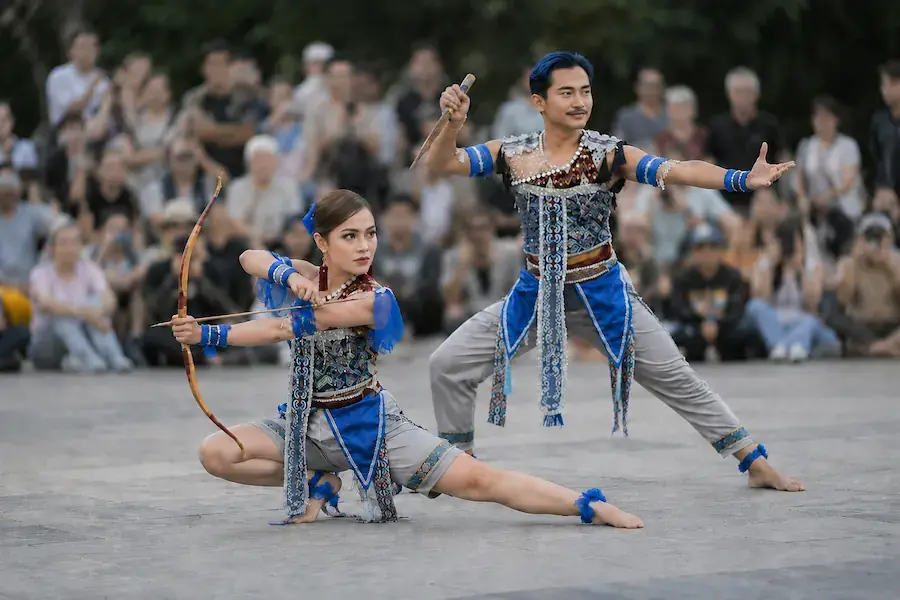
One of the most fascinating facts about the Tari Bagandut tradition is the requirement for gandut dancers to master martial arts, especially Banjar silat.
This tradition emerged because Bagandut performances in the past were held in open settings and involved very close interaction with the audience. It was not uncommon for spectators to behave mischievously or attempt to approach the dancers excessively.
Silat skills served as a form of self-defense for the female dancers. With martial arts training, they could protect themselves and avoid unwanted situations during performances.
In addition to silat, traditional beliefs also held that a gandut should understand various spells and forms of traditional knowledge. People at the time believed that dancers were often targets of mystical influences or attempts at enchantment by individuals attracted to them.
For this reason, a gandut was not only expected to be beautiful and skilled at dancing. She also needed mental resilience, courage, self-defense abilities, and traditional knowledge believed to provide protection.
Four Types of Tari Bagandut That Once Flourished
Throughout its development, Tari Bagandut evolved into several variations distinguished by their accompanying songs and movement characteristics.
Bagandut Mandung-Mandung
This type uses the song Mandung-Mandung as its primary accompaniment. Its movements feature dynamic interactions between male and female dancers. In certain sections, symbolic striking movements directed upward, toward the middle, and downward are incorporated as part of the choreography.
Bagandut Mangandangan
Bagandut Mangandangan is accompanied by the song Mangandangan. In this variation, the male dancer more frequently performs movements that follow or guide the direction of the female dancer's movements. Therefore, dancing ability and mastery of silat are especially important.
Bagandut Karuncungan
This type is accompanied by the song Karuncungan or Stambulan. Its movements are simpler and emphasize holding hands while moving left, right, forward, and backward. Many observers consider its movement patterns similar to modern social dances because they emphasize cooperation between partners.
Bagandut Manunggul
Bagandut Manunggul has a unique concept. In this performance, the male dancer sits while hiding inside a sarong, while the female dancer attempts to entice or invite her partner out of the sarong through attractive and engaging dance movements.
Distinctive Movements of Tari Bagandut
Tari Bagandut features a variety of traditional dance movements that have been passed down from generation to generation.
Male dancers perform movements such as Step Empat, Kijik, Gerak Hambat, Gerak Pukul, Hayam Ma'alas, and Garah. These movements reflect an active and assertive character in approaching their dance partners.
Female dancers, on the other hand, perform a wider variety of movements such as Kambang, Limbai, Kibas, Tangkis, Step Dua, Step Empat, and Kijik. These movements create an impression of grace, flexibility, and agility while responding to their partners.
The combination of these two movement styles creates the unique dynamics of Tari Bagandut and makes its performances feel lively and engaging.
Musical Accompaniment That Brings the Performance to Life
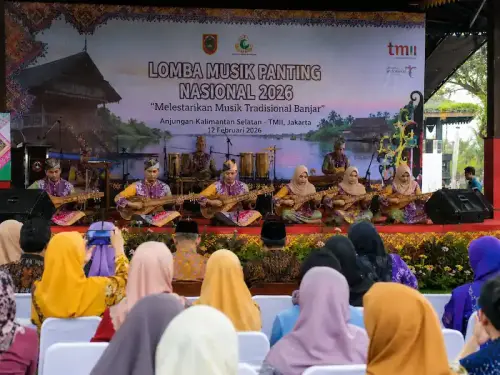
The beauty of Tari Bagandut cannot be separated from the accompaniment of traditional Banjar music. The instruments typically used include the babun, gong, Banjar violin, kendang, and flute.
Each type of song creates a different atmosphere. The songs Mandung-Mandung, Mangandangan, and Karuncungan not only serve as accompaniment but also determine the tempo, rhythm, and character of the dancers' movements.
The combination of the Banjar violin's melodies with the resonant sounds of the babun and gong creates a festive atmosphere that is characteristic of Bagandut performances.
Dancers' Costumes Reflecting Banjar Identity
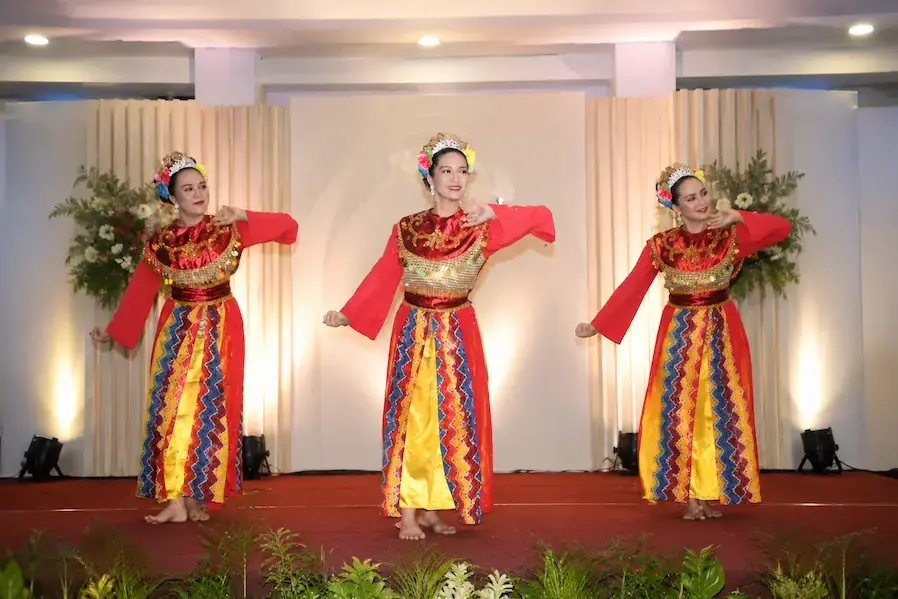
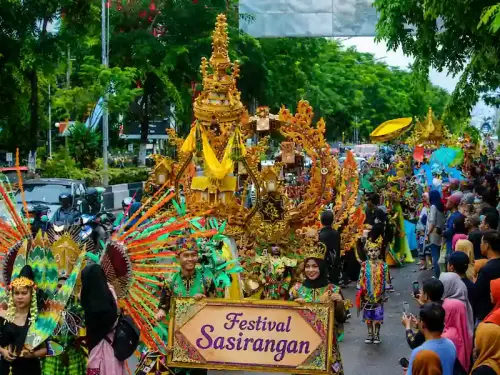
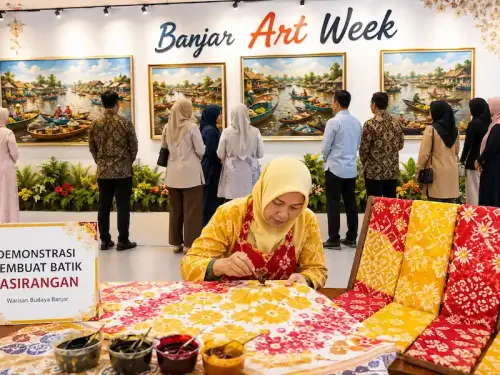
Female dancers typically wear a baju kurung or a simple kebaya paired with sasirangan fabric or a traditional Banjar sarong. Their appearance is complemented by shawls, crowns, earrings, bracelets, necklaces, and rings.
Male dancers wear long-sleeved shirts or baju koko paired with loose-fitting trousers. On their heads, they wear a laung, the traditional Banjar headcloth, or a peci as part of their attire.
These costumes showcase the strong cultural identity of the Banjar people and form an important part of the performance's aesthetic appeal.
Unique Traditions in Tari Bagandut Performances
In traditional practice, a Bagandut performance begins with a male dancer inviting a female dancer to perform together. This invitation is usually accompanied by the offering of money as a sign of respect.
Afterward, the dancing pair moves to the rhythm of the music while circling around the performance area. Their interaction becomes the main attraction for the audience.
On some occasions, audience members may also join in the dancing. They usually place money into a sasanggan as a form of participation and support for the performance.
This tradition demonstrates that Tari Bagandut is not merely a spectacle but also a medium for social interaction within Banjar society.
The Current Condition of Tari Bagandut
Although it was once a highly popular form of entertainment, Tari Bagandut is now considered one of the traditional arts that is becoming increasingly rare. Changes in modern lifestyles, the emergence of contemporary entertainment, and the declining number of practitioners have made performances much less common than they once were.
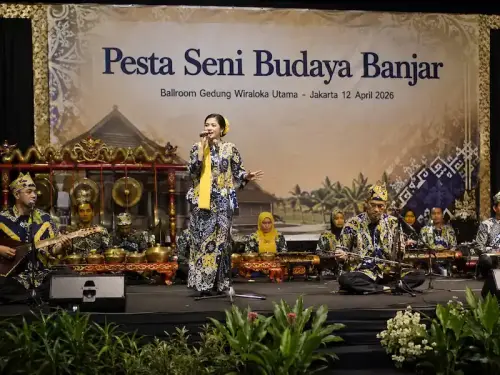
Today, Tari Bagandut is primarily performed during cultural preservation activities, regional arts festivals, and events aimed at reintroducing Banjar cultural heritage to younger generations.
In several areas, such as Rantau, there are still artists and young dancers striving to learn and preserve the Bagandut tradition, particularly the Bagandut Mandung-Mandung variant, which is regarded as one of the most authentic forms.
A Banjar Cultural Heritage Worth Preserving
Tari Bagandut stands as evidence of the cultural richness of the Banjar people, born from a combination of dance, music, social traditions, and the values of past generations. Within it are stories of social interaction, folk entertainment, martial arts skills, and performance traditions that have evolved over hundreds of years.
As one of the cultural identities of South Kalimantan, Tari Bagandut possesses significant historical and artistic value. Preserving this dance is important not only for the Banjar community but also for Indonesia's cultural diversity, ensuring that this ancestral heritage remains known and is not lost to time.